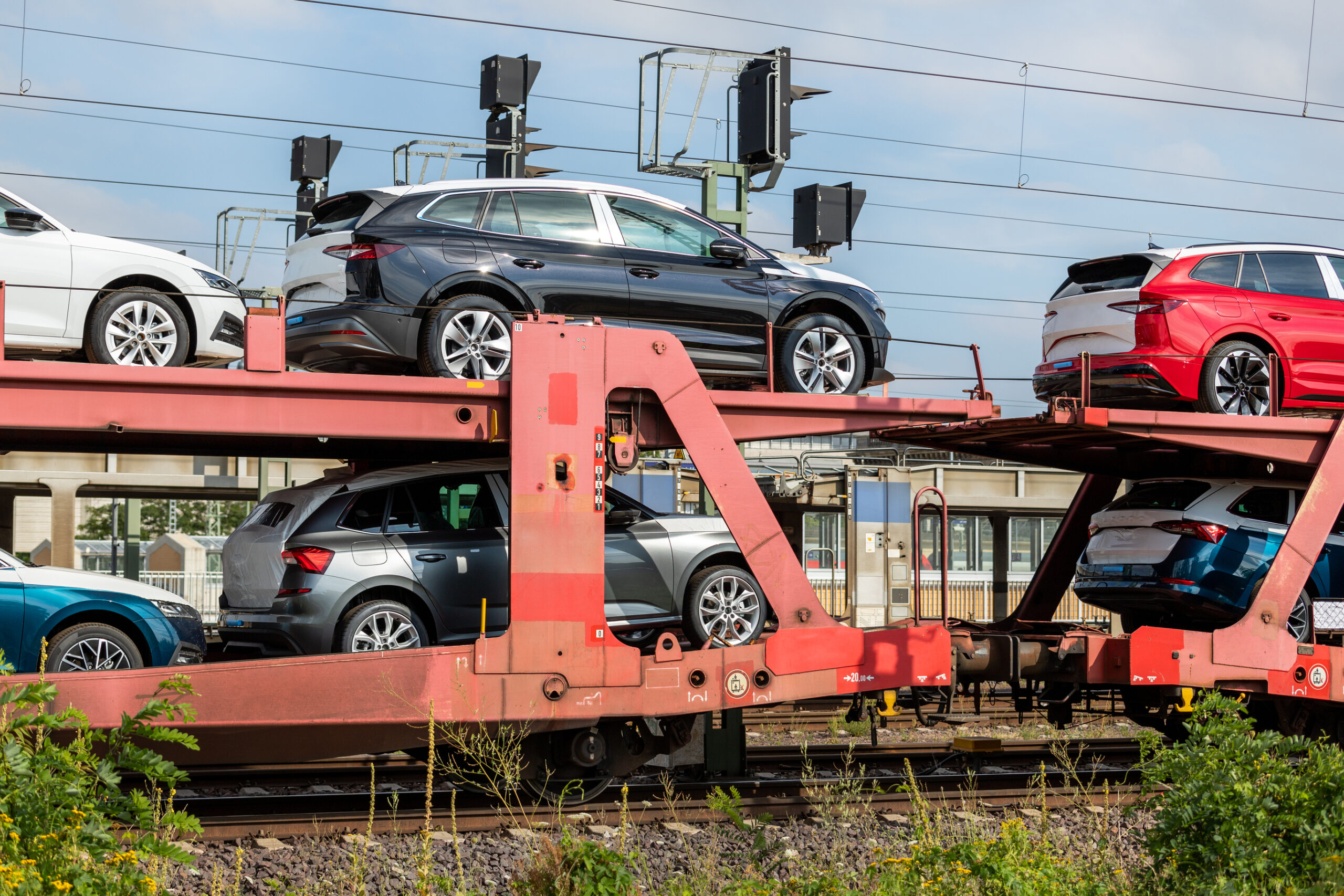
Delware’s governor has just announced he is rolling back the state’s 2035 gasoline powered car ban in a move that could trigger New Jersey Governor Phil Murphy to follow suit.
Don’t hold your breath.
In a significant shift for Delaware’s environmental policy, newly elected Governor Matt Meyer has announced his intention to eliminate the state’s mandate requiring all new vehicles sold by 2035 to be zero-emission.
The decision, revealed in an interview with WHYY News just three months into Meyer’s term, aligns with broader pushback against similar mandates nationwide, including a recent executive action by President Donald Trump aimed at curbing state-level restrictions on gasoline-powered vehicles. As Delaware takes steps to reverse its policy, attention now turns to neighboring New Jersey, which adopted a similar 2035 gas car ban. Will New Jersey follow Delaware’s lead, or stay the course on its zero-emission goals?
One candidate for governor in New Jersey says it doesn’t matter whether or not Murphy repeals his agenda. He will, if elected in November.
“The Democratic Governor of Delaware just eliminated his state’s electrical vehicle mandate of 2035,” said Republican endorsed candidate Jack Ciatterelli. “As Governor, I will do the same thing on Day One of my administration.”
Ciattarelli has been vocal in his opposition against the gas car ban since it was first announced by Governor Murphy.
Delaware’s Reversal: A Response to Consumer Choice and Federal Pressure
Governor Meyer, a Democrat who previously served as New Castle County executive, made clear his skepticism of government mandates dictating consumer behavior. “I’m not a strong believer in government mandates on consumers,” Meyer told WHYY News. While expressing support for zero-emission vehicles—citing his efforts to convert nearly half of New Castle County’s non-police fleet to electric during his tenure—he emphasized that Delaware’s electric vehicle (EV) mandate would not take effect. The specifics of how the state will dismantle the rule, part of Delaware’s adoption of California’s Advanced Clean Cars II (ACCII) regulation, remain unclear, but Meyer’s commitment signals a definitive policy shift.
Delaware’s 2035 mandate, aligned with California’s Clean Air Act waiver, required a phased increase in zero-emission vehicle sales, starting with 35% of new cars by 2026 and reaching 100% by 2035. The policy aimed to reduce tailpipe emissions and combat climate change but faced criticism for its feasibility and impact on working-class residents. A Delaware Online opinion piece from April 2025 argued that the mandate could harm communities of color and low-income families, citing polling showing 61% of Maryland residents and a majority of New Jerseyans opposed similar plans. Meyer’s decision appears to respond to these concerns, as well as federal developments.
President Trump’s executive actions, including efforts to revoke California’s Clean Air Act waiver, have emboldened opponents of state-level gas car bans. A bipartisan U.S. House vote on May 1, 2025, to block California’s 2035 ban—upon which Delaware’s and New Jersey’s policies are modeled—further undermines the legal foundation of these mandates. Although the Senate parliamentarian and Government Accountability Office have questioned Congress’s authority to override California’s waiver, the political momentum against EV mandates is palpable. Meyer’s move positions Delaware as one of the first states to act on this shifting landscape.
New Jersey’s 2035 Ban: Facing Similar Pressures
New Jersey, like Delaware, adopted California’s ACCII regulation in November 2023 under Governor Phil Murphy’s administration. The state’s Department of Environmental Protection set ambitious targets: 51% of new car sales must be zero-emission by 2027, rising to 100% by 2035. Announced as part of Murphy’s “Energy Master Plan,” the policy aims to curb greenhouse gas emissions and position New Jersey as a leader in clean energy.
However, recent developments suggest the state may face challenges in maintaining this trajectory.
A bipartisan House vote casting doubt on New Jersey’s mandate, given its reliance on California’s now-contested waiver. Within the state, skepticism has emerged among lawmakers. Senate Budget Chair Paul Sarlo, a Democrat, declared at a 2023 New Jersey Business and Industry Association (NJBIA) forum that the 2035 timeline was “not happening,” citing affordability concerns and inadequate charging infrastructure.
Polls referenced in Delaware Online indicate significant public opposition, with more New Jersey residents opposing the ban than supporting it.
Despite these headwinds, New Jersey has not yet signaled an intent to follow Delaware’s lead. Governor Murphy, a staunch advocate for climate action, has defended the 2035 goal as critical to achieving a 100% clean energy future by 2035—15 years ahead of the state’s original 2050 target. However, with Murphy’s term ending in January 2026 due to term limits, the policy’s future may hinge on his successor.
A Republican or moderate Democratic governor could pivot toward Delaware’s approach, especially if federal pressure intensifies.
Contrasting Contexts: Delaware vs. New Jersey
While Delaware and New Jersey share geographic proximity and similar EV mandates, their political and economic contexts differ. Delaware, with a smaller population and less dense urban landscape, may face fewer logistical hurdles in scaling back its mandate. Meyer’s background as a county executive overseeing a successful EV fleet conversion suggests he favors voluntary adoption over mandates, a stance that resonates with Delaware’s relatively moderate political climate.
New Jersey, by contrast, is a more urbanized state with higher traffic volumes and greater reliance on passenger vehicles.
Its proximity to major metropolitan areas like New York City and Philadelphia amplifies the environmental stakes of vehicle emissions. Murphy’s administration has invested heavily in EV infrastructure, including charging stations and incentives, to support the 2035 transition. Yet, affordability remains a sticking point.
EVs remain costlier than gas-powered cars, and New Jersey’s working-class families—much like Delaware’s—may resist a mandate perceived as limiting affordable options.
The federal rollback of California’s waiver, if successful, could force New Jersey’s hand. Without the waiver, states cannot enforce stricter emissions standards than federal rules, effectively nullifying both Delaware’s and New Jersey’s bans. Even if the waiver survives legal challenges, public sentiment and political shifts could erode support for the policy in New Jersey, as seen in Delaware.
What’s Next for Both States?
For Delaware, Governor Meyer’s next steps involve determining the “mechanism” to eliminate the EV mandate. This could involve executive action, regulatory changes through the Department of Natural Resources and Environmental Control, or legislative approval. Given Meyer’s early announcement, Delaware may act swiftly to align with federal trends and address constituent concerns.
New Jersey’s path is less certain. Governor Murphy’s administration may double down on the 2035 goal, leveraging existing investments in EV infrastructure to maintain momentum. However, the 2025 gubernatorial election looms large.