
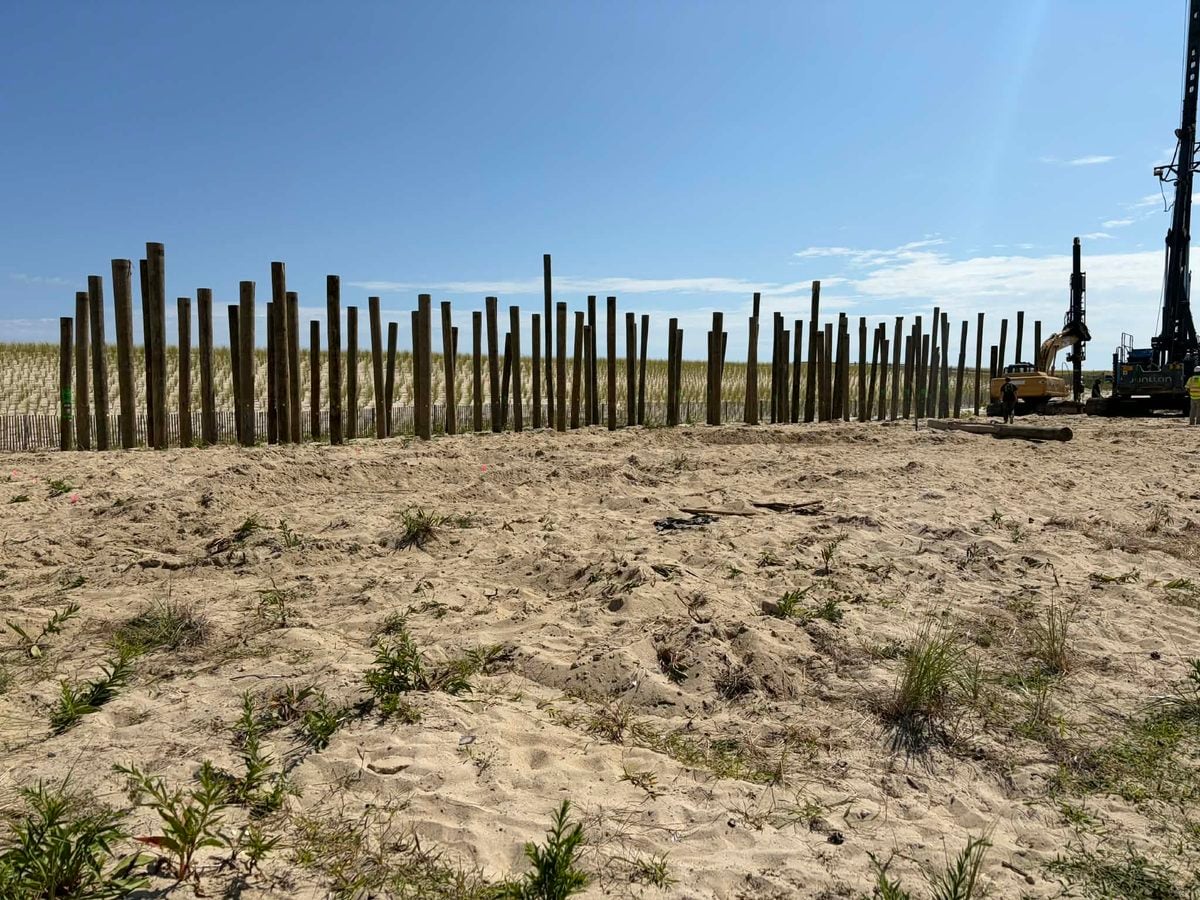
New photos show pilings rising from the former Joey Harrison’s Surf Club site as a project more than a decade in the making finally takes shape.
ORTLEY BEACH, NJ — New photographs provided to Shore News Network offer an early look at construction on New Jersey’s newest boardwalk, now beginning to rise along the Ortley Beach oceanfront where Joey Harrison’s Surf Club once stood.
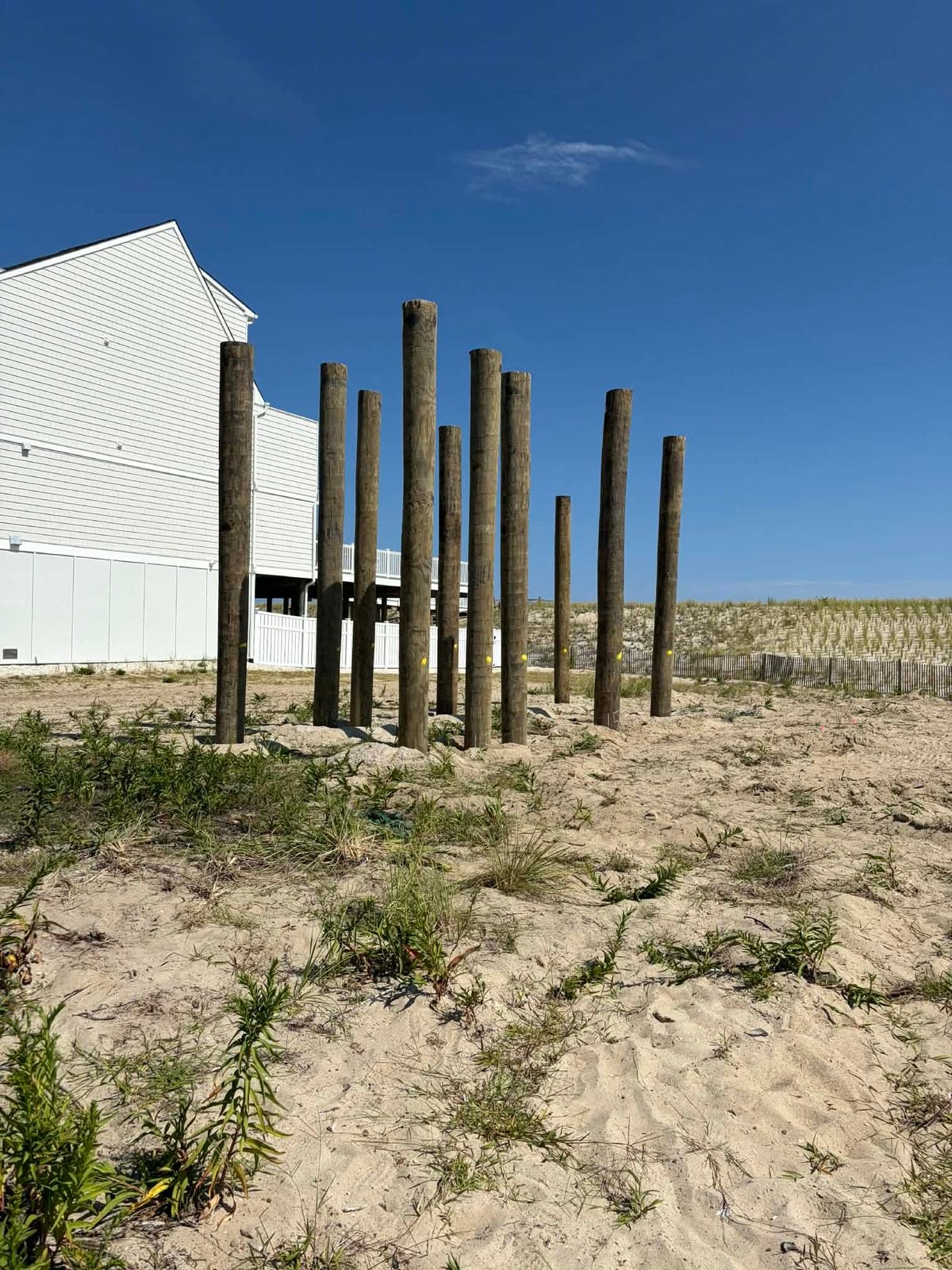
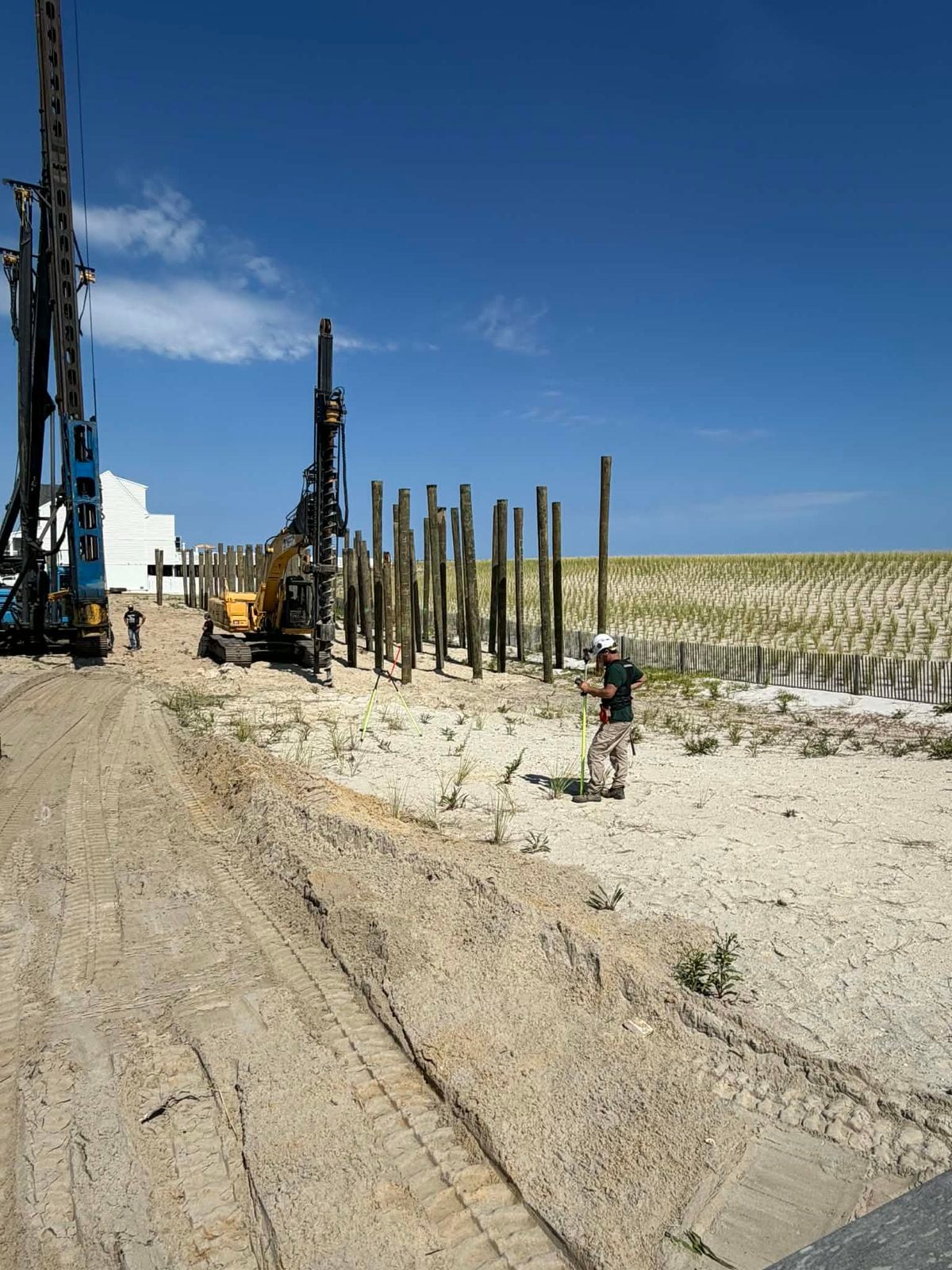
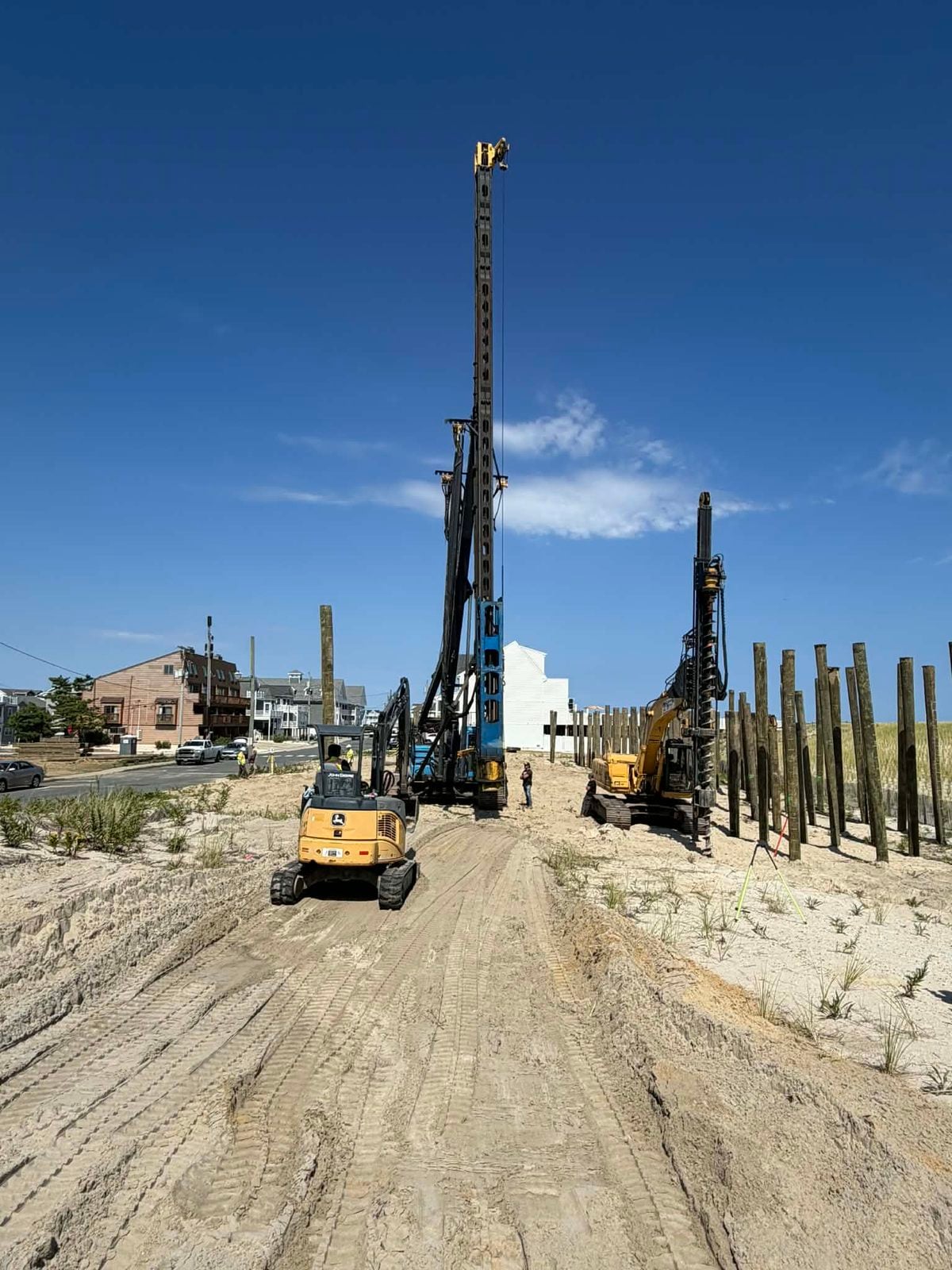
The images show timber pilings installed at the former nightclub property between Sixth and Seventh avenues, creating the foundation for a new elevated boardwalk and public beachfront pavilion.
The first major structural work follows years of negotiations, demolition, environmental restrictions, design changes, permit reviews and construction bidding. What had remained an open gap along the beachfront since Superstorm Sandy is now visibly entering a new phase.
Timber Pilings Mark the Project’s First Visible Progress
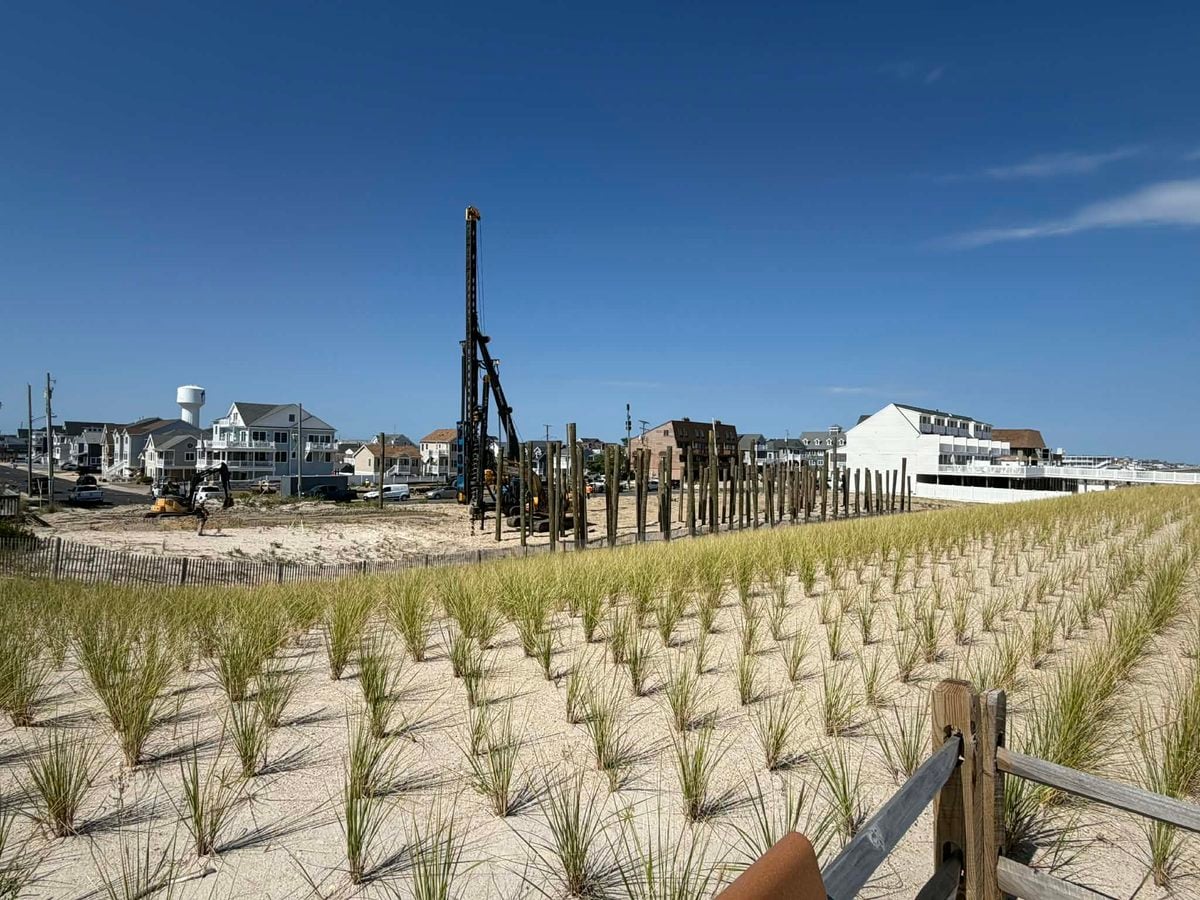
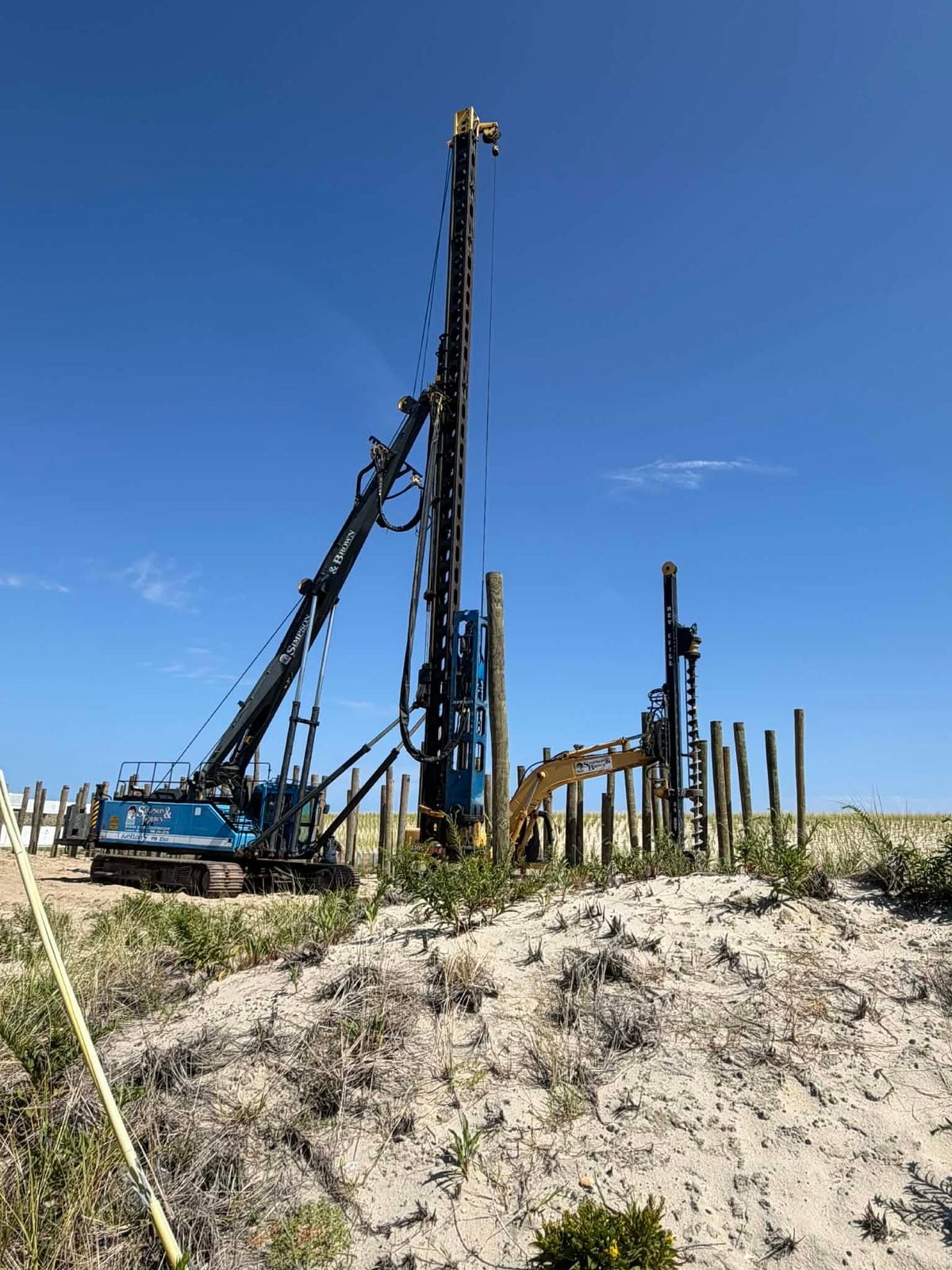
SNN first reported this week that crews had begun installing the pilings, moving the project from engineering documents and government approvals into physical construction.
The boardwalk will extend approximately 300 feet across the publicly owned beachfront property. Plans call for a structure about 50 feet wide, with a pavilion positioned near its center.
The full expansion will cover approximately 13,220 square feet. The pavilion itself is expected to occupy about 3,040 square feet and provide a public gathering area overlooking the Atlantic Ocean.
The timber supports are being driven about 20 feet into the sand. Engineering specifications require individual pilings to withstand approximately 10 tons of weight and five tons of uplift because of the site’s exposure to coastal storms and high winds.
Once completed, the structure will sit about 15 feet above street-level grade and approximately five feet above the dune crest established during federal beach-replenishment work.
A Boardwalk Gap Created by Superstorm Sandy
For decades, Joey Harrison’s Surf Club was one of the Jersey Shore’s most recognizable beachfront entertainment destinations.
The Ortley Beach club drew generations of summer visitors with live music, dancing and oceanfront nightlife. Its location directly on the beach also made the property extraordinarily vulnerable to coastal storms.
Superstorm Sandy destroyed the club in October 2012 as Ortley Beach sustained some of the worst damage anywhere along the New Jersey coast. Homes were swept from their foundations, streets flooded and large sections of the barrier-island community were left uninhabitable.
The Surf Club never reopened.
Its damaged remains stood on the oceanfront for years as plans to rebuild the private business failed to advance. The vacant and deteriorating property became one of Ortley Beach’s most visible reminders of the destruction Sandy left behind.
Toms River eventually initiated a formal municipal demolition process, and the surviving structures were torn down in 2021.
Residents Pushed to Preserve the Property
As redevelopment proposals circulated, residents urged the township to acquire the land and prevent one of Ortley Beach’s last major oceanfront parcels from becoming private residential development.
Negotiations were complicated by disagreements over the property’s value. The owner viewed the land as a potentially lucrative development site, while township officials had to justify the cost of acquiring storm-damaged beachfront property.
The municipality ultimately purchased the site in late 2021 for $7.3 million under a much criticized plan by the former mayor.
Most of the purchase—approximately $6.615 million—was funded through New Jersey’s Blue Acres program. Toms River authorized about $685,000 from its Open Space Trust Fund.
The state’s Blue Acres program purchases flood-prone properties and preserves the land as open space, preventing future development in locations facing repeated storm damage.
The funding protected the Surf Club property from private redevelopment but also imposed restrictions on what Toms River could build there. Any improvements had to remain compatible with public recreation, beach access and open-space requirements.
Plans Took Years to Reach Construction
Early discussions envisioned a boardwalk extension, gazebo, landscaping, restrooms, benches and additional beach parking. Turning those general concepts into an approved project required coordination with state environmental regulators and coastal permitting agencies.
The township also had to account for dune elevations and the large federal beach-replenishment project that restored sand and storm protection along Ortley Beach.
Plans eventually settled on an elevated wooden boardwalk, oceanfront pavilion, native dune vegetation and reconstructed parking across Oceanfront Drive.
In February, SNN reported that Mayor Daniel Rodrick was preparing to move ahead with the long-awaited redevelopment of the Surf Club property.
Rodrick, who took office in 2024, made advancing the project a priority. The land purchase and early planning began under previous municipal administrations, while final contracting and the start of major construction occurred during his term.
Contractor Changed Before Work Began
The project encountered another delay after its initial construction award.
Ashland Contractors LLC had first been selected for the work, but a dispute emerged involving specifications and subcontracting requirements. The contract did not ultimately proceed with Ashland.
Toms River later awarded the job to Black Rock Enterprises of Old Bridge for approximately $3.87 million.
The project is being built under a labor agreement requiring organized labor and emphasizing workers from Ocean, Monmouth and Burlington counties.
The change in contractors pushed the visible start of construction beyond the earlier spring timetable. With the first pilings now in place, however, the foundation work has officially begun.
Pavilion, Dunes and Parking Included
The project is more than a short wooden walkway.
Construction plans include the central pavilion, approximately 75 cubic yards of additional beach sand and more than 4,000 square yards of native coastal vegetation. Those components are intended to integrate the public structure with the restored dune system rather than weaken the shoreline’s storm protection.
Across Oceanfront Drive, the former Surf Club parking lot will be reconstructed for public beach access.
Parking remains a persistent concern in Ortley Beach, particularly during the summer, when residents and visitors compete for limited spaces near the ocean. The restored lot will return a portion of the former nightclub property to active public use.
The project will also help close a longstanding break along Ortley Beach’s oceanfront pedestrian route, although the completed section will function as a passive public space rather than a commercial amusement boardwalk.
A New Chapter for Ortley Beach
The photographs capture an early stage of construction: timber supports standing where a legendary nightclub once faced the Atlantic.
For residents who watched the damaged Surf Club remain vacant for years, the pilings represent something larger. They are the first unmistakable sign that one of the final pieces of Ortley Beach’s post-Sandy recovery is moving off paper and into the landscape.
The site’s transformation has taken nearly 14 years—from nightclub, to storm wreckage, to vacant land, to publicly preserved beachfront.
Now, for the first time, visitors can see the outline of what comes next.
Readers can follow continuing coverage of Ortley Beach, Toms River, the Jersey Shore, local news and New Jersey.
