
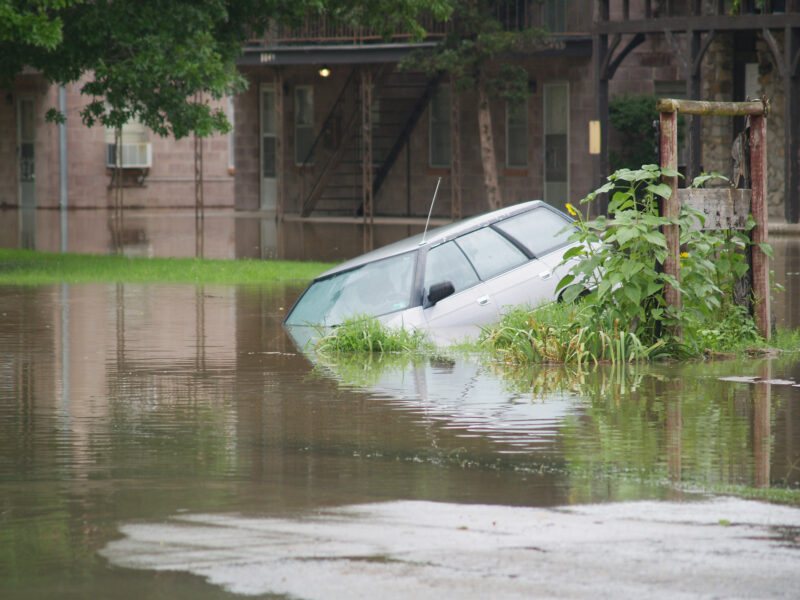
Lakewood, NJ – Lakewood Township has a problem. Once a sleepy vacation resort in the heavily wooded and sandy-soiled pine forest, it is now a major New Jersey city and a concrete jungle and the water has virtually nowhere to go, but to an overburdened stormwater system that replaced the natural sandy soil and well-drained landscape with parking lots, pavement, and large high-density housing projects.
Widespread flash flooding that inundated Lakewood and surrounding communities over the weekend has reignited a long-running debate over what is driving increasingly severe flooding across central Ocean County.
While meteorologists point to the intense rainfall that dumped between 2 and 5 inches of rain across portions of the region in a matter of hours, many residents argue that years of rapid development, the loss of wooded areas, and expanding pavement have made flooding significantly worse. Others cite climate change as a contributing factor to the increasing frequency of intense rainfall events.
Weekend storms overwhelmed roads and drainage systems
Heavy thunderstorms flooded roads throughout Lakewood, Toms River, Jackson, and other Jersey Shore communities, stranding motorists and prompting rescue operations by Chaveirim of Central Jersey. Police, firefighters, and emergency responders handled dozens of calls as streets became impassable.
Residents once again pointed to familiar trouble spots, including Martin Luther King Drive and Pine Street, where flooding has repeatedly occurred during major rain events.
The National Weather Service attributes flash flooding to intense rainfall rates that exceed the capacity of drainage systems. However, hydrologists have also long noted that increased development can reduce natural ground absorption, allowing more stormwater to rapidly enter streams, drainage systems, and roadways.
Jackson residents worry history could repeat itself
Concerns over development are also growing in neighboring Jackson Township, where environmental advocates fear continued residential growth could create flooding problems similar to those experienced in Lakewood.
Ocean County Commissioner Director Frank Sadeghi has projected Jackson’s population could approach 200,000 residents over the next two decades, requiring substantial investments in roads, sewer infrastructure, and other public services to accommodate future growth.
Some residents and environmental groups argue that expanding development within the township’s watershed could increase runoff and place additional pressure on existing drainage systems, while also reducing natural open space that absorbs rainfall.
Jackson Township is a large watershed with many headwaters, swamps, and lakes, making a 200,000 population city a natural flooding disaster waiting to happen.
Township officials advancing drainage improvements
At a recent Jackson Township Council meeting, Township Engineer Charles Cunliffe presented plans to address longstanding drainage deficiencies, including persistent flooding affecting residents along Forest Drive in the township’s most densely populated neighborhoods.
Cunliffe said years of deferred infrastructure improvements allowed drainage problems to worsen, blaming ‘previous administrations’ often focused on resurfacing roads rather than replacing aging stormwater infrastructure beneath them.
While Cunliffe, whose company is a political donor to the current administration and who is paid hourly by the township, blamed ‘previous administrations’ for neglect, the entire council, minus Councilman Chris Pollak, either served under, or supported those previous administrations politically until recently.
Engineers generally note that flooding is influenced by multiple factors, including rainfall intensity, soil conditions, watershed characteristics, drainage capacity, and land development. The extent to which each factor contributes can vary from one storm and one community to another.
At a recent township meeting, environmentalist Adam Heidi raised concerns over overdevelopment and township officials ignoring warning signs issued by the Environmental Commission, which he serves on.
Heidi highlighted that many proposed developments in Jackson ignore critical environmental and zoning protections, especially near sensitive Pinelands areas.
Questioned why site plans are accepted without thorough environmental review, citing examples of illegal land clearing and lack of enforcement. Argued that existing regulations are not consistently followedor enforced. They called for stronger oversight, suggesting that significant projects be reviewed by the environmental commission to better protect the town’s natural resources
As Ocean County continues to experience rapid population growth, officials face increasing pressure to balance new development with infrastructure upgrades designed to reduce flooding risks for existing neighborhoods.
Key Points
- Flash flooding in Lakewood renewed debate over whether rapid development, aging infrastructure, and intense rainfall are contributing to worsening flooding.
- Jackson Township residents and environmental advocates have expressed concerns that continued development could increase future flooding in the township.
- Local officials are advancing drainage improvement projects while county leaders plan for significant population growth across central Ocean County.