
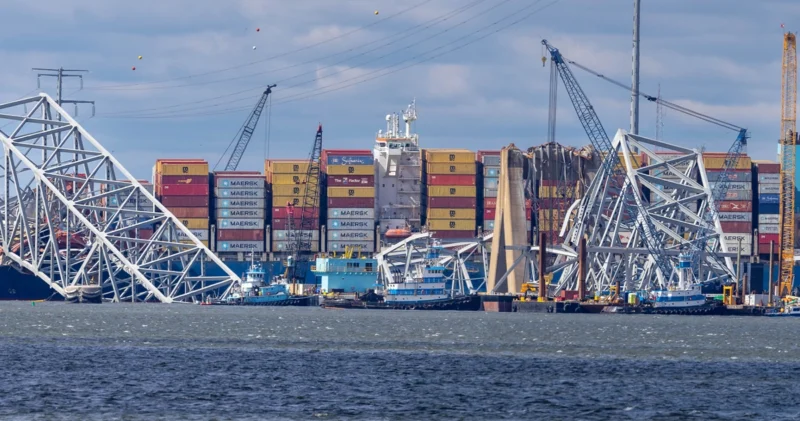
Agreement marks a significant step in state-led litigation following a catastrophic infrastructure failure that disrupted a major U.S. port.
Baltimore, Maryland – Maryland Attorney General Anthony G. Brown announced Friday that the State of Maryland has reached a settlement in principle with Grace Ocean Private Limited and Synergy Marine Pte Ltd., the owner and operator of the M/V Dali, resolving a portion of the state’s claims stemming from the March 26, 2024 collapse of the Francis Scott Key Bridge. The agreement represents a major development in one of the most consequential infrastructure and maritime disaster cases in recent state history.
The settlement, negotiated by the Maryland Office of the Attorney General’s Civil Litigation Division in coordination with the Maryland Transportation Authority, the Maryland Port Administration, and the Maryland Department of the Environment, addresses claims tied to the cargo vessel’s allision with the bridge. The case has drawn national attention due to its economic impact, loss of life, and implications for maritime safety and infrastructure oversight.
Multi-agency litigation effort targets vessel operators
The legal action, filed in the U.S. District Court for the District of Maryland in September 2024, alleged negligence, mismanagement, and reckless operation of a vessel deemed unseaworthy. State officials argued that the M/V Dali should never have departed port under the conditions that led to the disaster.
“For two years, Maryland workers, families, and communities have carried the weight of a disaster that should never have happened,” Brown said. “The Dali’s crash into the Key Bridge disrupted the Port of Baltimore, devastated livelihoods, and sent economic shockwaves across our State that are still being felt today. Our work is not finished, but this settlement is an important step toward making Maryland whole.”
The agreement does not resolve potential claims against Hyundai, the shipbuilder, signaling that litigation could continue against additional parties. Officials emphasized that the current settlement is limited in scope and remains subject to finalization.
Economic and human toll reshaped regional priorities
The collapse of the Francis Scott Key Bridge triggered widespread disruption across Maryland’s transportation and shipping sectors. The Port of Baltimore, one of the busiest ports on the East Coast, was forced to halt operations temporarily, affecting thousands of workers and supply chains across multiple industries.
Six construction workers were killed in the incident, underscoring the human cost of the disaster. In the months that followed, traffic patterns were rerouted through already burdened communities, amplifying concerns about infrastructure resilience and environmental justice.
—
Key Points
• Maryland reached a settlement in principle with the M/V Dali’s owner and operator
• The agreement resolves part of the state’s claims but excludes potential action against the shipbuilder
• The bridge collapse caused fatalities, economic disruption, and long-term infrastructure impacts
—
Broader implications for maritime safety and accountability
The case highlights increasing scrutiny of global shipping operations and vessel safety standards, particularly as ports handle larger cargo volumes and aging infrastructure faces mounting stress. Legal experts note that multi-agency litigation efforts like Maryland’s reflect a growing trend of states aggressively pursuing accountability in complex maritime incidents.
The state sought damages for the destruction of the bridge, environmental harm to the Patapsco River, lost government revenues, and broader economic losses. The involvement of multiple state agencies and outside maritime counsel underscores the scale and complexity of the claims.
Officials have not disclosed financial terms of the settlement, and the Office of the Attorney General stated it will provide no further comment until the agreement is finalized.
The case remains ongoing, with additional legal proceedings expected as the state evaluates claims against other potentially responsible parties, including the vessel’s builder.