
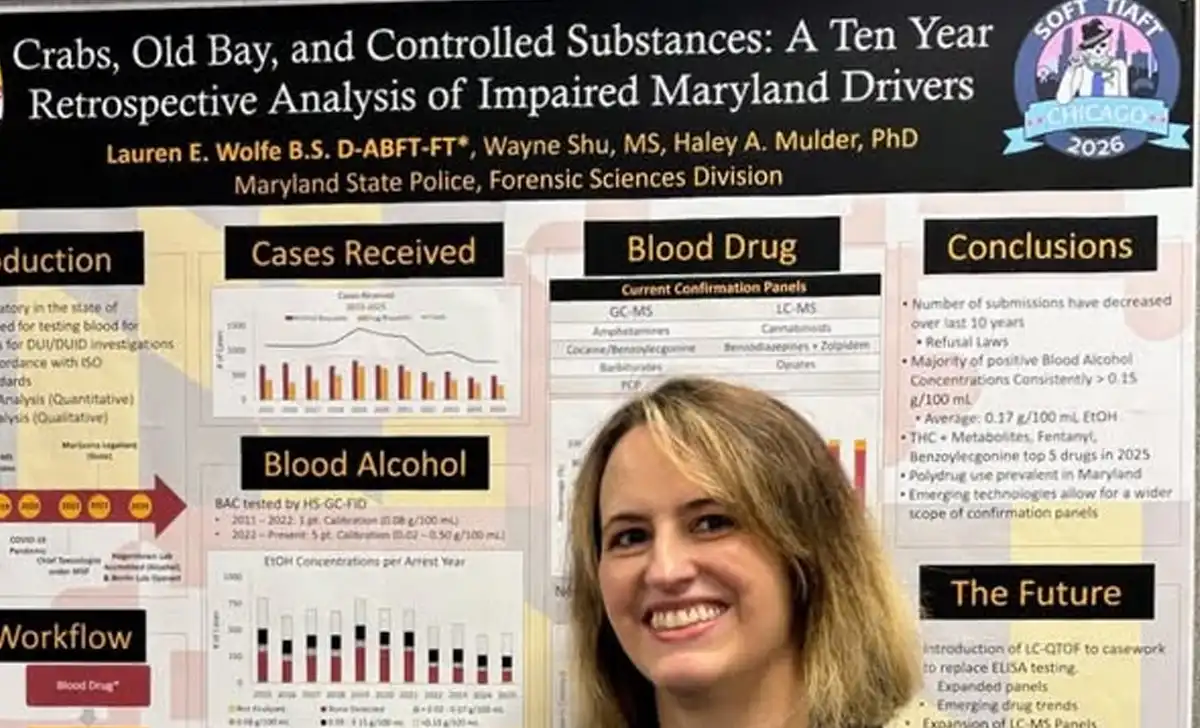
A 10-year review of Maryland impaired-driving cases found changing drug trends from 2015 through 2025, with THC metabolites and fentanyl among the substances most frequently detected.
PIKESVILLE, MD — A decade-long Maryland State Police review of impaired-driving cases found significant shifts in the drugs showing up in drivers’ blood, including changes tied to the opioid epidemic, the COVID-19 pandemic and the legalization of recreational marijuana.
Maryland State Police Forensic Sciences Division toxicologist Lauren Wolfe presented the research this week at the 2026 SOFT-TIAFT Joint Meeting in Chicago.
The presentation, titled “Crabs, Old Bay, and Controlled Substances: A Ten-Year Retrospective Analysis of Impaired Maryland Drivers,” examined alcohol and drug findings from Maryland cases between 2015 and 2025.
THC and fentanyl frequently identified
State Police said THC and its metabolites were among the substances most frequently detected during the study period.
Fentanyl was also among the drugs commonly identified.
The research was designed to track how impaired-driving toxicology changed over time, including shifts associated with the opioid crisis and Maryland’s legalization of marijuana in 2023.
State Police did not release a complete breakdown of the number of cases reviewed or the percentage attributed to each individual substance in its announcement.
More than half of alcohol-positive cases exceeded legal limit
The research also examined alcohol-related cases.
According to Maryland State Police, more than half of the cases that tested positive for alcohol involved blood alcohol concentrations at or above Maryland’s legal limit.
Maryland’s per se legal limit for most drivers is a blood alcohol concentration of 0.08%.
Research presented to international forensic toxicology group
Wolfe conducted the research with Dr. Haley Mulder, Maryland State Police chief toxicologist, and Toxicology Supervisor Wayne Shu.
The findings were presented during the SOFT-TIAFT Joint Meeting, which brings together forensic toxicologists from around the world to discuss emerging research, laboratory methods and trends in drugs and alcohol.
Maryland State Police said the presentation reflects the work of its Forensic Sciences Division in tracking how drug use and impaired driving have changed over the past decade.
