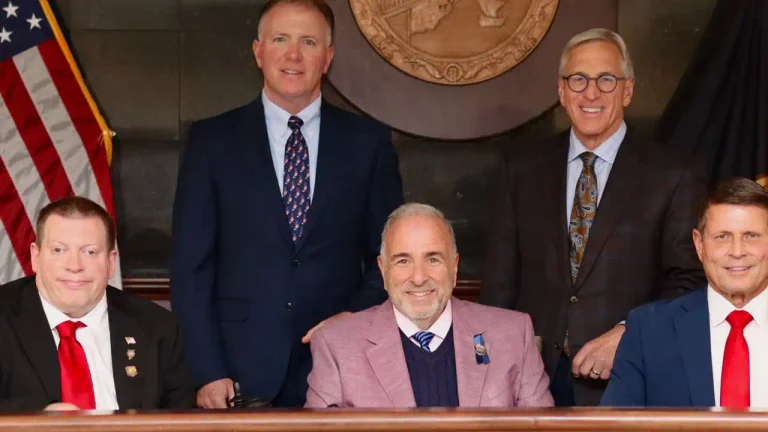
TRENTON, N.J. — A New Jersey assemblyman is publicly challenging Gov. Mikie Sherrill’s World Cup funding strategy, arguing her administration’s push for temporary taxes conflicts with claims that most fans—and their spending—will stay in New York City.
Assemblyman Brian Bergen raised the criticism in a social media post within the past day, pointing to what he described as “fuzzy” math behind the state’s financial approach to hosting matches at MetLife Stadium in 2026.
Dispute centers on who benefits—and who pays
Bergen’s critique targets a core tension in Sherrill’s messaging: the governor has warned that New Jersey could shoulder tens of millions in costs while much of the economic upside flows across the Hudson River.
“Why push a 3% sales tax hike in NJ for six weeks?” Bergen wrote. “You can’t say the visitors won’t be here… and tax them like they are. The math isn’t mathing.”
His comments reflect a broader debate unfolding in Trenton as lawmakers weigh how to fund the state’s role in hosting the FIFA World Cup, one of the largest sporting events in the world.
Sherrill has consistently argued that New Jersey taxpayers should not subsidize visitors, many of whom are expected to travel from New York City to attend matches in East Rutherford.
Temporary taxes and rising costs fuel backlash
The administration and lawmakers are backing a package of temporary, World Cup–related revenue measures aimed at offsetting costs tied to security, transportation, and infrastructure.
Proposals under discussion include:
- A roughly 3% sales tax surcharge in the Meadowlands district during the tournament
- A statewide hotel surcharge of about 2.5%
- Transportation-related fees, including surcharges on rideshare trips to MetLife Stadium
- Potential additional taxes tied to sports betting activity during the event
Supporters describe these as targeted “tourism taxes” designed to capture revenue from visitors rather than impose long-term burdens on residents.
—
Key Points
• Assemblyman Brian Bergen questions Sherrill’s World Cup tax plan and cost projections
• NJ expects about $46–$48 million in transportation costs tied to MetLife Stadium
• Proposed temporary taxes and fees aim to shift costs to visitors instead of residents
—
Transportation pricing adds to controversy
Beyond taxes, transportation costs have become a major flashpoint.
Reports indicate NJ Transit fares to MetLife Stadium could rise dramatically during the tournament, with round-trip prices potentially reaching $100 to $150—far above the typical fare of about $12.90.
State officials have tied those increases to an estimated $46 million to $48 million in transit-related expenses, emphasizing that FIFA is not contributing to those costs despite generating billions in revenue from the tournament.
Sherrill’s position has been clear: either FIFA or the users of the system—fans—should cover those expenses, not New Jersey taxpayers.
Economic benefits acknowledged—but debated
Even as she pushes for cost recovery, Sherrill has acknowledged that the World Cup will bring “real economic benefits for our communities and businesses.”
However, her administration has repeatedly emphasized that those benefits may not be evenly distributed.
Critics, including Bergen and some analysts, argue that New York City could capture a disproportionate share of tourism spending, citing its dominance in hotels, nightlife, and global branding tied to the event.
That dynamic underpins Bergen’s argument: if visitors are primarily spending in New York, he questions the logic of implementing New Jersey-based tax increases to capture that revenue.
Broader strategy shift shapes debate
The funding dispute comes alongside a broader shift in how New Jersey is approaching World Cup events.
The state recently canceled its planned large-scale fan fest at Liberty State Park, opting instead for a decentralized model featuring smaller watch parties, local fan zones, and community festivals across all 21 counties.
Officials say that approach will spread economic impact more evenly within the state, aligning with the broader goal of ensuring New Jersey—not just neighboring regions—benefits from hosting.
What comes next
The debate over taxes, fees, and transportation pricing is expected to continue as the June 2026 tournament approaches and final policies are set.
For now, the proposals remain temporary and tied specifically to the World Cup window, but lawmakers and residents are closely watching how the costs—and benefits—ultimately balance out.
As of this week, no final agreement has been announced on the full package of surcharges and pricing, leaving the state’s World Cup funding strategy an active and evolving issue.