
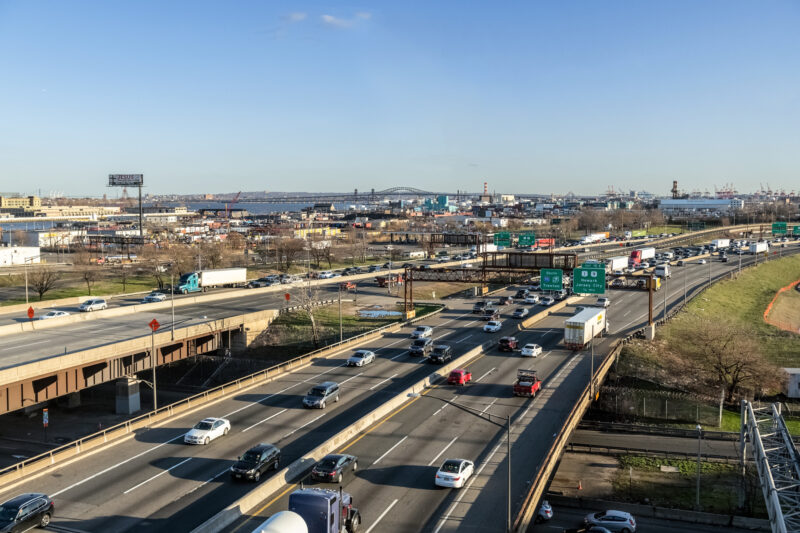
Rising tolls, congestion pricing and fuel costs strain affordability for daily workers
TOMS RIVER, N.J. — A daily commute from Ocean County to Manhattan now costs more than $17,000 a year, underscoring growing affordability concerns for New Jersey workers as tolls, congestion pricing, and fuel expenses continue to climb.
For one Toms River commuter driving to New York City five days a week, the combined cost of tolls and gas has reached roughly $340 per week—an amount that rivals a second mortgage payment for some households.
The figures highlight a widening gap between political promises of affordability and the real-world costs facing working residents under current state and regional policies.
The real cost of getting to work
Breaking down the commute reveals where the financial pressure is coming from—and it is not just gas prices.
A typical one-way trip includes:
- Garden State Parkway tolls: about $8–10 per day
- New Jersey Turnpike tolls: about $8–12 per day
- Lincoln Tunnel peak toll: $16.79
- New York City congestion pricing: $6 (after tunnel credit)
That brings the daily toll total to approximately $41.79, or about $209 per week.
Gas adds another major layer. A 150-mile daily round trip in a mid-size SUV averaging 20 miles per gallon costs about $26.25 per day, or $131 per week at $3.50 per gallon.
Combined, the numbers are stark:
- Weekly commuting cost: ~$340
- Monthly cost: ~$1,400–$1,500
- Annual cost: ~$17,600+
This is not discretionary spending. It is the cost of going to work.
The biggest driver: getting into New York
Despite rising tolls across New Jersey highways, the most significant costs come at the final stretch of the commute.
The Lincoln Tunnel and congestion pricing alone total about $22.79 per day, accounting for more than half of total toll expenses.
Over a full year of commuting:
- Tunnel costs exceed $4,200 annually
- Congestion pricing adds roughly $1,500 annually
Together, just entering Manhattan costs thousands per year—before factoring in any New Jersey tolls or fuel.
A growing affordability gap
For many commuters, these costs cut directly into take-home pay.
At roughly $340 per week, the commute alone can consume:
- A significant portion of a middle-class salary
- More than many households spend on groceries
- The equivalent of a car payment—or more
And unlike rent or mortgages, these costs offer no long-term return. They are recurring, unavoidable, and rising.
This is where frustration is growing among commuters who feel squeezed between multiple layers of government policy.
Just take the bus you say? That is not much better, about $150 per week, and the inconvenience, delays, and strict schedule adherence necessary.
Policy promises vs. commuter reality
In recent election cycles, New Jersey Democrats—including current leadership—have emphasized affordability, middle-class relief, and economic fairness.
At the same time, New York City implemented congestion pricing, adding a new daily cost for drivers entering Manhattan below 60th Street.
While the policy is designed to reduce traffic and fund mass transit, its financial impact falls heavily on commuters who rely on driving—especially those coming from areas with limited public transportation options.
For Ocean County residents, that reality is unavoidable. Unlike North Jersey, where rail access is more robust, many commuters from Toms River and surrounding areas have few viable alternatives to driving.
The result is a layered cost structure:
- State tolls
- Bi-state tunnel fees
- City-imposed congestion pricing
- Rising fuel costs
Each policy may serve a distinct purpose, but together they create a cumulative burden that is difficult to ignore.
Key Points
• Toms River to NYC commute costs about $340 per week in tolls and gas
• Annual commuting expenses exceed $17,000 for daily drivers
• Tunnel and congestion pricing account for the majority of toll costs
Limited alternatives for South Jersey commuters
One of the central challenges in this debate is geography.
Commuters from Central and South Jersey often lack direct rail access to Manhattan, making driving the default option rather than a choice.
While NJ Transit offers bus and train routes, they can involve:
- Long travel times
- Multiple transfers
- Limited scheduling flexibility
For many workers, especially those with rigid work hours or family obligations, driving remains the most practical—if expensive—solution.
This creates a disparity within the state, where some residents can avoid rising toll costs through public transit, while others cannot.
The compounding effect of daily costs
What makes the situation particularly challenging is how quickly small daily costs add up.
A $6 congestion fee may seem modest in isolation. A $16.79 tunnel toll may be expected. But combined with multiple toll roads and fuel, the total becomes overwhelming.
Over time, the numbers compound:
- $200+ per week in tolls alone
- $1,000+ per month when combined with gas
- Nearly $18,000 annually
That is money that could otherwise go toward housing, savings, education, or retirement.
Instead, it is spent simply to maintain employment.
A question of priorities
The broader debate is not just about cost—it is about priorities. Supporters of congestion pricing argue it reduces traffic, improves air quality, and funds critical infrastructure. State officials point to maintenance and modernization costs for toll roads and bridges.
But for commuters, the question is more immediate: how much is too much?
At what point do layered policies—each justified on its own—collectively create an unsustainable burden?
What comes next
With congestion pricing now in effect and tolls unlikely to decrease, commuting costs are expected to remain high. Some drivers may look for alternatives, including carpooling, adjusting work schedules, or exploring public transit despite its limitations.
Others may face tougher decisions, including relocating closer to work or changing jobs entirely. Related coverage has increasingly focused on how transportation costs are reshaping where people live and work across the region.
For now, the reality is clear: for thousands of New Jersey residents, the cost of getting to work is no longer a minor expense—it is a major financial strain.
And as policies continue to evolve on both sides of the Hudson River, that strain shows no immediate sign of easing.