
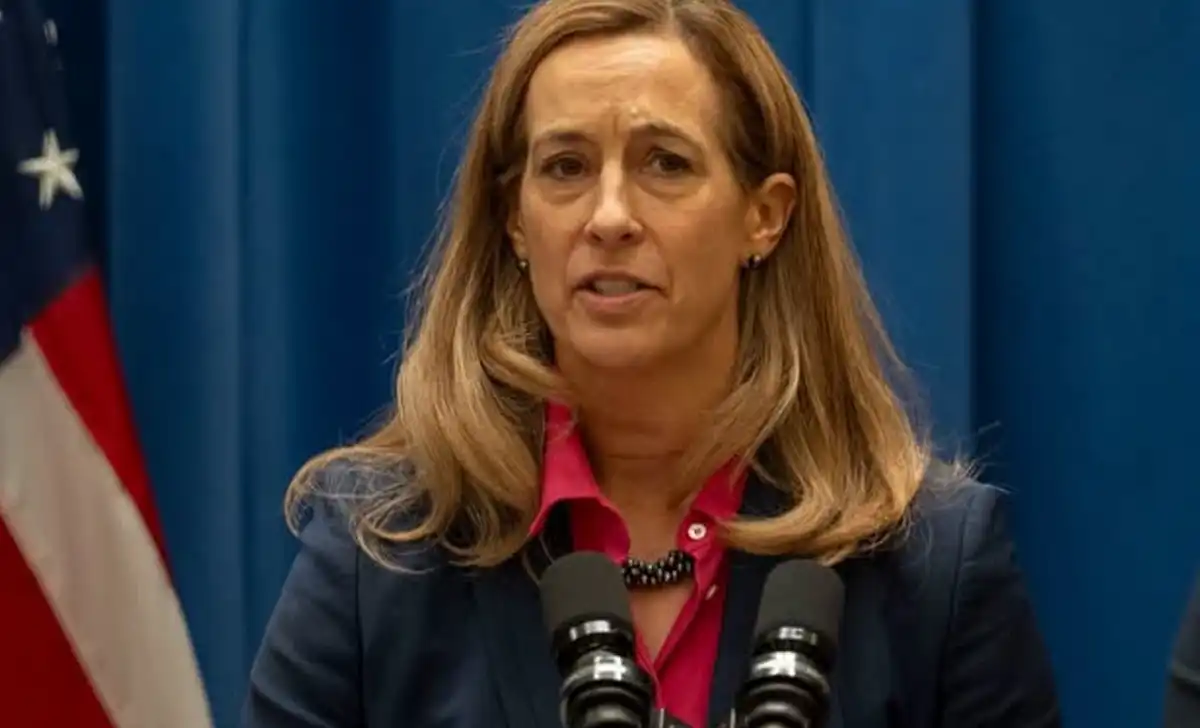
Assembly Republicans are escalating their push to overhaul New Jersey’s school funding system, arguing record spending has not delivered enough accountability while districts like Toms River, Jackson and Middletown continue facing severe budget pressure.
TRENTON, N.J. — New Jersey is spending a record $12.4 billion on K-12 schools this year, but a growing fight in Trenton is shifting from how much the state spends to what taxpayers are getting for the money.
Assemblyman Gerry Scharfenberger, R-Monmouth, is highlighting an April budget hearing in which Education Commissioner Lily Laux told lawmakers that the state funding formula is designed around student need rather than academic outcomes.
“We absolutely do not fund outcomes. We fund student need,” Laux said during the Assembly Budget Committee hearing, according to Scharfenberger’s account of the exchange.
“It doesn’t matter that you have top-performing districts. It’s apples and oranges,” the state committee chair said.
Republicans are using that distinction to argue that New Jersey needs greater accountability for billions in education spending.
Scharfenberger Says Record Spending Is Only Half the Story
Gov. Mikie Sherrill signed a fiscal 2027 budget with a record $12.4 billion for K-12 education, more than $370 million above the prior year, but it’s not enough for districts like Jackson, Toms River, and Middletown, which were hit hardest by unfunded state mandates.
The administration has presented that investment as evidence of its commitment to public schools.
Scharfenberger argues the statewide total masks significant financial problems in individual districts.
During the April hearing, he questioned whether increased aid to large urban districts is producing adequate academic results.
“We just want to make sure everything is being spent wisely, we’re getting the outcomes that the investment is calling for,” Scharfenberger said during the hearing.
Democratic lawmakers pushed back, arguing that high-need urban districts often serve more students living in poverty, learning English or requiring additional services, making direct comparisons with wealthier suburban districts misleading.
The 6% Cap Is Fueling Another Fight
New Jersey’s current budget limits increases in major categories of state school aid to 6%, even when the funding formula calculates that a district should receive substantially more.
An analysis by the nonpartisan Office of Legislative Services found that the cap saves the state about $332.6 million by withholding part of the formula-calculated increases.
That has become a major issue for districts that previously lost substantial amounts of aid under the S2 funding redistribution.
Toms River, for example, says its formula-generated increase was significantly larger than the amount it ultimately received because of the cap.
Toms River and Jackson Have Already Felt the Consequences
Few communities illustrate the school funding fight better than Ocean County.
In 2024, the state adopted budgets for both Jackson and Toms River after their school boards failed to approve balanced spending plans.
Jackson’s budget included a 9.9% tax levy increase.
Toms River later faced another major increase. Its own audited financial report says the state-imposed 2025-26 budget carried a 12.9% overall tax levy increase, following a roughly 9% increase the previous year.
The district says it has lost more than $175 million cumulatively since implementation of S2.
Toms River has repeatedly argued that the state funding system has forced local taxpayers to absorb costs previously supported through state aid.
The district has raised taxes almost 22% in the past few years, and board members continue blaming the state; however, many in the community are also pointing fingers at the board.
The Toms River Regional School District total budget rose from approximately $252 million for the 2020–21 school year to $306 million for the 2026–27 school year, representing an increase of about $54 million (or roughly 21.4%) over this timeframe.
2020–21 Total Budget: ~$252.3 million2025–26 Total Budget: ~$293.5 million2026–27 Total Budget: $306.1 million
At that rate, state aid, even if adjusted, would not have been able to save the district which just made its superintendent Michael Citta one of the highest paid in the state.
Transparency Has Been an Issue for Years
The current dispute also revives an older fight over how New Jersey calculates aid.
Toms River and several other districts previously sought records explaining the calculations behind the state funding formula.
The Department of Education responded that the computer program used to perform some calculations was developed internally and considered proprietary. Districts later sued for records, and a judge ordered portions of the information released.
That history has fueled continuing complaints that local school officials cannot adequately predict how changes in property values, enrollment and other factors will affect future aid.
Sherrill Administration Says Formula Needs Work
The administration is not arguing that the current system is perfect.
Laux told lawmakers that the School Funding Reform Act, adopted in 2008, had served an important purpose but now needs another look.
“The implementation and the reality of how it supports our schools today is something that needs another look,” she said.
Sherrill’s budget already made several changes, including using actual special education enrollment rather than a statewide average and averaging property values over three years to reduce dramatic swings.
The Department of Education’s FY2027 budget plan also argues that limiting both increases and decreases gives districts greater year-to-year stability.
Republicans Want a Larger Rewrite
Republican lawmakers say those changes do not go far enough.
They are pushing legislation to remove the 6% growth cap, provide additional aid to districts operating below state adequacy levels and reconsider how the formula treats communities with constrained tax bases.
They have also proposed directing part of New Jersey’s anticipated settlement with Meta toward underfunded school districts.
The disagreement now centers on two competing questions: whether state aid should primarily follow the needs of students, or whether academic performance should play a greater role in determining where additional money goes.
With districts simultaneously cutting programs, selling buildings and raising property taxes despite record statewide education spending, that debate is likely to intensify as lawmakers begin considering changes to the formula.
