
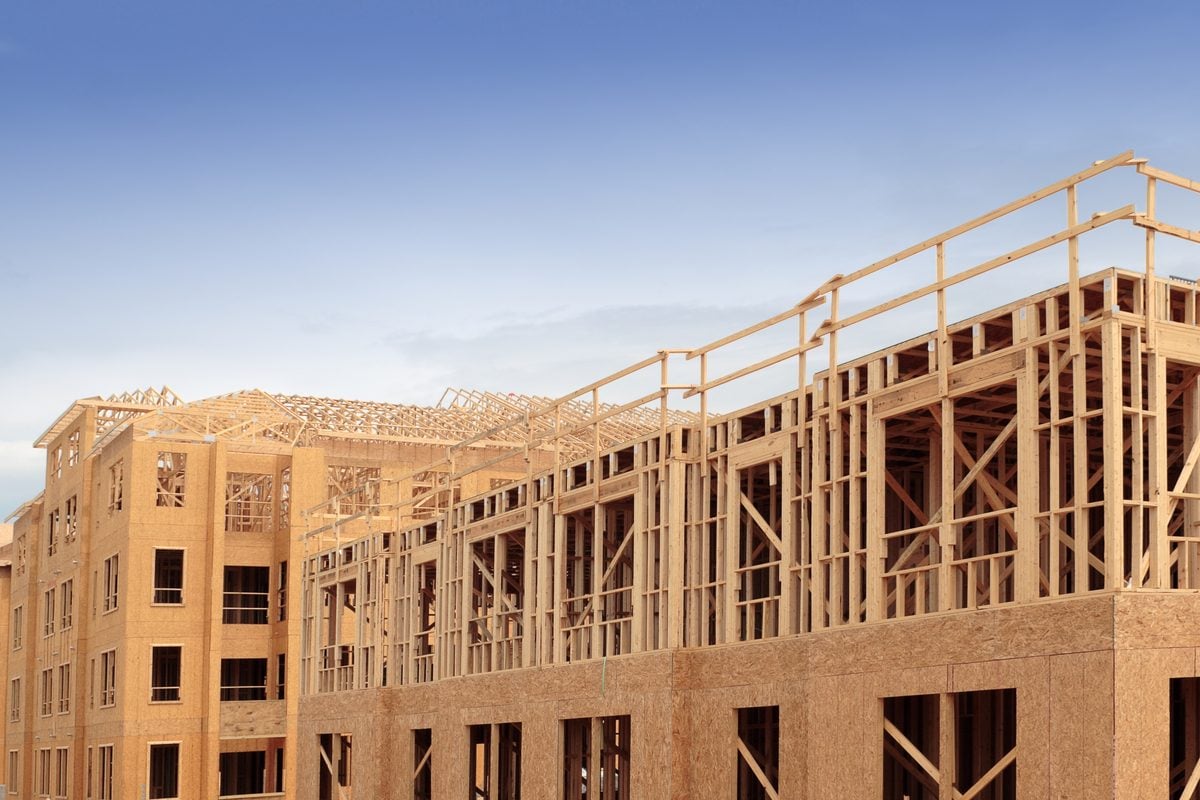
Gov. Mikie Sherrill says New Jersey needs 350,000 additional homes and wants to accelerate construction, even as municipalities battle the state over affordable housing obligations and the strain of continued development.
TRENTON, N.J. — New Jersey is already the most densely populated state in America, but Gov. Mikie Sherrill, a Virginia native, says it still needs hundreds of thousands of additional homes.
Sherrill unveiled a statewide housing plan Tuesday that calls for faster permitting, greater development around transportation hubs and a major expansion of housing on state-owned property.
The administration is not proposing to double all housing construction statewide. Rather, Sherrill wants to double the number of planned homes on state-owned land from 20,000 to 40,000 while pursuing a broader goal of adding 350,000 homes across New Jersey over time, according to the governor’s housing plan.
The announcement comes as dozens of municipalities have spent the past two years arguing that Trenton is already demanding too much development through New Jersey’s affordable housing mandates.
Sherrill Says New Jersey Is 350,000 Homes Short
The administration’s Housing Governing Council concluded that New Jersey needs approximately 350,000 additional homes to meet demand, improve affordability and remain economically competitive.
“Too many New Jerseyans cannot afford their rent or mortgage, seniors are being priced out of their homes, and young people cannot afford to buy their first house,” Sherrill said.
Her plan calls for shortening permitting timelines through mandatory “shot clocks,” increasing development assistance to municipalities and creating a tax-credit auction expected to generate tens of millions of dollars for affordable housing.
The administration is also moving ahead with transit-oriented developments in Red Bank, Bayonne and Linden.
New Jersey Is Already the Nation’s Most Crowded State
The push presents an unusual planning challenge.
New Jersey had about 1,263 residents per square mile in the 2020 Census. The U.S. Census Bureau’s population density data places New Jersey ahead of every other state. The Census table technically ranks it second when the District of Columbia is included, but among the 50 states, New Jersey is No. 1.
Its density is dramatically higher than neighboring Pennsylvania and New York.
That statewide number also masks even more intense development in North and Central Jersey, while fast-growing communities elsewhere are confronting increasingly familiar questions involving schools, roads, sewer capacity, traffic and open space.
Sherrill’s position is that insufficient housing supply is itself helping drive New Jersey’s affordability crisis.
Municipal officials challenging the state’s existing housing system argue that the answer cannot simply be substantially more high-density development without greater consideration of local infrastructure and land-use conditions.
The Fight Goes Back to Mount Laurel
New Jersey’s unusual housing system traces back more than 50 years.
In the landmark 1975 Southern Burlington County NAACP v. Mount Laurel Township decision, the New Jersey Supreme Court ruled that municipalities could not use zoning to effectively exclude lower- and moderate-income families.
The court held that developing municipalities must provide a realistic opportunity for a variety of housing affordable to people across income levels.
When the court concluded eight years later that municipalities had not adequately responded, Mount Laurel II strengthened the doctrine and required towns to provide their “fair share” of the regional need for affordable housing.
The New Jersey Judiciary’s history of the Mount Laurel decisions describes the doctrine as preventing municipalities from using zoning rules to exclude residents because of their economic status.
The Legislature responded in 1985 by creating the Council on Affordable Housing, better known as COAH.
Affordable Housing Battle Intensified Again in 2024
After years of litigation and a largely dormant COAH process, Gov. Phil Murphy signed a major overhaul of New Jersey’s affordable housing system in 2024.
The law eliminated COAH and established a new process for determining municipal obligations for the 2025-2035 Fourth Round.
The Department of Community Affairs calculated affordable housing obligations for all 564 municipalities.
Those numbers generated immediate resistance.
Local officials in several communities argued that the calculations required densities their towns could not reasonably absorb and raised concerns about traffic, schools, water, sewer systems and environmental constraints.
Dozens of Towns Went to Court
The fight became a statewide legal battle.
A coalition of municipalities challenged the 2024 law, arguing that portions of the new system exceeded constitutional requirements and improperly shifted the burden of housing production onto municipalities.
A state judge dismissed a challenge brought by 27 municipalities in 2025.
The dispute continued into federal court, where a coalition of roughly three dozen towns unsuccessfully sought to delay implementation. The Third Circuit also declined to halt the law.
In February 2026, the U.S. Supreme Court declined an emergency request to stop implementation, according to the New Jersey Globe’s coverage of the litigation.
The legal defeats left municipalities facing new zoning and planning requirements even as the broader argument over development continued.
Now Sherrill Wants Construction to Move Faster
That is what makes the timing of Sherrill’s housing initiative notable.
Municipalities are already implementing a new decade of affordable housing obligations under the Mount Laurel framework.
The Sherrill administration is now separately pushing to increase overall housing production and shorten the amount of time developments spend in the approval process.
The two policies are not identical. Mount Laurel deals specifically with providing realistic opportunities for low- and moderate-income housing, while Sherrill’s new initiative addresses the broader housing market.
But on the ground, both ultimately mean pressure to produce more homes.
The Debate Is Housing Costs Versus Growth Pressures
Sherrill argues that New Jersey’s shortage of homes has pushed prices beyond the reach of young families and caused seniors and longtime residents to struggle with housing costs.
Municipal opponents of aggressive state housing mandates have focused on the other side of the equation: whether individual communities have enough roads, schools, utilities and developable land to accommodate significantly more housing.
Those competing pressures are likely to define New Jersey’s housing debate.
The country’s most densely populated state is simultaneously dealing with some of the nation’s highest housing costs, a decades-old constitutional affordable housing mandate and local governments increasingly questioning how much additional development their communities can handle.
