

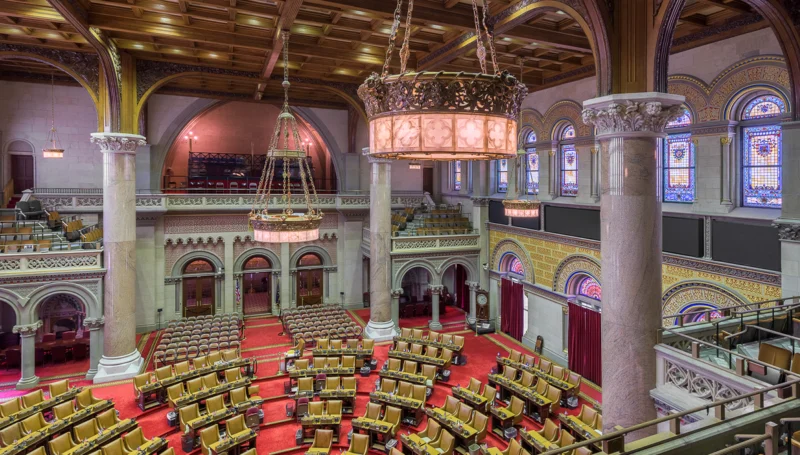
Albany, NY – New York lawmakers blew past a key April budget deadline again this year, with a roughly $237 billion spending plan stalled over disputes on housing policy and billions in migrant-related funding.
Negotiations between Gov. Kathy Hochul and state legislators remained unresolved as of Tuesday, forcing officials to consider another round of temporary “extender” budgets to keep government operations running, according to reporting from PBS and state legislative updates.
Migrant funding and housing fight drive impasse
At the center of the standoff is a proposed $2.4 billion allocation to manage the ongoing migrant influx, which has brought more than 160,000 people into New York’s shelter system.
The funding has drawn pushback from Republicans over cost concerns, while also adding pressure within the Democratic majority over how resources are distributed.
Housing policy has proven equally divisive.
Lawmakers are split over how to replace the expired 421-a tax incentive program for developers, a key tool previously used to spur housing construction. Proposals now tie new tax breaks to stronger tenant protections—creating tension between progressive lawmakers pushing for renter safeguards and moderates wary of mandates on developers.
Key Points
• New York missed its April budget deadline with $237B plan still unresolved
• Disputes center on $2.4B migrant funding and major housing policy changes
• Lawmakers expected to pass temporary extender budgets to avoid shutdown
Familiar pattern of late budgets
New York’s fiscal year begins April 1, but late budgets have become routine in Albany, often reflecting complex negotiations within the state’s Democratic supermajority.
This year’s delay underscores deeper divisions, not just between parties but within them. Progressive lawmakers have pushed for stronger tenant protections and expanded social spending, while suburban and moderate Democrats have raised concerns about economic impact and implementation.
Meanwhile, Republicans have focused criticism on the scale of migrant-related spending and broader budget growth.
Broader stakes for the state
Beyond the headline issues, the budget will determine funding levels for education, infrastructure, and public safety programs statewide.
The longer negotiations stretch, the more uncertainty builds for agencies and local governments that rely on state funding allocations.
The migrant crisis, in particular, has become a defining fiscal and political challenge, with New York City bearing the brunt of shelter and service costs and state leaders debating how much support to provide.
What happens next
Lawmakers are expected to approve short-term extender bills if a full agreement is not reached immediately, allowing payroll and essential services to continue while negotiations proceed.
As of April 22, no final deal has been announced, and talks remain ongoing with both housing policy and migrant funding still unresolved.