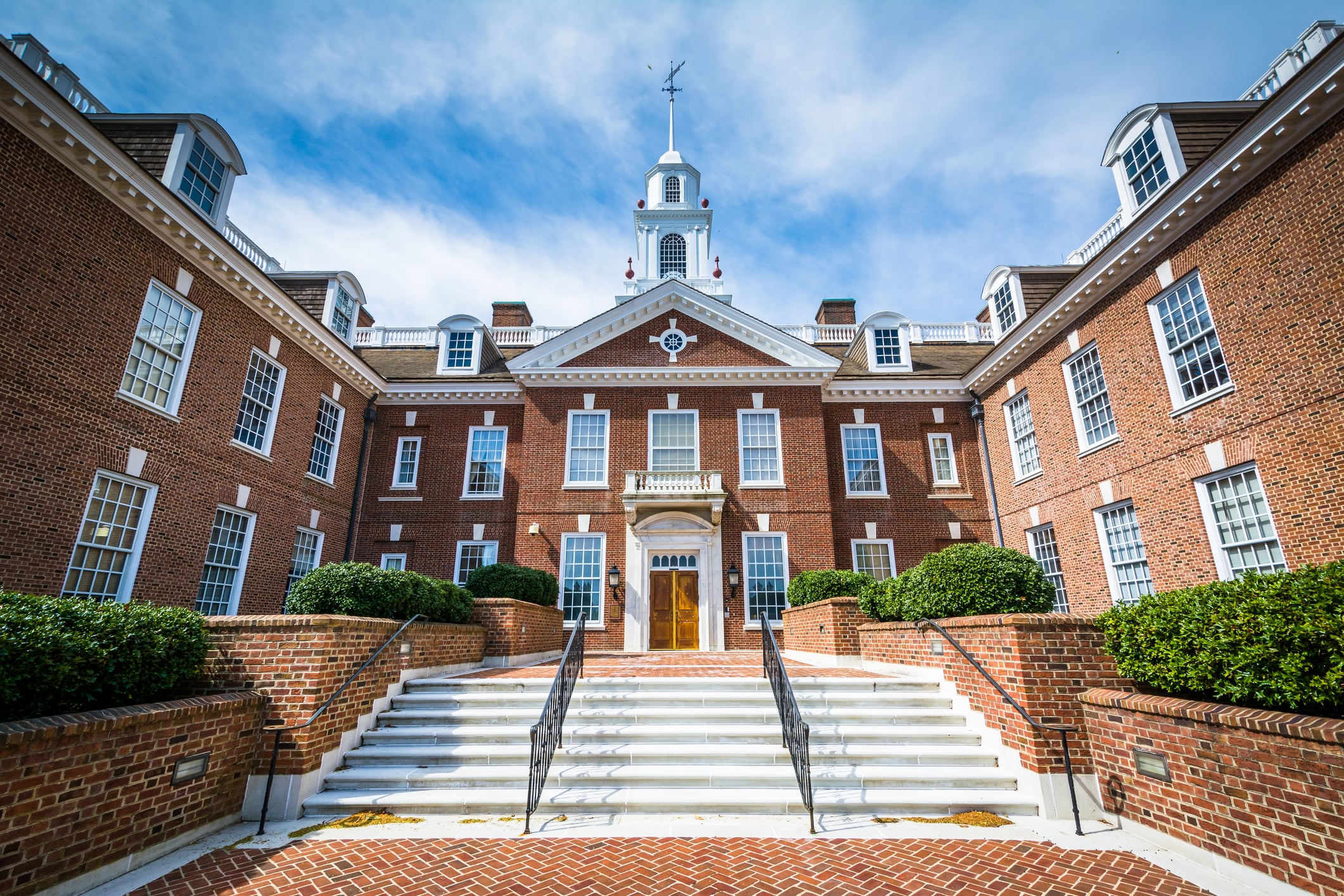
Dover, DE – Delaware lawmakers are moving closer to restricting how local police cooperate with federal immigration enforcement after the state House advanced multiple bills limiting ICE-related activity.
The measures—House Substitute 2 for House Bill 94 and House Substitute 2 for House Bill 151—recently passed the House and would reshape how state and local agencies interact with federal immigration authorities, according to legislative summaries from Delaware.gov.
Bills target enforcement at schools, hospitals
The most prominent proposal, HS 2 for HB 94, would prohibit state and local law enforcement from assisting federal immigration agents with civil enforcement actions at so-called “sensitive locations,” including schools, churches, and medical facilities.
Supporters say the goal is to ensure immigrants can access essential services without fear of enforcement activity.
Democratic lawmakers backing the legislation have framed the measures as a public safety and access issue rather than a shift in immigration policy. House Majority Leader Kendra Johnson (D–New Castle) said the goal is to ensure residents can “access schools, hospitals, and churches without fear,” arguing that separating local policing from federal immigration enforcement strengthens community trust. Bill sponsor Rep. Sophie Phillips (D–Newark) has similarly emphasized that the legislation protects “sensitive spaces where people should feel safe regardless of status,” pointing to concerns that immigration enforcement activity can deter individuals from seeking medical care or reporting crimes.
Republican lawmakers have sharply criticized the proposals, warning they could limit cooperation with federal authorities and create public safety risks. Rep. Rich Collins (R–Millsboro) has argued the policies could lead to “unintended consequences” by restricting coordination with federal immigration officials, while Rep. Bryan Shupe (R–Milford) has questioned whether the measures tie the hands of law enforcement. Members of the House Republican caucus have broadly framed the bills as moving Delaware toward “sanctuary-style” policies, raising concerns that limiting compliance with ICE detainers and enforcement requests could hinder efforts to remove individuals targeted by federal authorities.
A second measure, HS 2 for HB 151, would block state agencies from using public funds to contract with private, for-profit immigration detention facilities.
Key Points
• Delaware House passed bills limiting cooperation with ICE in certain situations
• Proposal restricts enforcement at schools, hospitals, and churches
• Separate bill bans state contracts with private detention centers
Additional proposal targets detainer requests
Lawmakers are also considering House Bill 368, which would prevent local law enforcement from holding individuals beyond their scheduled release solely based on a federal administrative immigration warrant, often referred to as an ICE detainer.
If enacted, the measure would further narrow the role of local agencies in federal immigration enforcement.
Federal designation adds pressure
The legislative push follows a 2025 designation by the U.S. Department of Justice labeling Delaware a “sanctuary jurisdiction,” citing limits on cooperation with federal immigration authorities.
These new bills would formalize and expand those limits in state law, deepening the divide between state-level policy and federal enforcement priorities.
Debate over public safety and enforcement
Supporters argue the measures strengthen community trust in law enforcement by separating local policing from immigration enforcement, particularly in sensitive settings.
Critics counter that the restrictions could hinder federal efforts to enforce immigration laws and remove individuals who may pose risks.
The proposals reflect a broader national divide, as states and local governments continue to set varying policies on cooperation with federal immigration agencies.
What happens next
The bills now head to the Delaware Senate, where lawmakers will decide whether to advance or modify the measures before any final vote.
If approved and signed into law, the changes would significantly redefine how Delaware agencies engage with federal immigration enforcement moving forward.
Delaware legislation, immigration policy, ICE cooperation
 Police Blotter
Dover man busted in another burglary less than a week after release
Shore News Network Police Blotter
Gunman opens fire on Dover home leaving 23-year-old man wounded
Shore News Network Police Blotter
Driver charged with vehicular homicide after deadly two-vehicle crash
Shore News Network Local History