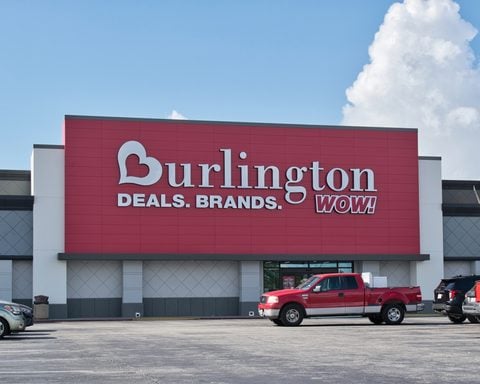
TRENTON, NJ — New Jersey’s largest business advocacy group is sounding the alarm after Burlington Stores announced plans to move its longtime headquarters and roughly 1,600 corporate employees to Philadelphia.
The warning was blunt.
New Jersey Business & Industry Association President and CEO Michele Siekerka called Burlington an iconic state brand and said its departure represents more than another corporate address change.
“It is very sad that New Jersey is losing Burlington Stores, which is an iconic brand in our state named for one of our own municipalities, as well as another Fortune 500 company,” Siekerka said.
Then she turned to Trenton.
Siekerka said corporations relocate for many reasons, but New Jersey cannot ignore the role its taxes, regulations and other policies play in corporate investment decisions.
“We cannot and should not ignore the impact our state’s tax policies and anti-business policies have on our overall competitiveness,” she said.
Burlington is crossing the river.
The retailer plans to invest about $370 million in a new headquarters at 3151 Market Street in Schuylkill Yards, where Pennsylvania officials expect the company to support at least 2,000 jobs within five years.
About 1,600 employees currently work in Burlington Township.
Burlington said those workers will transition to Philadelphia in phases beginning no earlier than late 2028 or early 2029, with several hundred additional positions expected as the company grows.
No overall layoffs are planned.
The company will retain New Jersey warehouses, distribution centers and stores employing thousands of workers, but its executives and headquarters operations are leaving the state where Burlington opened its first store in 1972.
Pennsylvania came loaded with incentives.
Gov. Josh Shapiro’s administration offered a $20 million redevelopment grant and a $10 million Pennsylvania First grant, while Philadelphia added a $7 million forgivable loan and tax incentives.
Taxes quickly entered the fight.
NJBIA said New Jersey’s top corporate burden reaches 11.5% for companies subject to the state’s 2.5% Corporate Transit Fee.
The fee applies to corporations reporting more than $10 million in taxable net income and sits on top of New Jersey’s 9% corporation business tax.
It expires Dec. 31, 2028.
Siekerka wants that expiration locked in permanently, arguing that large employers need certainty that state leaders will not extend or replace the surcharge.
Pennsylvania is moving the other way.
Its corporate net income tax stands at 7.49% in 2026 and is scheduled to decline by half a percentage point annually until reaching 4.99% in 2031.
The difference is substantial.
“Many businesses do have the opportunity to move just across the river for a more competitive business environment, and we can certainly assume that figured into the decision here,” Siekerka said.
That remains NJBIA’s conclusion.
Burlington has not publicly said New Jersey’s corporate tax rate caused the relocation, instead pointing to Philadelphia’s workforce, infrastructure and energy as major attractions.
Its CEO also praised Pennsylvania’s leadership.
“We found the vision and priorities articulated by the mayor and the governor extremely compelling — fiscal health, education and training, and economic opportunity for all,” Burlington CEO Michael O’Sullivan said.
He did not mention Gov. Mikie Sherrill.
The praise for Shapiro and Philadelphia Mayor Cherelle Parker nevertheless created a sharp contrast with New Jersey, where Sherrill’s administration acknowledged that businesses face serious obstacles.
Sherrill’s office called the departure disappointing.
“Governor Sherrill has been clear that she is committed to making New Jersey the best place to start and grow a business, but right now, it is simply too hard to do business in our state,” the governor’s office said.
The administration cited slow permitting, difficult regulations and unnecessary delays as barriers to expansion and investment.
NJBIA wants more.
Siekerka called on state leaders to abandon the proposed Climate Superfund Act, change the state’s independent-contractor proposal and reconsider Department of Environmental Protection land-use rules.
The stakes reach beyond existing jobs.
NJBIA said New Jersey will lose Burlington’s executive presence, future corporate hiring and property-tax revenue associated with the company’s 441,000-square-foot Burlington Township complex.
What happens to that property remains undecided.
The relocation follows other high-profile corporate departures, including Samsung’s decision to move its U.S. headquarters from Englewood Cliffs to Texas.
Mars Wrigley is also leaving Newark.
The company will eliminate 307 positions while consolidating its headquarters operation in Chicago, although it plans to retain its Hackettstown manufacturing facility.
The pattern has business leaders worried.
New Jersey recorded 84 WARN notices affecting 9,242 workers through July 2026, compared with 59 notices affecting 8,571 workers during the same period last year.
Many WARN filings involve restructurings, outsourcing, automation or nationwide cost-cutting, but headquarters relocations carry a separate economic cost because executive operations and future corporate growth move elsewhere.
Siekerka said New Jersey must change course.
“Without major changes, we will likely see our biggest job creators look to grow elsewhere.”