
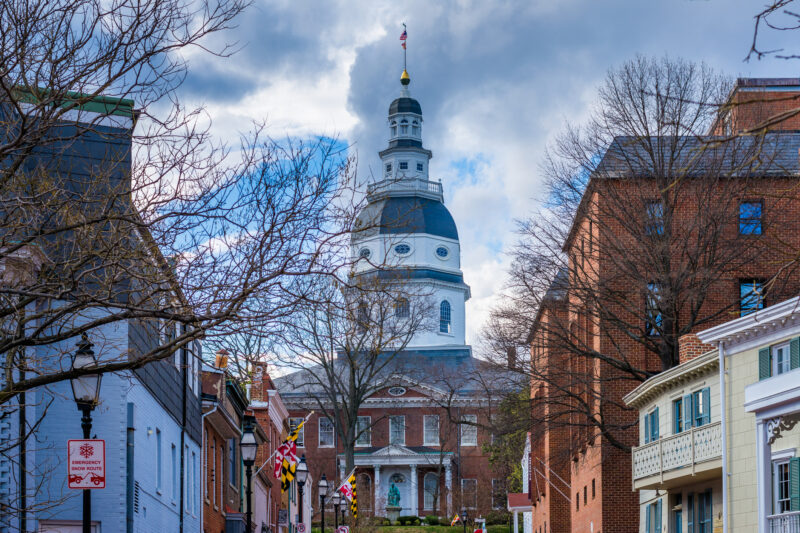
More than 40 proposals introduced as debate grows over “sanctuary-style” policies
Annapolis, MD — Maryland lawmakers have introduced more than 40 immigration-related bills during the 2026 legislative session, with several key proposals advancing that would limit cooperation with federal immigration enforcement.
Among the most significant measures is legislation banning agreements between local agencies and U.S. Immigration and Customs Enforcement (ICE), part of a broader push by Democratic lawmakers to reshape how state and local entities interact with immigration authorities.
Key bills target ICE cooperation and enforcement limits
One of the central proposals, SB245/HB444, would prohibit Maryland agencies from entering into or renewing 287(g) agreements—partnerships that allow local law enforcement to assist in federal immigration enforcement—and require existing agreements to be terminated.
Another major proposal, known as the Community Trust Act (SB791/HB1575), seeks to limit how local correctional facilities cooperate with ICE, including restrictions on detainers and information sharing.
Additional legislation, such as HB309, would restrict immigration enforcement actions in or near courthouses, while data privacy bills like HB711/SB504 aim to prevent state systems from being used to support federal immigration enforcement efforts.
10 Key Immigration Bills Shaping Maryland’s 2026 Debate
- SB245 / HB444 – ICE Agreement Ban
Prohibits state and local agencies from entering or renewing 287(g) agreements and requires termination of existing partnerships. - SB791 / HB1575 – Community Trust Act
Limits cooperation between local jails and ICE, including detainers and data sharing. - SB1 / HB155 – Law Enforcement Face Covering Restrictions
Restricts officers, including federal agents operating locally, from wearing face coverings with limited exceptions. - HB309 – Courthouse Enforcement Limits
Bars immigration enforcement actions in or near courthouses to protect access to legal proceedings. - HB711 / SB504 – Data Privacy Protections
Establishes safeguards to prevent state data systems from being used for immigration enforcement. - HB1036 – Independent Investigations
Requires independent probes into deaths tied to federal immigration enforcement actions. - HB719 – Anti-Sanctuary Policy Bill
A Republican-backed measure that would prohibit sanctuary-style policies and require cooperation with ICE. - In-State Tuition Eligibility Changes
Proposals to reduce residency or tax filing requirements for undocumented students seeking in-state tuition. - Sensitive Location Protections
Multiple bills aimed at limiting immigration enforcement in schools, hospitals, and similar locations. - Expanded Legal and Worker Protections
Measures designed to increase access to legal counsel and strengthen labor protections for undocumented workers.
Key Points
• More than 40 immigration-related bills introduced in Maryland’s 2026 session
• Major proposals focus on limiting ICE cooperation and expanding immigrant protections
• A smaller number of bills seek to increase enforcement or block sanctuary policies
Broader legislative push and political divide
The surge in immigration legislation marks one of the most active sessions in recent years, with proposals spanning enforcement limits, civil rights protections, and public safety measures.
Roughly half of the bills focus on reducing cooperation with federal immigration authorities, while a smaller group—primarily Republican-backed—aims to strengthen enforcement or prevent sanctuary-style policies.
Only a portion of the proposed legislation is expected to advance, with many bills still in committee or facing significant debate in the General Assembly.
What comes next
Lawmakers continue to review and debate the proposals as the session progresses, with several high-impact bills already moving forward.
Further amendments and votes are expected in the coming weeks, which will determine how many of the measures ultimately become law.
Current status: Multiple immigration-related bills are advancing through Maryland’s legislative process, with final outcomes pending as debate continues in the General Assembly.