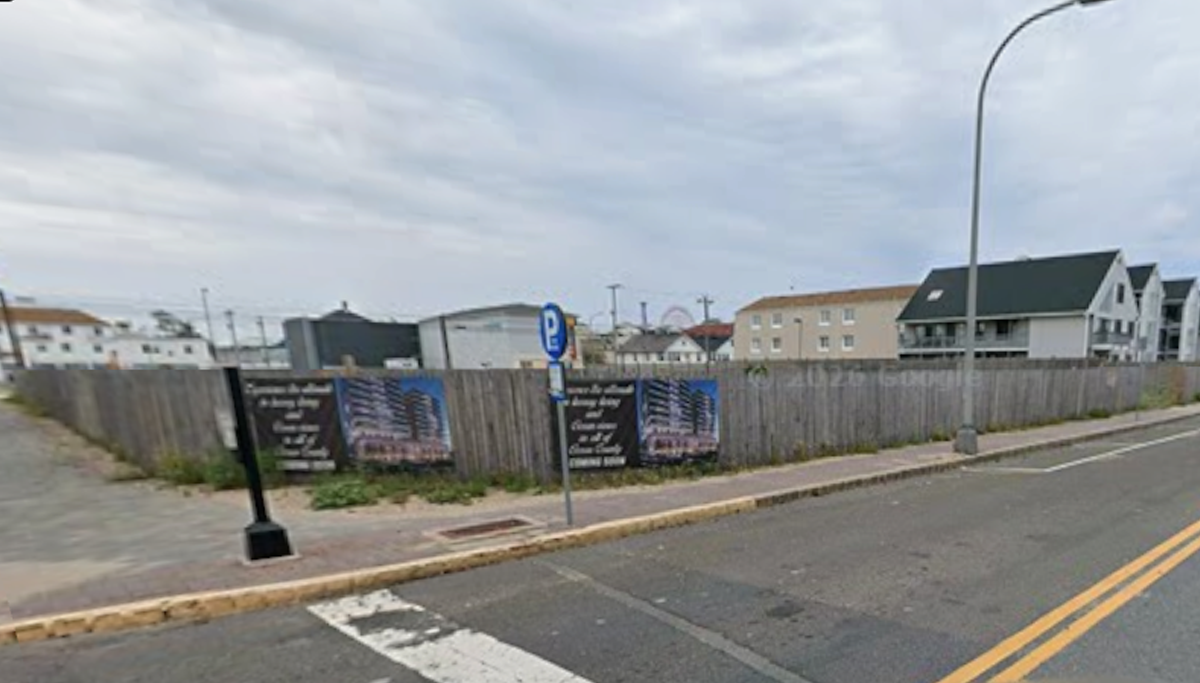
Seaside Heights, NJ – Long before Seaside Heights tried reinvented itself as a family destination, the stretch of Boulevard anchored by clubs like Baby O’s, Yakety Yak Cafe, and the Bamboo Club defined an era of packed dance floors, live music, and a nightlife scene deeply intertwined with the drug culture of the 1980s. Some would say some of the best cocaine at the Jersey Shore could be found on the Seaside Heights boulevard in the 1980s.
Baby O’s wasn’t just another club—it sat at the center of a strip that drew thousands each summer, turning Seaside Heights into one of New Jersey’s most intense nightlife hubs.
A nightclub at the center of the Shore scene
At its peak, Baby O’s operated alongside now-legendary venues like Bamboo, Karma, and Merge, forming a corridor that dominated the Shore’s after-dark economy for decades.
The building itself had a long history even before its nightclub identity, hosting live music acts in the late 1970s and early 1980s, including touring bands—evidence that it was part of the Jersey Shore’s entertainment scene well before the high-energy club era took over.
But by the 1980s, the focus had shifted. The Boulevard became less about concerts and more about dense, high-volume partying—loud music, crowded dance floors, and a cash-heavy environment that drew both tourists and something else: drug distribution.
Key Points
• Baby O’s was a central nightclub in Seaside Heights’ 1980s–2000s party strip
• The Boulevard became a seasonal hub for cocaine and other drug activity
• Enforcement focused on repeated crackdowns rather than one major bust
The cocaine era hits the Jersey Shore
The rise of Baby O’s coincided with a national surge in cocaine use during the late 1970s and 1980s.
Shore towns like Seaside Heights became ideal environments for that economy—large summer crowds, transient visitors, and nightlife that ran late into the night. The Boulevard, packed with clubs, became a seasonal hotspot where drugs circulated alongside alcohol and music.
Clubs like Baby O’s weren’t isolated cases. They were part of a broader ecosystem where cocaine, pills, and later heroin moved through nightlife spaces with relative ease during peak seasons.
Why there’s no single “Baby O’s bust”
Instead, enforcement during that period typically worked differently.
Investigations often involved:
- Undercover officers making purchases inside clubs
- Multi-week or multi-month surveillance operations
- Coordinated arrests targeting dealers, staff, or connected networks
These actions were frequently handled at the county level and reported in fragments, rather than as major headline-grabbing raids as local politics somestimes forced the rampant problem to be shoved under the rug.
A reputation that followed the Boulevard
By the late 1980s, the Boulevard’s identity was firmly established—not just as a party destination, but as an area associated with fights, heavy policing, and drug activity.
That reputation didn’t fade quickly. It carried into the 1990s and even the 2000s, eventually becoming part of the reason local officials pushed for major changes. They went from cocaine binges at Baby O’s to MDMA raves at nearby clubs like Merge.
When Seaside Heights gained national attention during the “Jersey Shore” television era, Baby O’s and nearby clubs were still part of that same high-energy environment—though under increasing scrutiny.
From nightlife epicenter to redevelopment
Today, Baby O’s is gone.
The building, along with much of the old nightclub strip, was demolished as Seaside Heights shifted away from its party-centric identity following Superstorm Sandy and years of public safety concerns.
As of now, the area is in a redevelopment phase, which at this point, seems like it has outlasted the nightclub era itself. Baby O lot sits vacant as political corruption and financial mismanagement plagued the corner.
The cocaine culture of the 1980s didn’t define the Shore entirely, but it shaped the reputation of places like the Boulevard and left a lasting imprint on how the town eventually chose to change. It later became Club X/S/ before shutting down.
What remains today
While the buildings are gone, the legacy of that era still surfaces in local memory and scattered records, reflecting a time when Baby O’s stood at the center of a nightlife scene that was as influential as it was controversial.
 Health and Wellness
 Police Blotter
Barnegat man accused of murdering wife before stabbing himself in chest
Shore News Network Ocean County News
Water Company Shuts Off Service at Ocean County Social Services Building
Shore News Network Five Towns NJ News
Lakewood Man Jailed for Burning Down Home on Delaware Trail
Shore News Network