Trenton, NJ – Moving an estimated 320,000 fans to and from eight World Cup matches at MetLife Stadium will cost more than $62 million, with New Jersey Transit officials outlining a plan that includes emergency upgrades, borrowed buses, and expanded staffing.
In a nutshell, New Jersey continues to claim that it will cost them $150 per rider to get fans to the stadium, a figure that is out of line with other host cities that are offering discounted rates. In Philadelphia, the city has announced free service after the matches.
New Jersey is a completely different situation as Governor Mikie Sherrill continues to battle FIFA over what she says are insurmountable costs that she doesn’t want taxpayers to pay. Instead, she wants FIFA to pay the difference, despite a standing contract with the organization signed by former Democrat Governor Phil Murphy.
The cost breakdown, first reported by The Bergen Record, shows how the agency expects to handle roughly 40,000 spectators per match traveling between New York Penn Station and East Rutherford, one of the busiest transportation demands the region has faced in decades. Even after a $10.7 million federal grant and an additional $3.6 million contribution from the region’s host committee, NJ Transit still projects about $48 million in remaining costs.
Where the money goes
The largest single expense—$20 million—is tied to labor, reflecting the scale of staffing required to operate additional trains, manage crowds, and maintain extended service during the tournament window.
Another $12.74 million is earmarked for accelerated purchases of train components, including wheels, axles, and air conditioning systems for 50 rail cars designated for World Cup shuttle service. While tied to the event timeline, these upgrades address longstanding maintenance needs across NJ Transit’s fleet.
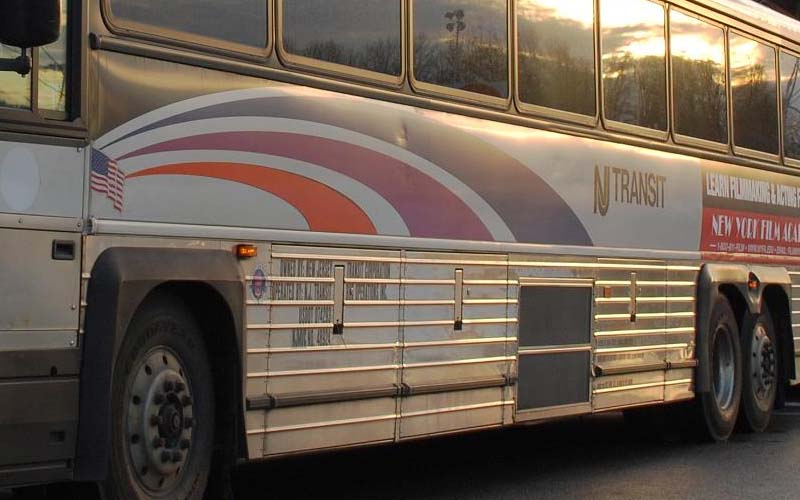
Bus service accounts for a similarly large share. The agency plans to spend $12.69 million to secure 385 buses on loan from private carriers, supplementing its existing fleet to handle surges in ridership that exceed normal capacity.
Safety and security measures add another $10.49 million, reflecting the scale of coordination required for an international event expected to draw global attention and large crowds.
Key Points
• NJ Transit estimates $62 million to move fans for 8 World Cup matches at MetLife Stadium
• Federal and regional grants reduce net cost to $48 million, about $150 per rider
• Major expenses include labor, train upgrades, bus rentals, and security operations
Costs tied to both urgency and long-term gaps
Some of the remaining expenses highlight operational logistics rather than infrastructure. NJ Transit has allocated $3.6 million to cross-honor tickets and offer discounts for riders transferring between systems like PATH, ferries, light rail, and buses—an effort to spread demand across the region’s transit network.
Another $2 million will go toward customer communication, including signage and digital tools to direct visitors unfamiliar with the system.
A smaller but notable $760,000 contract will allow NJ Transit to take over parking lots near Secaucus Junction, a critical transfer hub expected to handle a significant share of World Cup traffic.
Dividing the adjusted $48 million cost by the projected 320,000 match-goers puts the per-rider expense at roughly $150, a figure that underscores the logistical intensity of moving large crowds through a system already operating near capacity.
Federal funding and political backdrop
The funding picture includes a $10 million federal grant provided during the Trump administration to support World Cup-related infrastructure and operations in New Jersey and New York. Combined with the host committee’s contribution, that assistance offsets only a portion of the overall cost burden.
The remaining expenses fall largely on NJ Transit, which has faced years of criticism over aging infrastructure, service delays, and funding gaps. Some of the World Cup-related spending—particularly fleet upgrades—aligns with improvements advocates have argued are overdue.
Pressure test for a strained system
The World Cup matches in East Rutherford are expected to function as a stress test for NJ Transit’s rail and bus networks. Secaucus Junction, the main transfer point for stadium service, will likely see surges far beyond typical peak commuting levels.
The need to borrow hundreds of buses and fast-track equipment upgrades suggests the agency is preparing for demand that current capacity cannot fully absorb on its own.
At the same time, the investments could leave a lasting footprint. Upgraded train components, expanded coordination between transit systems, and improved passenger communication tools may continue to benefit riders long after the final match ends.
What comes next
Planning remains ongoing as NJ Transit refines its operational strategy ahead of the tournament, with final logistics expected to evolve as ridership projections and security requirements are finalized.
The agency has not indicated any reduction in scope, and the current cost estimates reflect a full-scale mobilization to meet anticipated demand. Whether those investments translate into smoother service—or expose deeper system limitations—will become clear once the matches begin.
NJ Transit, World Cup transportation, MetLife Stadium