
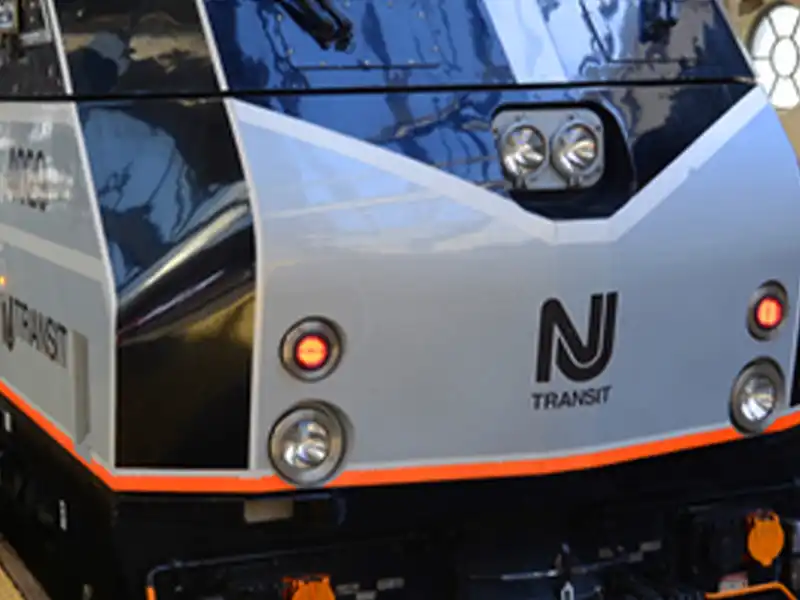
Newark, NJ — Thousands of commuters traveling between New Jersey and New York faced delays of up to an hour Monday morning after ongoing repairs from an Amtrak tunnel fire disrupted NJ Transit service, the latest setback for a transportation network preparing to handle an influx of visitors when the 2026 FIFA World Cup begins in just 10 days.
NJ Transit warned riders that trains traveling into and out of New York Penn Station could experience delays of up to 60 minutes because of continuing repair work tied to overhead wire and infrastructure damage caused by a May 29 fire in one of the Hudson River tunnels. The agency also diverted Midtown Direct service to Hoboken and implemented cross-honoring on buses and PATH trains to help stranded passengers reach Manhattan.
The disruption marked another difficult commute for riders who have endured a string of transportation problems in recent days across the region.
Weekend Problems Follow Friday Tunnel Fire
Monday’s delays stemmed from a fire that broke out Friday inside one of the tunnels carrying Amtrak and NJ Transit trains beneath the Hudson River, one of the busiest rail corridors in the nation.
Although service continued over the weekend, repair work remained underway Monday morning, creating bottlenecks during the first weekday rush since the incident.
The tunnel fire was only the latest transportation disruption affecting New Jersey commuters.
Last week, travelers encountered delays tied to infrastructure issues, rail service interruptions, and recurring congestion on major highways leading into New York City. The latest rail problems arrived as many commuters were already expressing frustration over the reliability of the region’s aging transportation network.
Key Points
• NJ Transit reported delays of up to 60 minutes Monday morning because of repairs from a May 29 Hudson River tunnel fire.
• Midtown Direct trains were diverted to Hoboken, with tickets honored on PATH and buses.
• The disruption comes just 10 days before the 2026 FIFA World Cup begins and weeks before MetLife Stadium hosts global matches.
World Cup Transportation Plans Face Real-World Test
The timing is especially significant because the World Cup is no longer a distant event.
The tournament opens on June 11, and the New York-New Jersey region is expected to welcome hundreds of thousands of visitors over the following weeks. MetLife Stadium in East Rutherford will host eight matches, including the 2026 FIFA World Cup Final on July 19.
Many visitors staying in Manhattan are expected to travel through the same rail system that experienced delays Monday morning.
The Hudson River rail tunnels represent one of the most critical transportation links serving the tournament. Every day, they carry commuters, business travelers, tourists, and airport connections between New Jersey and New York. Any disruption inside the tunnels can quickly cascade across multiple rail lines.
Transportation officials have spent years preparing operational plans for the tournament, but incidents such as Friday’s fire underscore the challenges of relying on infrastructure that dates back more than a century.
Commuters Continue Facing Reliability Concerns
For many riders, Monday’s disruption felt familiar.
Over the past several years, service interruptions tied to signal failures, overhead wire problems, power issues, disabled trains, and infrastructure maintenance have periodically affected travel between New Jersey and Manhattan.
When problems occur inside the Hudson River tunnels, alternatives are limited. PATH trains, buses, ferries, and diverted rail service can absorb some passengers, but capacity remains constrained during peak travel periods.
That reality became evident Monday as NJ Transit urged customers to use alternate routes while repairs continued.
The agency’s decision to divert Midtown Direct service to Hoboken highlighted the importance of backup transportation options that officials expect to rely on heavily during major World Cup events.
Roads Also Struggled With Major Delays
The rail disruption follows a difficult stretch for motorists as well.
Monday’s morning commute saw multiple crashes and tractor-trailer incidents across New Jersey, including a crash on U.S. Route 22 in Newark that closed all westbound lanes, an overturned tractor-trailer on Route 33 in Freehold Township, and a vehicle fire on Interstate 80 in Paterson.
Major delays were also reported at the George Washington Bridge, Lincoln Tunnel, and Holland Tunnel, creating congestion across both rail and highway networks.
The combination of rail disruptions and roadway incidents illustrates how quickly transportation challenges can spread throughout the region when key routes are compromised.
Countdown to Kickoff
With the World Cup opening in less than two weeks, transportation agencies are entering the most critical phase of their preparations.
Officials have repeatedly emphasized coordination among NJ Transit, Amtrak, PATH, the Port Authority of New York and New Jersey, local transit providers, and emergency management agencies. The goal is to ensure visitors can move efficiently between airports, hotels, New York City attractions, and match venues.
Still, Monday’s delays serve as a reminder that even as operational plans near completion, the region remains dependent on infrastructure vulnerable to unexpected failures.
As crews continue repairing damage from Friday’s tunnel fire, commuters—and soon World Cup visitors—will be watching closely to see whether the transportation network can avoid further disruptions during one of the busiest and most visible periods in its history.