


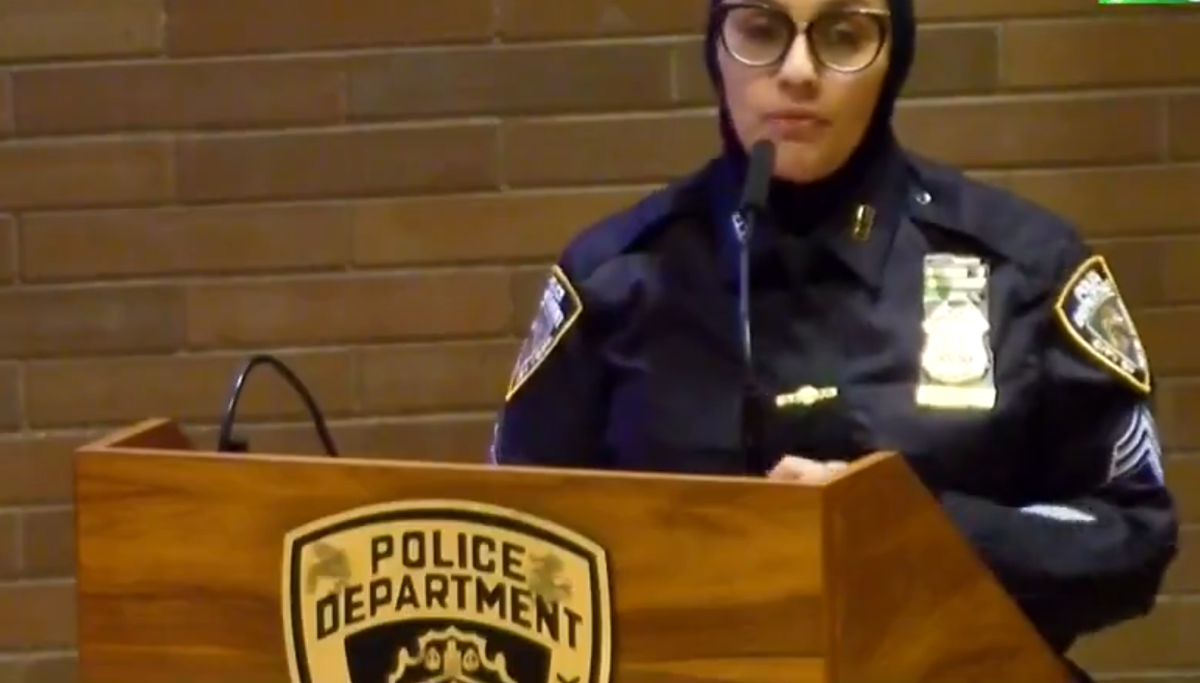
New York, NY — A resurfaced video circulating Monday shows an unidentified NYPD officer stating the department hopes to see “another 100,000 ladies wearing hijabs,” a comment that has reignited discussion around religious inclusion, recruitment messaging, and past controversies within the department. The clip, widely shared across social media this week, does not appear to be recent, but its reemergence has drawn fresh scrutiny to how the NYPD communicates diversity efforts.
In the video, the officer says the department has “1,200 Muslim officers” and “10 in hijab,” before expressing optimism about significantly increasing that number. The context of the remark—such as when or where it was made—remains unclear, and the officer has not been publicly identified.
Policy shift and the path to hijab inclusion
The NYPD formally allows religious head coverings, including hijabs, as part of its uniform policy, a change that followed years of advocacy and legal pressure. A key figure in that shift is Sergeant Aml Elsokary, an 18-year veteran recognized as the first NYPD sergeant to wear a hijab on duty.
Elsokary’s role marked a turning point in the department’s approach to religious expression. Her advocacy contributed to policy changes that now permit Muslim women to serve while wearing approved hijabs, aligning the NYPD with broader workplace accommodation standards.
The NYPD Muslim Officers Society has since highlighted officers who balance active duty with their religious practices, often using events like World Hijab Day to raise awareness about representation within law enforcement.
Recirculated comment fuels mixed reactions
The resurfaced video has prompted criticism online, with some users questioning the tone and scale of the officer’s remark, particularly the reference to “100,000” hijab-wearing officers—far exceeding the NYPD’s total uniformed workforce.
Others have defended the statement as aspirational or symbolic, suggesting it reflects a broader goal of inclusivity rather than a literal target. Without additional context, the intent behind the comment remains open to interpretation.
—
Key Points
• A previously recorded NYPD video resurfaced Monday showing an officer discussing hijab-wearing recruits
• The officer referenced 1,200 Muslim officers and expressed hope for “100,000” women in hijabs
• NYPD policy allows religious head coverings following advocacy led by Sgt. Aml Elsokary
—
Legal challenges continue to shape policy
Despite formal policy changes, tensions around religious accommodations have persisted. In 2024, the New York chapter of the Council on American-Islamic Relations (CAIR-NY) reported incidents in which Muslim women were allegedly forced to remove their hijabs during police processing.
Those claims led to legal action and, ultimately, a significant policy shift. The NYPD agreed to an $18 million settlement in 2024, ending the practice of requiring individuals to remove religious head coverings for mugshots. The agreement marked one of the largest settlements tied to religious rights in police custody procedures.
Advocates said the settlement underscored ongoing gaps between official policy and on-the-ground enforcement, even as the department promotes diversity in its ranks.
Representation vs. reality
The renewed attention highlights a broader tension within the NYPD’s diversity narrative—balancing recruitment goals with consistent application of religious protections.
While the department has made visible strides in representation, including officers like Elsokary, critics argue that isolated incidents and lawsuits continue to undermine trust among Muslim communities.
Supporters of the policy changes point to measurable progress, including increased visibility of Muslim officers and institutional recognition of religious practices. However, the resurfaced video demonstrates how messaging—especially when amplified online—can shape public perception regardless of intent or timing.
As of Monday, the NYPD has not issued a public statement addressing the resurfaced video or confirming details about when it was recorded. The identity of the officer in the clip also remains unverified.
The department’s current policy continues to permit religious head coverings, and no new changes tied to the video have been announced.