
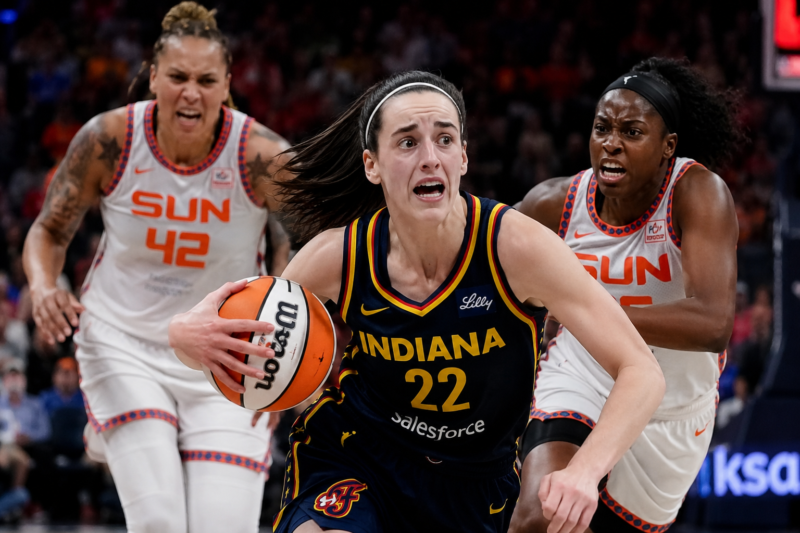
Caitlin Clark helped usher in record television audiences, sold-out arenas, and unprecedented financial growth. Whether the league can sustain that momentum may depend on whether basketball once again becomes the primary story.
The WNBA entered a new era when Caitlin Clark arrived. It has since become the house that Clark built, and saved. It’s a league that is losing money each year, and is subsidized by the NBA to keep the arena lights on in most cities. That is, until Caitlin Clark and the Indiana Fever arrive and sell out arenas nationwide.
Television ratings surged, attendance reached record levels, merchandise sales exploded, and corporate investment accelerated. Clark’s games routinely became the league’s most-watched broadcasts, helping fuel expansion, new media rights agreements, and increased player salaries.
Few athletes in league history have altered the business of women’s basketball as quickly.
Yet instead of spending the past two seasons celebrating that growth, much of the conversation has centered on hard fouls, officiating controversies, player rivalries, and social media debates over race, politics, and culture.
The physical play directed at Clark has become one of the league’s defining storylines. Several incidents have resulted in league reviews, flagrant foul upgrades, and suspensions, while others have sparked criticism that officials have not consistently protected one of the sport’s biggest stars.
Opposing teams have acknowledged that physical defense is part of their strategy against Clark, who has already established herself as one of the league’s premier offensive players. Whether the officiating has kept pace with that reality remains a frequent topic of debate among fans and analysts.
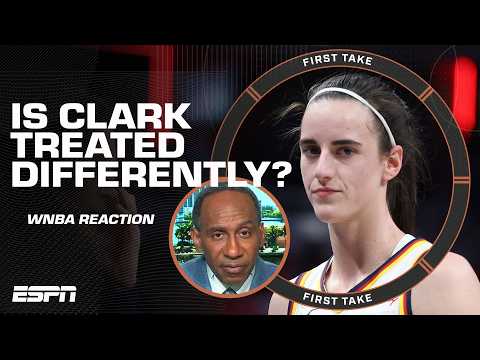
Outside the court, every confrontation involving Clark has generated broader discussions about race, media coverage, and league culture. Those conversations have often overshadowed the basketball itself.
That’s where the WNBA faces its greatest challenge.
Professional sports leagues are ultimately judged by their product on the floor. Fans tune in for competition, star players, and memorable moments. While social issues inevitably become part of sports, they can also eclipse the game if league leadership fails to keep the focus on competition.
Clark brought millions of new viewers to the WNBA—many of whom had never watched a game before. Those fans arrived because of basketball.
Gainbridge Fieldhouse has a capacity of over 17,000. While the Fever have historically sold out 100% of their season ticket inventory. Fever away games are considered some of the hottest tickets in the league, with some opponents moving their Fever matchups to larger arenas to accommodate the intense demand.
Years from now, this period may be remembered as either the beginning of the WNBA’s transformation into a lasting mainstream league or as a missed opportunity to fully capitalize on the arrival of one of the most influential players in its history.
Recent Financial Milestones Before and After the Clark Era
The league experienced unprecedented financial growth, transitioning from historical deficits into profitability and triggering revenue sharing with players.
- Historical (1997–2023): Cumulative losses with no single year of profit. The league was heavily subsidized by the NBA to sustain operations.
- Rebound (2024): Surging viewership and ticket sales led to a record-setting year, though the league was still roughly $40 million to $50 million in the red overall.
- Profitability (2025): The league officially triggered revenue sharing, generating enough revenue to distribute roughly $8 million directly to players. This marked the first time the WNBA recorded a substantial operating profit, estimated at $40 million to $80 million over the two-year span.
- Projected (2026 and beyond): The league’s financials are expected to permanently stabilize with the start of an 11-year, $2.2 billion media rights deal (averaging $200 million annually) with ESPN, NBCUniversal, and Amazon.
The league’s long-term success won’t depend on winning online arguments. It will depend on protecting its stars, enforcing consistent rules, and making the quality of play—not controversy—the reason people keep watching.
Main photo: Satirical creation – AI generated image.