
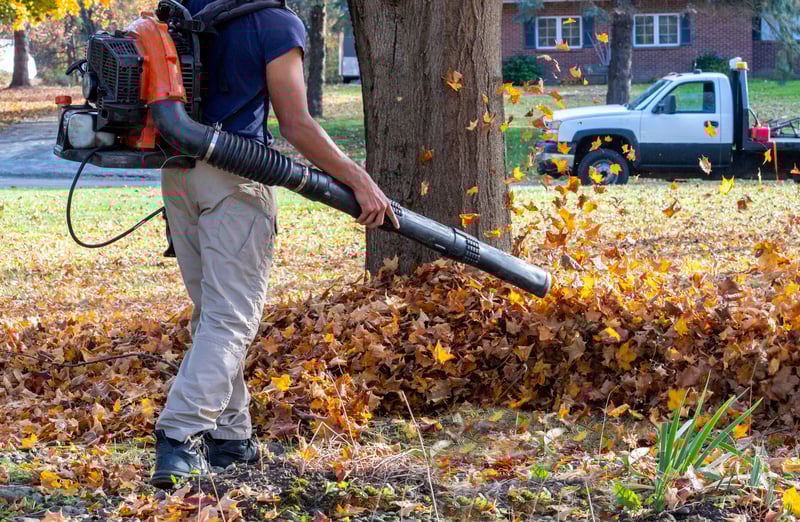
RICHMOND, VA – A new proposal before the Virginia General Assembly would give local governments the power to ban or regulate gas-powered leaf blowers, marking a potential shift in how communities across the Commonwealth handle air and noise pollution from small-engine lawn equipment.
Filed as House Bill 881, the measure would amend the state code to allow any locality with a population density of at least 2,500 people per square mile to prohibit or restrict the use of gas-powered leaf blowers within its jurisdiction. Local governments could also impose civil penalties for violations and use collected fines to help residents and businesses purchase electric or battery-powered alternatives.
The bill requires that any ordinance enacted under this authority take effect no sooner than 12 months after passage, allowing time for public awareness and transition. The legislation would not mandate a statewide ban, but rather enable individual localities — such as Arlington, Alexandria, or parts of Northern Virginia — to adopt regulations tailored to their environmental goals and community standards.
Supporters of the proposal cite increasing evidence that gas-powered leaf blowers contribute to air pollution, greenhouse gas emissions, and high noise levels in densely populated neighborhoods. Studies have shown that small gasoline engines used in landscaping can emit large amounts of carbon monoxide, hydrocarbons, and particulate matter relative to their size. Environmental advocates argue that allowing local control would let cities take action where these machines have the most significant impact.
Opponents, however, warn that the measure could create a patchwork of differing local rules, complicating compliance for landscapers and small businesses operating across multiple jurisdictions. Industry representatives say the technology for electric blowers is improving but still lacks the runtime and power needed for commercial use, potentially raising costs for contractors and customers alike.
If passed, the law would follow similar actions taken in several other states and cities nationwide, where concerns over emissions and noise have led to partial or full bans on gas-powered outdoor equipment. Localities would have discretion to decide the level of restriction — from limiting hours of operation to implementing complete bans — as long as enforcement does not begin until one year after enactment.
The proposed legislation was referred to the House Committee on Counties, Cities and Towns for consideration. Debate is expected to center on the balance between environmental priorities, economic impact, and the authority of local governments to regulate equipment use.
Key points:
- The bill would allow cities and counties with population densities above 2,500 per square mile to ban or regulate gas-powered leaf blowers.
- Localities could impose civil penalties, using collected funds to assist residents and businesses in buying electric alternatives.
- Any ordinance would take effect no earlier than 12 months after adoption to give time for transition and compliance.