
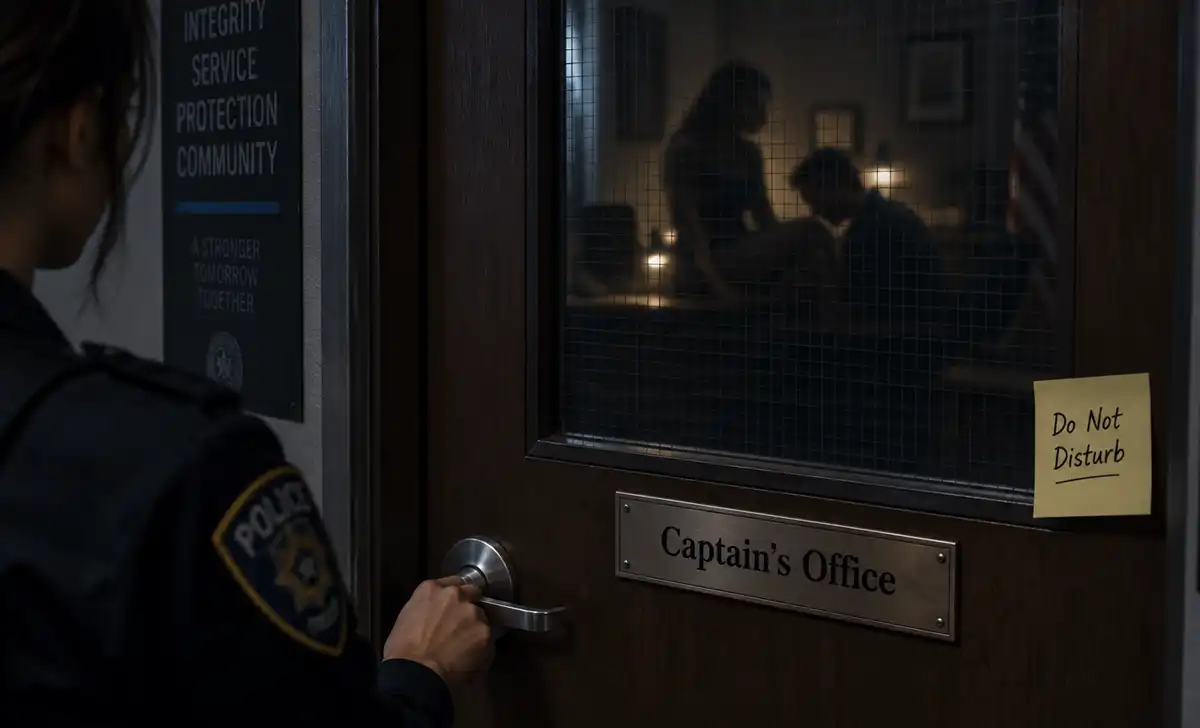
Assembly Bill A5480 would create civil penalties of up to $10,000 for sexual activity inside state, county and municipal buildings, school facilities, courtrooms and other government-owned or leased property.
TRENTON, NJ — Sexual activity inside a New Jersey town hall, government office, courthouse or public school building could carry thousands of dollars in fines under a bill introduced this week in Trenton. Besides being wrong and something that should never happen, it happens more than the public would like to know. It would also add another layer of criminality for teachers who abuse students, which has become more commonplace in the state in recent years.
Assembly Bill A5480, introduced Sept. 14 by Assemblywoman Annette Quijano, would create a specific statewide prohibition on sexual activity inside government facilities. A first violation would carry a civil penalty of between $1,000 and $5,000, while subsequent offenses could result in fines of up to $10,000.
We’re not paying our public workers to have sex in government buildings, but they are.
That means no more quickies for governors at public rest areas, no more sex on the police captain’s desk, no more sexual hazing at the fire station, and no more off-hours teachers’ lounge hanky panky.
The measure applies to anyone who engages in covered sexual activity inside a qualifying facility, not only government workers or elected officials. It does not appear to carve out an exception for victims of public officials who are sexually assaulted by members of government agencies.
Municipal buildings are explicitly covered
The bill leaves little question about whether local government buildings would be included.
A “government facility” is defined to include any state, county or municipal government building or office, legislative office, courtroom, Board of Education facility or other building or facility owned or leased by a government entity.
That would include municipal buildings throughout New Jersey, along with county offices, public school facilities and state government workplaces.
Government employees and elected officials could face additional consequences beyond the fine. Their cases could be referred to the State Ethics Commission, Joint Legislative Committee on Ethical Standards, Local Finance Board or an applicable local ethics board.
Bill covers more than intercourse
A5480 uses a broad definition of sexual activity.
The bill covers sexual contact, sexual penetration and lewdness. Its definition of sexual penetration specifically includes intercourse, cunnilingus, fellatio and anal intercourse.
Sexual contact includes intentional touching of another person’s intimate areas for sexual arousal or gratification, including through clothing.
The proposal therefore reaches considerably further than prohibiting intercourse inside a government workplace.
New Jersey has seen misconduct allegations inside government offices before
Sexual misconduct inside New Jersey government workplaces has surfaced repeatedly in litigation and disciplinary proceedings over the years.
In one case involving East Orange City Hall, three municipal employees alleged they were sexually harassed by a supervisor while working inside the building. According to the New Jersey Supreme Court’s decision in Griffin v. City of East Orange, one employee alleged that the supervisor closed his office door, grabbed her face and kissed her during a 2009 encounter.
An older Stafford Township case also documented allegations involving conduct inside a municipal building. In Vassallo v. Bell, testimony described a township employee entering a female municipal employee’s office and kissing her on the ear. The case itself concerned later libel claims stemming from the controversy.
Those cases involved allegations of unwanted conduct and employment disputes, rather than the kind of consensual workplace sexual activity that A5480 would also reach.
In Toms River and Island Heights, a former police officer and volunteer fire chief was arrested for sexual abuse and hazing of male firefighter subordinates at the Silverton Volunteer Fire Company. In Jackson Township, now police Chief Mary Nelson was shocked to find one of her subordinates engaging in a sex act on her desk with a town hall secretary. That officer was later fired and the secretary promoted to the business administrator’s office.
Then, there’s former New Jersey Governor Jim McGreevey. You didn’t think anyone would forget that one, did you?
McGreevey described encounter at Parkway rest area

Former Gov. Jim McGreevey wrote publicly about going to a Garden State Parkway rest area as a young man while concealing his homosexuality from the public. At the time, it was still not cool to come out of the closet, so McGreevey used public restrooms.
In a 2007 essay for The Washington Post, McGreevey described pulling into a Parkway rest stop, flashing his headlights as a signal and waiting before a state trooper approached his vehicle and told him to leave.
The episode illustrates the type of government-owned or controlled location that could raise questions under the broad language of A5480. The bill does not specifically mention highway rest areas owned by the NJTPA, and whether a particular location would qualify would depend on its ownership and whether it falls within the legislation’s definition of a government facility.
Proposed law would also cover consensual encounters
The major change proposed by A5480 is that the government would not necessarily have to establish harassment, coercion or another criminal offense.
Consensual sexual activity could itself generate a civil penalty when it takes place inside a covered government facility.
The bill also states that its penalties would not prevent prosecutors from bringing criminal charges when the underlying conduct separately violates New Jersey law. That distinction means an incident could result only in the new civil penalty, or could carry employment, ethics or criminal consequences depending on what occurred.
Sponsor cites public confidence and workplace safety
Quijano’s legislation states that sexual conduct in taxpayer-funded government facilities can undermine public confidence and workplace safety and that public servants should be held to high ethical standards.
The measure remains proposed legislation and has not become law.
If approved by the Legislature and signed by the governor, it would take effect 90 days after enactment.
For municipal governments, the language is particularly direct: town halls, municipal offices and other locally owned or leased facilities would be covered by the prohibition.
A New Jersey bill would impose fines of up to $10,000 for sexual activity inside town halls, schools, courtrooms and other government-owned facilities.