
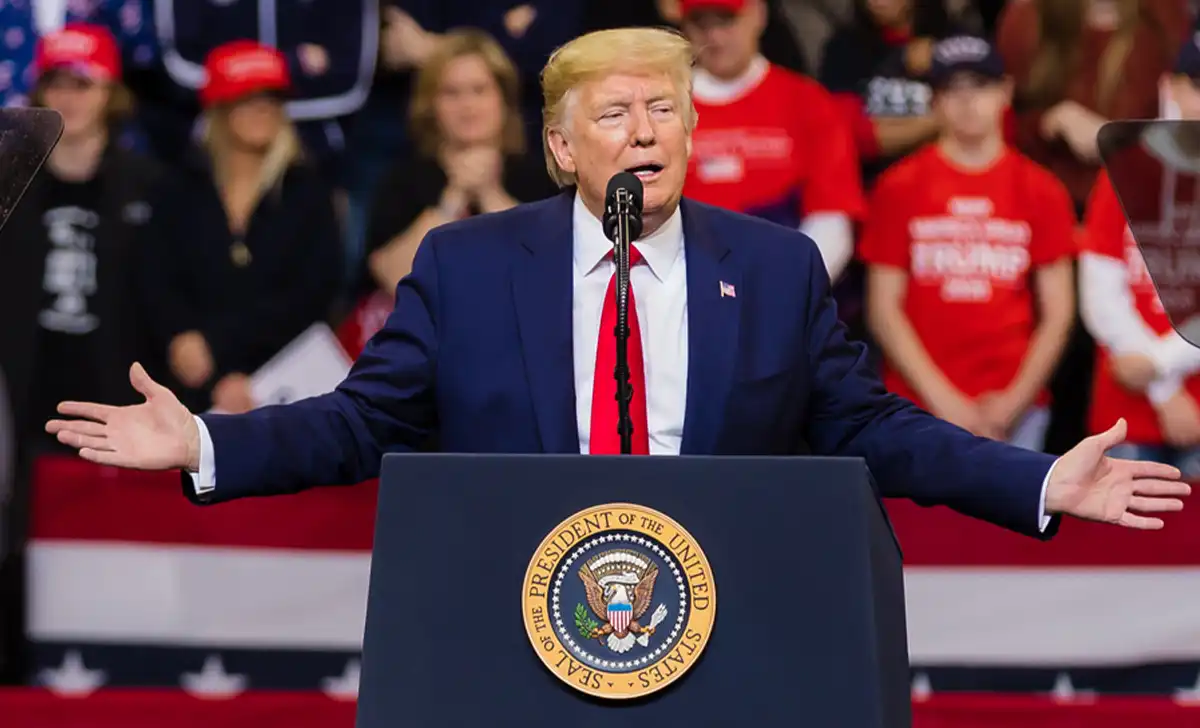
Roughly 45 to 46 challenges were filed or joined under Gov. Phil Murphy and Attorney General Matt Platkin, while about 29 more have followed since Gov. Mikie Sherrill took office with Jennifer Davenport as attorney general.
TRENTON, NJ — New Jersey’s legal battles with the Trump administration have now reached roughly 75 lawsuits since President Donald Trump returned to the White House, spanning immigration, federal funding, elections, tariffs, health care, environmental regulations and major infrastructure projects.
The litigation began under former Gov. Phil Murphy and then-Attorney General Matt Platkin and has continued at a similar pace under Gov. Mikie Sherrill and Attorney General Jennifer Davenport.
A review of public filings and contemporaneous lawsuit counts puts the Murphy-Platkin total at approximately 45 to 46 cases through Jan. 20, when Sherrill took office. About 29 additional challenges have been filed or joined under Sherrill and Davenport through mid-September.
The exact total varies slightly depending on how amended complaints, related actions and the transition between attorneys general are counted.
Murphy and Platkin filed dozens before leaving office
By the end of the Murphy administration, New Jersey had become a frequent participant in multistate litigation challenging Trump administration actions.
Rutgers reported immediately before Platkin’s departure that New Jersey had joined other attorneys general in suing the administration 45 times.
A subsequent February tally by New Jersey Monitor reported that New Jersey had filed 49 Trump-related challenges and that three had been filed after Sherrill took office, suggesting 46 originated during the Murphy-Platkin period.
Those cases challenged federal funding freezes, changes to federal programs, environmental policies, immigration actions and efforts to alter birthright citizenship, among other issues.
Sherrill and Davenport continued the litigation strategy
The change in governors did not produce a major retreat from that approach.
By April 20, NJ Spotlight News counted 57 New Jersey lawsuits against the Trump administration since the beginning of Trump’s second term.
The number has continued climbing.
New Jersey has since challenged administration policies involving health insurance, federal law-enforcement grants, environmental regulations, voting rules, driver information, student loans, family-planning funds and immigration benefits.
The Attorney General’s Office also maintains a running collection of federal challenges under its “Protecting NJ from Attacks out of DC” litigation page.
By mid-September, the overall total stood at approximately 75 cases, with about 29 filed or joined since Sherrill became governor.
Trump administration has taken New Jersey to court, too
The litigation has not been one-sided.
The U.S. Department of Justice has filed its own lawsuits challenging several New Jersey policies.
In February, DOJ sued New Jersey and Sherrill over Executive Order 12, which limits federal immigration officers’ access to certain nonpublic areas of state property and restricts the use of state facilities as staging areas for civil immigration enforcement.
Attorney General Pamela Bondi said at the time that New Jersey could not interfere with federal immigration operations. The administration’s position was laid out in the Justice Department’s February complaint announcement.
The federal government suffered a setback in that case Sept. 4 when a judge dismissed the lawsuit challenging Sherrill’s executive order.
Davenport called the dismissal confirmation that the state could control access to its own nonpublic property.
Federal government challenged New Jersey’s mask law
The Justice Department returned to court in April over New Jersey’s Law Enforcement Officer Protection Act.
That state law generally requires law-enforcement officers, including federal agents operating in New Jersey, to keep their faces visible and identify themselves during public enforcement activity, subject to specified exceptions.
The Justice Department’s lawsuit argues that New Jersey cannot regulate the manner in which federal officers perform their duties.
Federal officials have also argued that forcing agents to uncover their faces can increase the risks of harassment, doxing and threats against officers and their families.
New Jersey has defended the law as an identification and accountability measure.
That litigation remains part of the larger federal-state fight over immigration enforcement.
Trump administration also targeted immigrant tuition benefits
The Justice Department filed another case April 30 challenging New Jersey laws allowing certain immigrants without lawful status to qualify for in-state college tuition and state financial assistance.
Federal attorneys argue the state programs conflict with federal law because comparable benefits are not automatically available to U.S. citizens living outside New Jersey.
DOJ said the New Jersey case was the ninth in a broader series of federal lawsuits challenging similar state tuition policies.
The administration’s position is detailed in its complaint challenging New Jersey’s tuition and financial-aid laws.
New Jersey has secured several major rulings
A number of New Jersey’s challenges have produced favorable final or interim rulings.
One of the clearest final decisions came in January in litigation over federal electric-vehicle charging money.
The lawsuit had been filed in May 2025 during Platkin’s tenure. After Davenport took office, a federal judge granted summary judgment to New Jersey and other states and ordered restoration of their National Electric Vehicle Infrastructure program funding.
The Attorney General’s Office said the January ruling restored New Jersey’s previously approved funding and invalidated the federal government’s decision to halt the program.
Courts have sided with New Jersey on tariffs and Gateway funding
In May, the U.S. Court of International Trade granted summary judgment to a coalition including New Jersey in litigation over tariffs imposed under Section 122 of the Trade Act.
The court concluded that the challenged tariffs were not authorized under that provision.
New Jersey had joined the case in March under Davenport.
Another major confrontation involved the Gateway rail tunnel between New Jersey and New York.
Sherrill, Davenport, New York Gov. Kathy Hochul and New York Attorney General Letitia James sued after the federal government froze billions of dollars committed to the project.
A federal court issued emergency relief in February, allowing work to continue. In June, the court again ruled against the funding freeze while litigation proceeded.
The June Gateway ruling allowed construction and federal funding to continue.
Federal funding dispute produced another July ruling
New Jersey also led a coalition of states challenging a federal regulation that could have allowed agencies to terminate certain congressionally appropriated grants.
A federal judge ruled in favor of the states in July, finding that the administration had improperly expanded its authority over money Congress had already appropriated.
That case was among several lawsuits centered not primarily on immigration or social policy, but on who controls federal money already authorized by Congress.
AmeriCorps case ended in settlement
Not every case has ended with a judge choosing one side.
The AmeriCorps dispute concluded with a settlement in September.
The lawsuit began during the Platkin era after the administration moved to reduce AmeriCorps funding and staffing.
Under the settlement announced Sept. 11, the administration agreed to restrictions on making similar large-scale cuts without advance notice.
Davenport’s office described the resolution in its AmeriCorps settlement announcement.
Trump administration has also prevailed in important proceedings
New Jersey and other states have not prevailed at every stage.
One significant federal victory came Aug. 24 in litigation challenging Trump’s second elections executive order.
The U.S. Supreme Court granted the administration’s request to stay a lower-court injunction involving portions of that order.
The Supreme Court did not determine that the challenged policies were ultimately lawful. Instead, the Court concluded that the states’ original challenge had been brought before federal agencies had taken the actions needed to implement portions of the order.
The ruling temporarily allowed those provisions to move forward while litigation continued.
That distinction matters because preliminary injunctions, emergency stays, dismissals, settlements and final judgments carry different legal consequences.
Postal Service rule brought another round of litigation
The election dispute changed again when the U.S. Postal Service subsequently adopted a final rule.
New Jersey joined another coalition challenging that rule in August, arguing that the Postal Service had exceeded its authority over mail ballots and state election administration.
A federal court blocked portions of the rule.
The federal government returned to the Supreme Court seeking to lift that injunction, but on Sept. 14 the Court declined to do so.
The sequence produced different outcomes at different stages of closely related litigation, demonstrating why the dozens of cases cannot reliably be reduced to a simple running wins-and-losses tally.
Litigation now touches nearly every part of state government
The lawsuits now stretch far beyond a single policy dispute.
Under Sherrill and Davenport alone, New Jersey has gone to court over immigration enforcement, Gateway funding, tariffs, public benefits, environmental regulations, health insurance, student lending, voting rules, driver information and federal grants for law enforcement and public health.
The Trump administration, meanwhile, has defended those policies through appeals and emergency applications while also filing affirmative lawsuits against New Jersey over immigration enforcement, federal officers, voter information and benefits provided under state law.
That legal confrontation is likely to continue because many of the approximately 75 New Jersey challenges remain unresolved, and several cases in which one side has already obtained a favorable ruling are still moving through appeals.