
World Animal Protection is pressing Six Flags Great Adventure to send its five African elephants to sanctuaries, but former safari workers and Jackson residents are defending the park’s animal-care program and challenging the group’s claims.
JACKSON, NJ — An animal advocacy campaign seeking the removal of elephants from Six Flags Great Adventure is running into resistance from Jackson residents and former park employees who say the organization is not telling the full story about how the animals live behind the scenes.
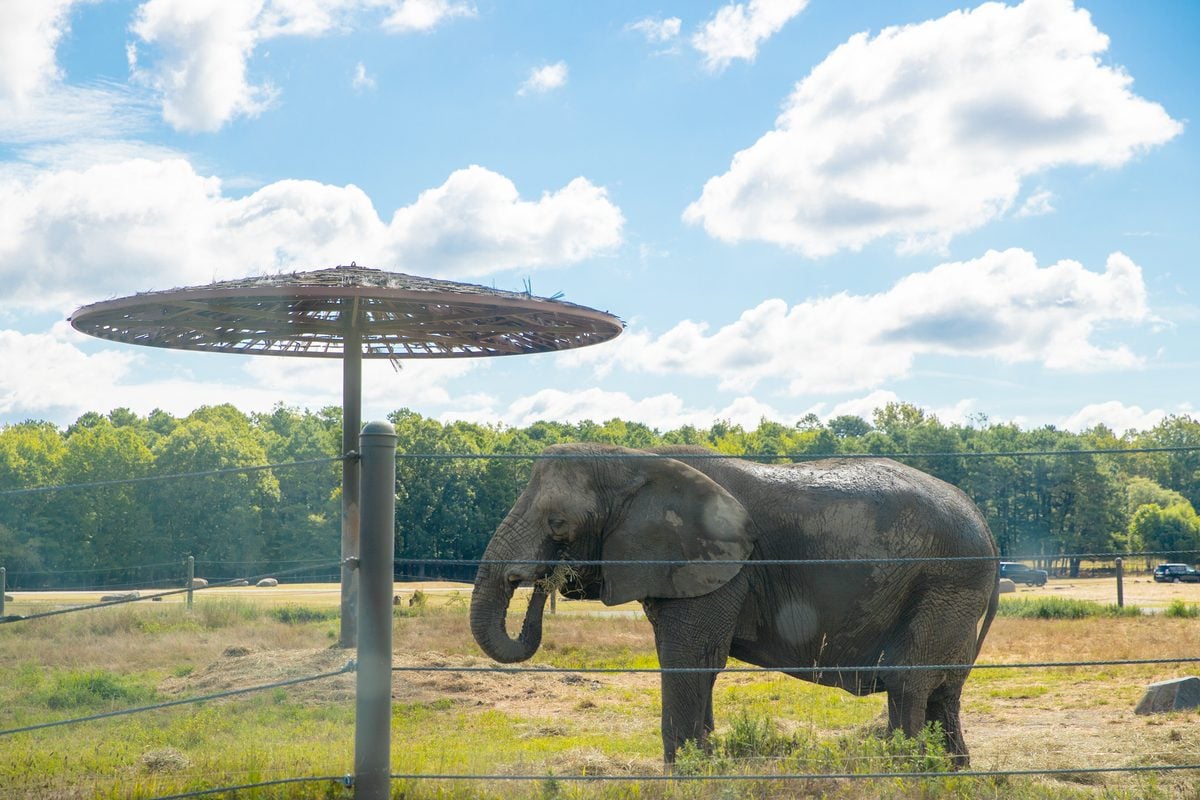
World Animal Protection has intensified its campaign involving Joyce and four other African elephants at the Wild Safari, filing a complaint with the U.S. Department of Agriculture this week alleging the animals lack adequate shade in an outdoor enclosure.
The organization wants Six Flags to close its elephant exhibit and transfer the animals to accredited sanctuaries. Its campaign has also focused on the proximity of roller coasters and safari vehicles to the elephants.
But when a World Animal Protection representative brought that campaign directly into a public Jackson community group this week, residents — including a longtime safari guide who said she worked directly with the elephants — pushed back.
Former safari guide disputes picture of elephant habitat
Nicole Barrantes, who identified herself as working for World Animal Protection, told residents the elephants have limited space and asked Jackson residents to support the organization’s campaign.
Lauren Coleman, who said she spent years working as a safari tour guide and had firsthand experience with the elephants, disputed that characterization.
“Your information is wrong,” Coleman wrote.
Coleman said the area visitors see from the safari route does not represent all of the space available to the elephants.
“They hang out in the public view for a handful of hours a day, and then they head back ‘behind the scenes’ to a huge area that the public never sees,” she wrote.
Coleman said animals are not forced into public view and described additional elephant and rhinoceros areas outside the normal view of guests.
“If the elephants don’t want to come out that day, they don’t,” Coleman wrote. “Their needs come first.”
She also defended the safari’s veterinary staff and animal caretakers.
“The veterinary staff is top-notch, the caretakers are wonderful, and the staff is so compassionate,” Coleman wrote. “I’d never work there if I didn’t believe firmly those animals are getting the best life imaginable.”
Six Flags’ overall Wild Safari covers approximately 350 acres, although the dispute between the organization and residents centers specifically on how much space is routinely available to the elephant herd.
A detailed 2019 investigation into Joyce previously described a secluded exercise area and barn as well as a much larger public elephant area inside the safari. Joyce has lived at Great Adventure since 2010 after spending years moving among other animal facilities.
Federal complaint focuses on shade
World Animal Protection took the dispute to federal regulators on Sept. 17.
The organization alleges that the outdoor elephant area does not provide sufficient protection from the sun and is asking the USDA to investigate whether conditions violate federal Animal Welfare Act regulations.
The federal regulation at issue requires outdoor facilities housing covered animals to provide shelter from sunlight when necessary for their health or comfort. The regulation can be reviewed through the USDA animal-care standards contained in federal regulations. The elephants do have sun, a shaded treeline between their enclosure and the public paths through the safari.
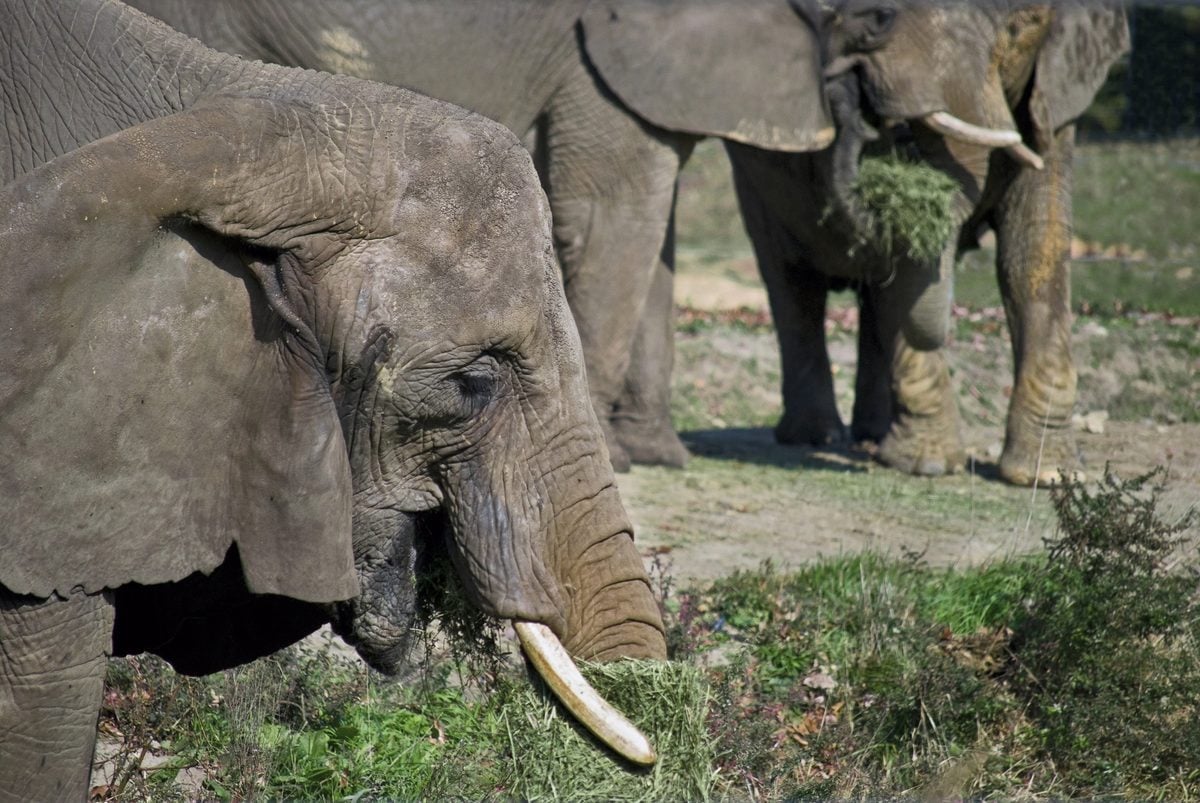
Elephants in their natural African habitats live in hot, dry, arid plains. African elephants cool themselves in several ways, especially important because they live in hot climates and don’t sweat much.
Their biggest cooling tool is their large ears. The ears contain an extensive network of blood vessels close to the skin. By flapping their ears, elephants move air across those vessels, helping heat escape from the blood before it circulates back through the body.
They also cool off by spraying water over themselves with their trunks, bathing, and standing or swimming in water. Afterward, they often throw mud or dust onto their skin. That coating can help retain moisture, reduce direct solar heating, and protect their skin from insects and sun. During the hottest part of the day, elephants may also seek shade and reduce activity. Interestingly, their wrinkled skin helps hold water and mud longer, which can enhance evaporative cooling.
The complaint is an allegation and does not itself establish that Six Flags violated federal law and the USDA has not made a decision regarding the organization’s complaint.
The company has previously defended keeping Joyce at Great Adventure, arguing that she has stability, established relationships with other elephants and familiar caregivers after spending much of her earlier life moving between facilities.
Roller coaster vibrations become another flashpoint
World Animal Protection has also focused on ground vibration.
The organization partnered with researchers associated with the University of Maryland Department of Geology and Terrapin Sensing to measure vibrations around the elephant area during the summer of 2025.
The group’s published campaign materials on Joyce say researchers recorded vibrations associated with nearby roller coasters and vehicle traffic.
Barrantes raised that issue in responding to residents.
“Elephants have specialized nerve endings in their feet that make them more sensitive to ground noises,” she wrote. “We partnered with the University of Maryland to study this and confirmed it affects them.”
World Animal Protection argues those conditions are another reason the elephants should be relocated.
Former workers and residents responding to the campaign argued that the safari’s much larger overall animal-care operation, off-exhibit areas and daily husbandry practices cannot be judged solely from what guests see while passing the elephant exhibit.
Residents tell group to look elsewhere
The discussion quickly expanded beyond Six Flags.
Several Jackson residents urged the organization to direct its attention toward other animal-welfare issues, including overcrowded animal shelters and the annual Kapparot ritual involving chickens that took place this week in parts of Jackson, Lakewood and Brick.
One commenter directly asked how World Animal Protection viewed the practice.
“We definitely don’t support it,” Barrantes responded.
Great Adventure and wildlife have been linked for more than 50 years
The safari has been part of the Great Adventure property since the park opened in 1974 and has long been one of the defining attractions in Jackson Township.
The attraction has evolved from the original drive-through safari into different tour formats over the decades while retaining hundreds of acres dedicated to animals.
Shore News Network recently reported on the safari after a viral tiger rumor in Jackson prompted police to confirm that every Six Flags animal was accounted for.
World Animal Protection says it will continue pressing Six Flags to move all five elephants to sanctuaries.
Residents and former employees defending the safari say the animals already have experienced veterinarians, dedicated keepers, substantial off-exhibit facilities and a home they have known for years.
For Joyce, who has lived at Great Adventure for the past 16 years, that disagreement has now moved beyond animal-welfare organizations and park management and directly into the Jackson community.