Cape May accepted a $500,000 coastal resiliency grant from a trust originally funded by Ørsted as Mayor Zack Mullock challenges longtime offshore-wind opponent Rep. Jeff Van Drew for Congress.
CAPE MAY, NJ — Three years after Danish energy giant Ørsted abandoned its massive Ocean Wind development off the New Jersey coast, money originating from a $15 million fund established by the company has surfaced as an issue in one of South Jersey’s most closely watched congressional races.
Cape May, led by Mayor Zack Mullock, accepted a $500,000 coastal resiliency grant this summer from the Ocean Wind Pro-NJ Grantor Trust. Mullock, a Democrat, is now challenging Republican U.S. Rep. Jeff Van Drew in New Jersey’s 2nd Congressional District this November.
The grant does not come directly from Ørsted today. The Ocean Wind Pro-NJ Grantor Trust describes itself as an independent entity created with a $15 million funding commitment Ørsted made beginning in 2019 to support coastal infrastructure and businesses participating in New Jersey’s developing offshore-wind economy.
Cape May Applied for and Accepted $500,000
The Cape May grant was not unsolicited.
City officials applied to the trust for coastal resiliency funding, and a July 16 award letter informed Mullock, City Manager Paul Dietrich and City Engineer Jim Rutala that the application had been approved.
“Congratulations,” Trust Board Chairman Brian K. Jackson wrote. “The Trustees voted to award your grant request in the amount of $500,000.”
Cape May City Council accepted the money through Resolution No. 290-08-2026, placing the $500,000 grant into the municipal budget for coastal resiliency purposes.
The trust says Ørsted initially committed $15 million over approximately eight years and that the organization operates independently of the developer.
“The Pro-NJ Grantor Trust does not serve as a forum to discuss energy efficiency or contracts awards by the NJ Board of Public Utilities and has no influence over offshore wind projects of any kind,” the trust states.
The trust is administered by Florio Perrucci Steinhardt Cappelli Tipton & Taylor, the law firm co-founded by former New Jersey Democrat Gov. Jim Florio.
Van Drew Made Offshore Wind a Signature Issue
Van Drew has spent years opposing offshore wind development off the Jersey Shore, holding hearings, calling for federal investigations and pressing for moratoriums on additional construction.
When Ørsted canceled Ocean Wind 1 and Ocean Wind 2 on Oct. 31, 2023, Van Drew credited local opposition for helping derail the projects.
“These Green New Deal style wind farms were bad for our economy, our environment, and would have been a complete disaster for hardworking middle-class families in South Jersey,” Van Drew said at the time.
He specifically credited Cape May County and grassroots activists.
“Orsted’s offshore wind projects could not have been stopped without the help of Cape May County, Judge Donohue, all of the fantastic grassroots efforts that sprung up along the way, and most importantly the people of South Jersey,” Van Drew said.
Ørsted gave a different explanation for its decision.
The company said high inflation, rising interest rates, supply-chain problems, vessel delays and deteriorating project economics forced it to abandon Ocean Wind 1 and Ocean Wind 2.
“Macroeconomic factors have changed dramatically over a short period of time,” Ørsted Americas CEO David Hardy said in announcing the cancellation. “As a result, we have no choice but to cease development of Ocean Wind 1 and Ocean Wind 2.”
Ocean Wind Would Have Put Up to 98 Turbines Offshore
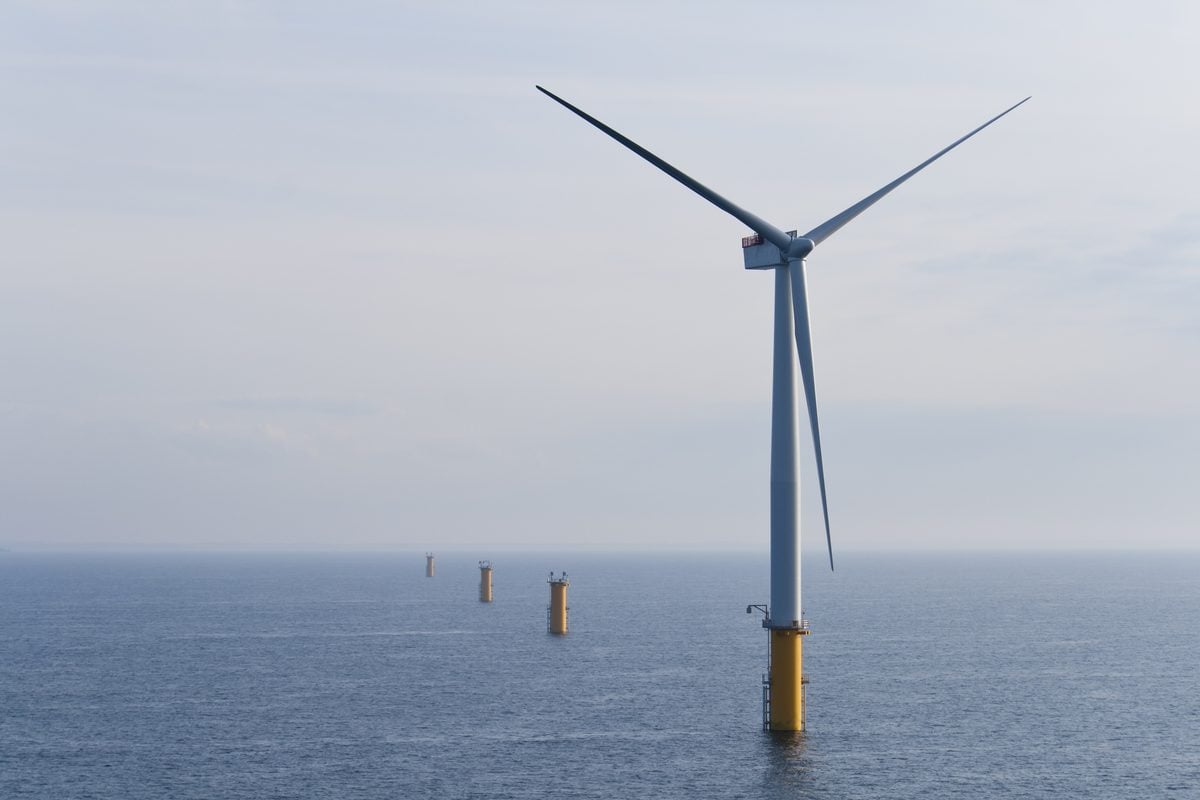
Ocean Wind 1 alone was approved for construction of as many as 98 turbines and three offshore substations roughly 13 nautical miles southeast of Atlantic City. The project was designed to generate approximately 1,100 megawatts.
A second Ørsted project, Ocean Wind 2, received a separate 1,148-megawatt award, bringing the company’s planned New Jersey offshore development to more than 2,200 megawatts.
The federal environmental review acknowledged potential effects on commercial and recreational fishing and required mitigation measures addressing economic losses to fisheries and shoreside businesses.
Van Drew has repeatedly argued that offshore development also poses risks to tourism, navigation, national security and utility customers, arguments he continues to make as New Jersey debates its broader energy strategy.
Grant Becomes an Issue in Congressional Contest
Mullock secured the Democratic nomination in June and is challenging Van Drew, the Republican incumbent, in the November election.