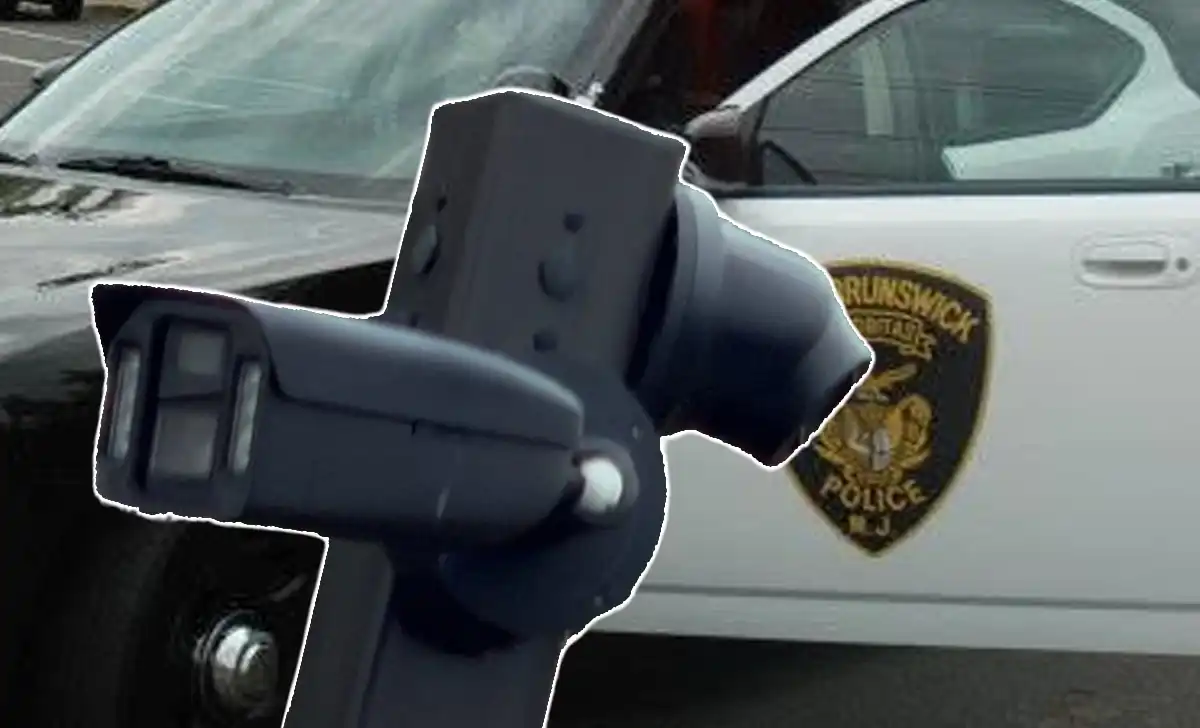
Newly obtained audit records show two New Brunswick police sergeants accounted for nearly four out of every five Flock database searches, while hundreds of queries reached sprawling multi-agency camera networks.
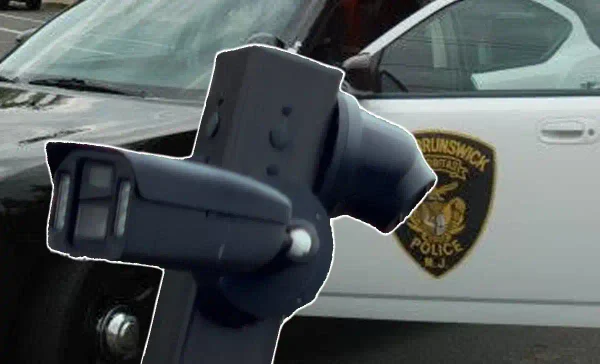
NEW BRUNSWICK, NJ — New Brunswick police ran 903 recorded searches through Flock Safety’s automated license plate reader system during the 2026 records reviewed by Shore News Network, including hundreds of searches capable of reaching 300 or more participating camera networks.
The records, obtained through OPRAmachine.com, provide a rare look inside how one New Jersey police department actually uses a surveillance system that has rapidly expanded across the country — and increasingly drawn scrutiny from civil liberties organizations over privacy, data sharing and police access to the movements of people who are not suspected of crimes.
New Brunswick is a particularly sensitive areas when it comes to surveillance as it is home to a large population of Rutgers University students, visiting families, and tourists.
The department has been actively using the cameras as an investigative tool.
Most searches were tied to recognizable criminal investigations. Robbery was the largest category, accounting for 241 records, followed by 111 involving weapons offenses, guns or shots fired and 95 involving stolen vehicles or motor vehicle theft.
Our audit did not show any evidence of improper use of Flock cameras; however, it relies solely on the officer’s own input in the “reason” field during their searches.
New Brunswick Has Used Flock Since 2021
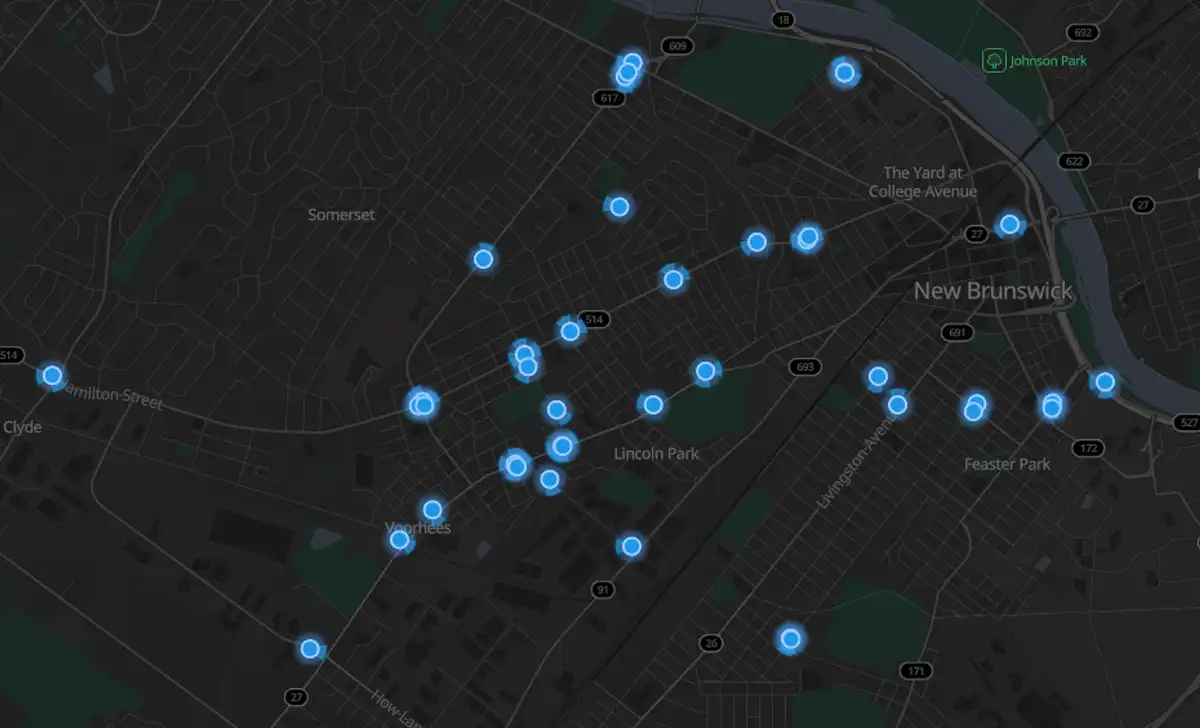
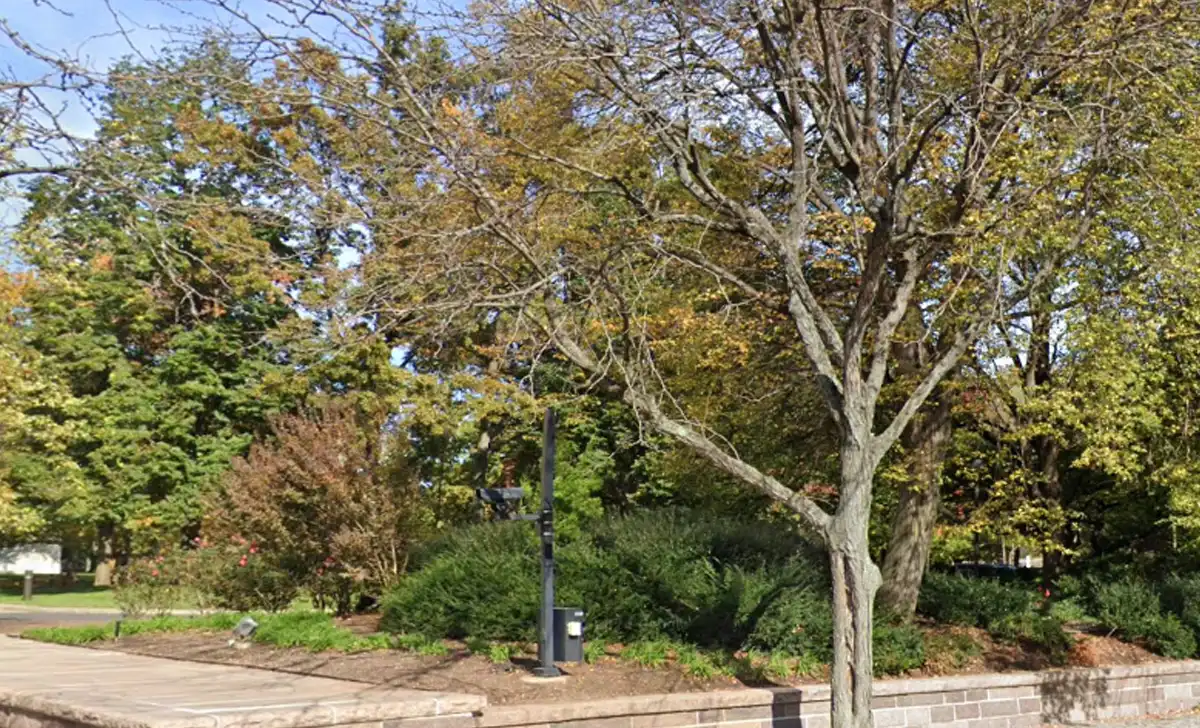
Flock is not new to the city. Under Police Chief Vincent Sabo’s leadership, the city has installed 160 surveillance cameras.
The New Brunswick City Council authorized the police department’s first documented Flock agreement in August 2021, approving a lease for a pole-mounted license plate reader and associated software for crime awareness and prevention.
The city renewed the system in December 2022.
By June 2025, New Brunswick approved another $7,000 Flock contract for proprietary software and hardware maintenance at the recommendation of police Capt. James Hoover.
What began publicly as a pole-mounted reader has become part of a much larger searchable law enforcement ecosystem.
The 2026 audit shows just how broad that access can become.
Robbery Dominates New Brunswick Searches
When similar search descriptions are grouped together, robbery accounted for 241 records, or 26.7% of all activity.
Weapons offenses, including guns and shots-fired investigations, accounted for 111 searches, or 12.3%.
Stolen vehicles and motor vehicle theft generated 95 searches, followed by 79 for destruction, damage or vandalism; 44 involving arson; 39 for larceny or theft; and 37 involving sex offenses.
The most common exact entry was “Robbery – investigation,” appearing 99 times.
The records contain 72 separate exact reason descriptions, including spelling and capitalization variations.
Shore News Network’s review did not find obvious entries describing political activity, immigration enforcement, journalists, romantic disputes, personal curiosity or other plainly non-law-enforcement purposes, as has dominated news headlines in recent years.
The records therefore do not establish that New Brunswick officers were using Flock for personal reasons.
Two Sergeants Accounted for 78% of Activity
Regan and DiMarcello together generated 705 of the 903 audit records.
That does not establish improper use. Investigators assigned to robberies, shootings, stolen vehicles and other major cases would be expected to use investigative databases more frequently than officers in assignments that rarely require those searches.
But the concentration of activity matters because one of the central concerns surrounding automated license plate reader systems is how much surveillance capability can be placed behind an individual police login.
Why Flock Cameras Have Become Controversial
Automated license plate readers have existed for years. What has changed is the scale and interconnection of the databases behind them.
A conventional plate reader can identify a stolen vehicle passing a patrol car or fixed camera. A networked system can allow an investigator to search vehicle observations collected by cameras spread across numerous jurisdictions.
That is what alarms privacy advocates.
The Electronic Frontier Foundation has warned that large ALPR databases can reveal where motorists live, work and travel and potentially expose visits to medical facilities, religious institutions and other sensitive locations.
The ACLU of New Jersey raised similar concerns more than a decade ago and specifically included New Brunswick among 21 police departments questioned about license plate reader use.
“The legitimate needs of public safety and law enforcement do not include tracking the movements of law-abiding citizens who take to the roads of New Jersey,” the ACLU-NJ said.
The criticism is not aimed simply at cameras reading license plates visible on public roads. It centers on how long that information is stored, how easily it can be searched, how many agencies can access it and whether enough oversight exists to prevent misuse.
Officers Elsewhere Have Used Plate Readers for Personal Surveillance
Real-world abuse cases have intensified the debate.
The Institute for Justice has documented cases nationally in which law enforcement officers were accused of using ALPR databases to track romantic partners, former partners or other people for reasons unrelated to legitimate police investigations.
“The fundamental problem with these systems is that they place private information about people’s movements over time in the hands of every officer,” Institute for Justice attorney Michael Soyfer said.
Other cases around the country have involved motorists being stopped or detained after erroneous license plate reader alerts or faulty information associated with a plate.
Those incidents have fueled calls for stronger auditing, tighter access controls and requirements that officers treat ALPR matches as investigative leads rather than proof of criminal activity.
New Jersey Police Say Flock Helps Solve Crimes
Police departments using the technology argue that it has become an important investigative tool.
Edison has moved to dramatically expand its own Flock network, with Police Chief Thomas Bryan publicly defending the technology.
“This is a great crime-fighting tool,” Bryan said. “As soon as a car comes into our township that is stolen, it alerts our patrol officers. We can track them much easier.”
Brick Township police made a similar argument after one of the township’s Flock cameras was cut down.
“A Flock camera does not issue tickets, conduct traffic stops, or determine that someone committed a crime,” Brick police said. “Information obtained from the system is used as an investigative lead and is evaluated by police officers along with other evidence.”
Police agencies say the cameras can help locate stolen vehicles, identify vehicles connected to crimes, find missing people and establish timelines in major investigations.
Flock Fight Has Already Reached New Jersey
The controversy is no longer theoretical in New Jersey.
In Brick, a Flock camera was deliberately cut down this summer and police later charged a township man with criminal mischief.
In Edison, officials approved a major expansion of the township’s Flock network despite opposition from Councilman Richard Brescher.
“I don’t want to be tracked. I don’t want my family tracked,” Brescher said.
Washington Township in Gloucester County has also faced criticism after municipal records showed opioid settlement money was used to purchase Flock technology for the police department.
The ACLU-NJ has cited that spending while criticizing government expansion of AI-powered surveillance systems.
Monthly activity included 55 records in January, 49 in March, 195 in April, 44 in May, 88 in June, 148 in July, 210 in August and 114 in the September records supplied.
August was the busiest month in the dataset.
As Flock Safety expands across New Jersey and the country, the fight is moving beyond whether license plate cameras help police solve crimes. The bigger questions are how much vehicle-location information police should be able to search, how far those searches should reach, who should have access and what safeguards should exist before an officer presses the button.