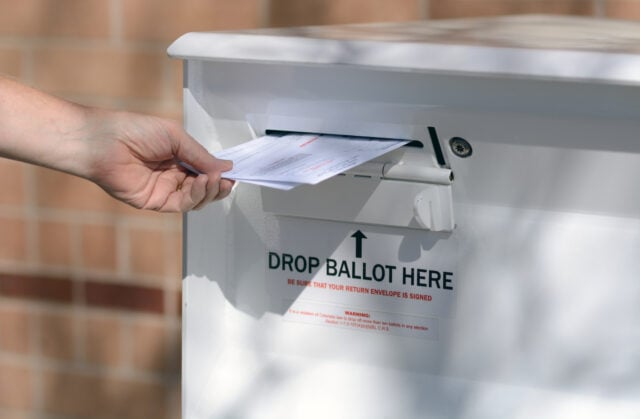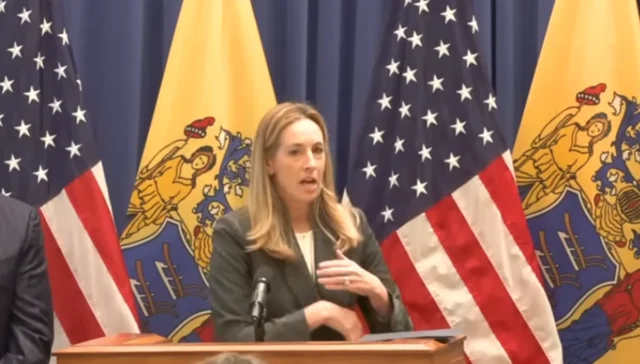
Federal prosecutors say a Jamaican national voted in four presidential elections and a Venezuelan national voted in 2024, while New Jersey’s separate investigation into thousands of improperly registered noncitizens remains unfinished and Gov. Mikie Sherrill continues withholding unredacted voter data from the Justice Department.
TRENTON, NJ — Two more federal prosecutions are putting fresh attention on a problem New Jersey has spent months trying to contain: noncitizens getting onto the voter rolls and, in some cases, casting ballots.
Those votes were cast in Orange and South Amboy.
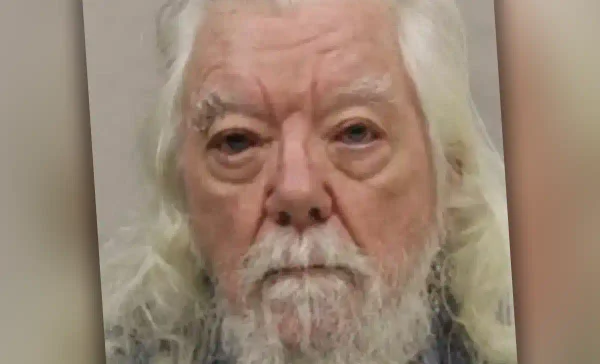
Patrick Terrance Reid, 61, a Jamaican national living in Orange, and Danubis Bernat, 49, a Venezuelan national from South Amboy, were charged Sept. 24 with voting in a federal election while not U.S. citizens and making false statements during the naturalization process.
As Shore News Network previously reported, prosecutors allege Reid voted in the 2012, 2016, 2020 and 2024 presidential elections.
Bernat allegedly voted in the November 2024 general election.
Both defendants are lawful permanent residents, according to federal authorities. They should not be described as undocumented immigrants.
What prosecutors say they did is still serious: each allegedly registered while not a citizen, falsely certified U.S. citizenship on a voter registration application and later denied having registered or voted when applying for naturalization.
Reid Allegedly Voted for More Than a Decade
Federal prosecutors say Reid entered the United States from Jamaica on an immigrant visa and was not a citizen when he registered.
He allegedly voted in person in the 2012 and 2016 presidential elections, then voted by mail in 2020 and 2024.
If the allegations are proven, Reid remained on New Jersey’s voter rolls through four presidential elections despite being legally ineligible to vote in federal races.
Bernat entered the country from Venezuela on a tourist visa and later became a lawful permanent resident. Prosecutors say she falsely claimed citizenship when registering and voted in 2024 before later denying that voting history on her citizenship application.
Both cases were brought through the U.S. Attorney’s Office for the District of New Jersey Election Integrity Task Force.
The charges remain allegations.
These Cases Are Not the Same as New Jersey’s 6,600-Person MVC Failure
The Reid and Bernat prosecutions arrive in the middle of New Jersey’s much larger voter-registration controversy, but there is no public evidence tying either defendant to the Motor Vehicle Commission software failure disclosed by Sherrill in July.
Those are separate matters unless investigators establish otherwise.
The state acknowledged that approximately 6,600 people were improperly transmitted for voter registration between June 2023 and June 2024 even though they had answered “no” when asked whether they were U.S. citizens.
The system nevertheless processed them for registration.
By August, the Sherrill administration said approximately 5,100 registrations had been placed in deleted status and about 1,450 more were being held in rejected status pending county review.
The state also said approximately 340 people who were newly registered because of the error had voted.
Sherrill has said there is no evidence those votes changed the outcome of an election.
Federal Cases Show Another Route Onto the Rolls
The new prosecutions raise a different problem.
The state software error involved people who told the MVC they were not citizens and were nevertheless improperly sent into the voter-registration system.
Federal prosecutors say Reid and Bernat affirmatively did the opposite: they allegedly certified that they were citizens when they were not.
That means fixing the MVC software failure would not necessarily address cases involving someone who knowingly provides false citizenship information.
New Jersey’s registration system relies in part on an applicant’s certification of eligibility.
The Reid allegations are particularly striking because prosecutors say he remained able to vote over a 12-year span.
Federal Prosecutors Have Brought a Series of New Jersey Cases
Reid and Bernat are not isolated federal defendants.
Federal prosecutors have announced a series of New Jersey election-related cases during 2026 involving noncitizens accused of illegally voting, falsely registering or lying about their voting histories while seeking citizenship.
Earlier defendants have included residents of Bergen, Atlantic, Monmouth, Middlesex, Hudson and Union counties.
Shore News Network reported in September on the prosecution of Mercedes Alexandra Cardoso, an Ecuadorian national who prosecutors say registered online and voted in June 2024 despite not being a U.S. citizen.
Attorney General Todd Blanche said during that case that voting is reserved for eligible citizens.
“Election fraud is a serious crime, and it is the duty of the Department of Justice to treat it as such,” Blanche said.
State’s Own Investigation Remains Open
Sherrill announced the MVC registration failure on July 21 and ordered her chief counsel to investigate how it happened.
The administration has released updated registration numbers and procedures for county election officials, but as of early October, the state continues to describe the underlying investigation as ongoing.
No final public investigative report explaining exactly how the failure operated for a year, who knew about it, when officials first became aware of it or why it was not detected sooner has been released.
The state initially blamed a vendor software error.
IDEMIA, the company involved with the MVC system, publicly disputed that characterization, saying its technology transmitted information and that responsibility for determining voter eligibility rested with the state.
Shore News Network reported on that dispute after Sherrill first disclosed the registrations.
Sherrill Refused to Give DOJ Unredacted Voter Records
The Trump administration has separately sought New Jersey’s full voter-registration database, including personally identifying information not contained in the public voter file.
Sherrill refused.
“We are not in the practice of turning this kind of personally identifying data over to the federal government because we have seen them weaponize it,” Sherrill said in July. “They are working to weaponize personal data and they don’t have a reputation for keeping it private either.”
The Justice Department went to federal court seeking the records.
A federal judge dismissed the case in July, ruling the federal government had not established legal authority under the statute it invoked to compel New Jersey to provide the unredacted information.
Shore News Network covered the ruling and the continuing fight over access to the state’s voter data.
The court ruling settled that lawsuit. It did not resolve the broader question of how many ineligible people may have registered or voted through means unrelated to the MVC software problem.
Congress Has Started Asking Questions Too
Republican congressional committees have sought records from New Jersey and IDEMIA over the 6,600 registrations.
Rep. Jeff Van Drew, who chairs a House Judiciary oversight subcommittee, held a September hearing focused on noncitizen voting in New Jersey.
No Sherrill administration official or IDEMIA representative testified at that hearing.
The governor has accused Republicans and the Trump administration of exploiting the MVC failure for political purposes.
“We inherited a problem. We didn’t hide it. We didn’t deny it. We’re investigating it. And we’re going to fix it, the right way,” Sherrill said in July.
The state has corrected thousands of registrations since then.
The federal prosecutions are now raising a harder question that exists outside that software failure: what happens when an ineligible registrant simply claims to be a citizen and gets through?
Reid Case Raises the Question of Detection
If prosecutors prove their allegations, Reid was not caught after one election.
He allegedly voted in four presidential elections stretching from Barack Obama’s 2012 reelection through the 2024 presidential contest.
His alleged voting history apparently surfaced in connection with federal immigration and naturalization scrutiny, not because New Jersey’s election system stopped him at registration or at the polls.
That is where the latest cases move beyond the original MVC controversy.
New Jersey knows roughly how many people were caught in the disclosed software failure.
It does not yet have a publicly released accounting showing how many noncitizens may have entered the voter rolls through false citizenship attestations, how long they remained registered or how many cast ballots before being detected.
For now, federal prosecutors are finding at least some of them one case at a time.