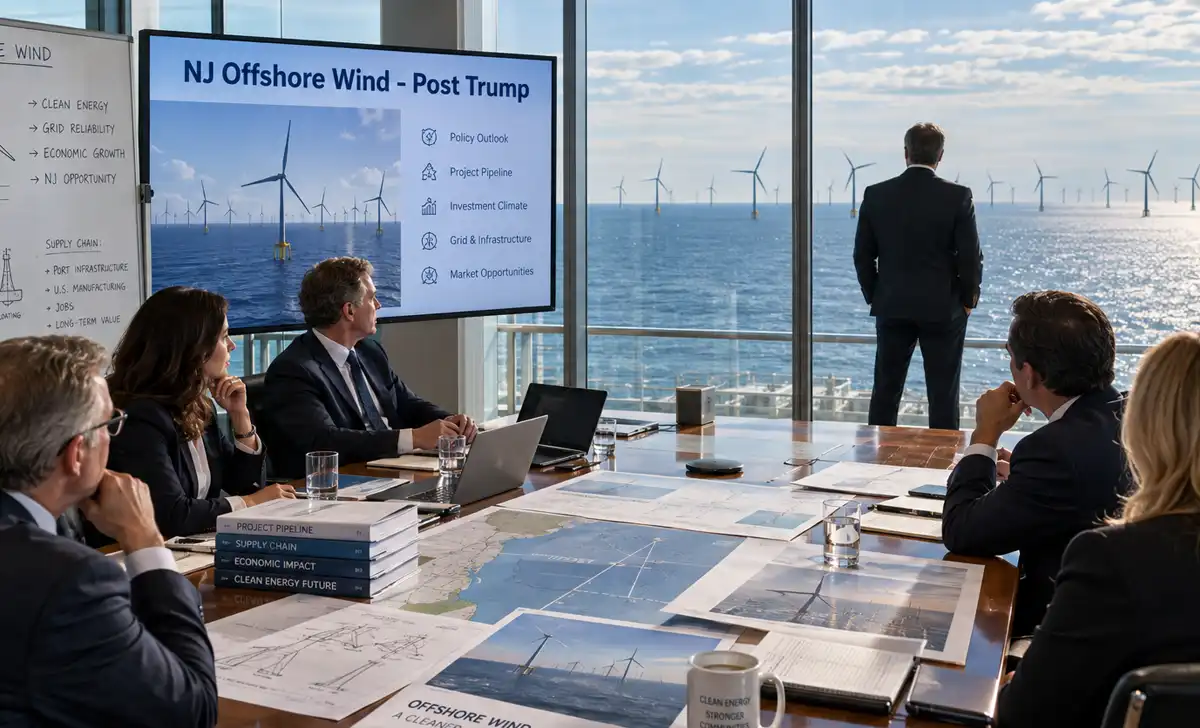
New Jersey’s offshore wind buildout has been gutted by canceled projects, federal hostility and fierce Shore opposition, but the industry has not packed up for good — and a heavily Democratic congressional delegation leaves the door open if Washington changes hands again.
ATLANTIC CITY, NJ — Big wind might be down right now, but do not count them out. Industry watchdogs suggest that the world’s top offshore wind energy CEOs are simply playing the long game right now. They are counting on time and politics. In two years, Donald Trump will be gone. In November, Democrats could re-gain control of the U.S. House of Representatives.
Within two years, Big Wind could benefit from America’s own winds of change and strike hard if a Democrat becomes the next president of the United States and if they party can regain control of the House and Senate by 2029.
For now, the giant offshore wind farms once planned off New Jersey are mostly drawings, permits, canceled contracts, and abandoned timelines — broken dreams smashed by local opposition and President Donald J. Trump.
Ørsted walked away from Ocean Wind. Leading Light collapsed. Attentive Energy lost its federal lease. Atlantic Shores has slowed its work rather than burn cash while President Donald Trump’s administration blocks the federal path the industry needs to move forward.
That does not mean offshore wind is finished in New Jersey. Not by a long shot. It’s coming, and the only thing that can stop it is the people, depending on who they elect to office each November.
The companies behind the industry think in decades. Federal leases, transmission plans, engineering work, port investments and environmental studies can outlast a president. Atlantic Shores, in particular, has chosen to pause parts of its development rather than shut the door entirely.
The calculation is simple enough: Trump will not be president forever, and Republicans can’t hold on forever either. What happens after him may determine whether offshore wind off New Jersey stays buried or comes roaring back.
Trump Changed the Business Almost Overnight
Trump returned to Washington promising to stop offshore wind and quickly followed through. His administration froze new offshore wind leasing and threw existing federal approvals, permits and projects back under review. For developers who need federal agencies to approve almost every major step offshore, the message was clear.
Some companies left. Others began donating heavily to political campaigns of Democrats who support offshore wind.
Atlantic Shorth asked to pause its federal review while it assessed the implications of Trump’s policies for the project. It did not withdraw.
New Jersey’s Wind Pipeline Looks Nothing Like It Did Five Years Ago
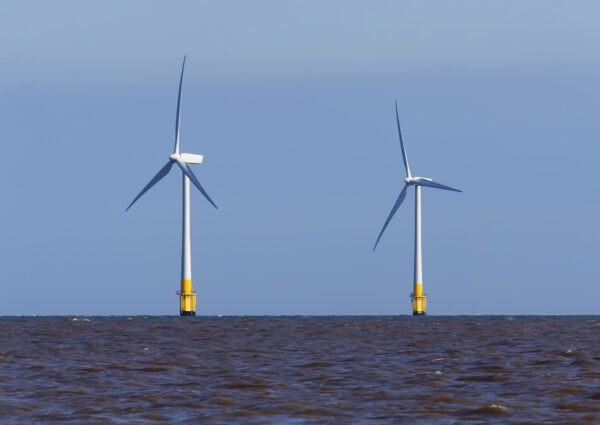
Only a few years ago, Trenton was planning offshore wind on a massive scale. Wind turbines would infect the Jersey Shore’s current pristine view of the Atlantic Ocean from Cape May to Sandy Hook…and beyond.
Ocean Wind 1 was expected to produce roughly 1,100 megawatts off South Jersey. Ocean Wind 2 was supposed to add another 1,148 megawatts.
Ørsted killed both projects in 2023.
Attentive Energy Two later won a New Jersey award for 1,342 megawatts. Its federal lease is now gone.
Leading Light Wind, onlargesthed as a 2,400-massociated with project, also fell apart.
Atlantic Shores remains the biggest surviving name tied to New Jersey waters, but it is nowhere near the construction schedule once envisioned.
The state went from talking about an 11-gigawatt offshore wind industry to having no comparable project moving cleanly toward construction.
Big Wind Has Time
Offshore wind projects are not built on election-cycle schedules. Years can pass between a lease sale and a turbine going into the water. Developers spend enormous sums on surveys, engineering, environmental reviews, transmission planning and financing before construction begins.
That long development cycle cuts both ways. A hostile administration can stop a project. A friendlier administration can restart one.
Trump’s current policies do not bind the next president. A future White House could reopen lease sales, restart federal permitting and restore a regulatory environment that encourages offshore wind rather than blocks it.
Congress could make the economics more attractive as well through tax policy, subsidies and energy legislation.
That is where New Jersey’s congressional delegation becomes important.
New Jersey Sends Far More Democrats Than Republicans to Washington, and that’s bad for the Jersey Shore.
People come to the Jersey Shore for just that, the Jersey Shore. Pristine beaches and an incredible view of the magestic Atlantic Ocean. They don’t come to spend thousands of dollars to go to the beach and stare at windmill farms.
But that’s what New Jersey Democrats want. New Jersey currently has nine Democrats and three Republicans in the U.S. House.
Both U.S. senators, Cory Booker and Andy Kim, are Democrats.
That gives the state an overwhelmingly Democratic federal delegation even while the White House is controlled by Trump.
Reps. Jeff Van Drew and Chris Smith have become two of the most aggressive offshore wind opponents in Congress.
Van Drew spent years fighting Ocean Wind, holding hearings, speaking at rallies and pressing federal officials over fishing, energy costs, national security, navigation and the impact on Shore communities.
His relationship with Trump gave those efforts far more power once Trump returned to office. Van Drew said Trump asked him to help prepare action against offshore wind before taking office.
“I’ve spoken with the president about the wind turbines, and he told me to have my people draw up an executive order,” Van Drew said. “We got it done in forty-eight hours.”
Smith was equally enthusiastic about the incoming administration taking action.
“I’m all for it,” Smith said.
Those two lawmakers now have a White House willing to act on many of the arguments Shore opponents had been making for years. Van Drew is at risk of losing his election to a Cape May mayor who took huge money from the wind industry. That means a lot, not just for Cape May, but the entire Jersey Shore.
Most of New Jersey’s Democrats Are on the Other Side
The rest of the delegation looks very different.
Rep. Frank Pallone has been one of New Jersey’s most consistent supporters of offshore wind and federal renewable-energy policy.
Rep. Donald Norcross tied the industry directly to South Jersey manufacturing and organized labor, backing the Paulsboro monopile operation and the New Jersey Wind Port.
Sens. Booker and Kim have supported efforts to preserve a federal path for offshore wind and broader clean-energy development.
Reps. Rob Menendez and other Democratic members have also pushed back against Trump administration policies that halt offshore wind and other renewable-energy projects.
Not every New Jersey Democrat has made offshore wind a signature issue. Some have much thinner public records on the subject than Pallone or Norcross.
But the numbers are still important, because even though they haven’t said much on the subject, their voting records matter, and it’s presumable that they will vote in line with other more vocal Democrats when push comes to shove in Congress.
If Democrats eventually retake the White House and control Congress, New Jersey would have a large federal delegation generally receptive to rebuilding the policy framework offshore wind companies relied on before Trump returned.
Tom Kean Doesn’t Fit Neatly Into Either Camp, but his opponent does
Republican Rep. Tom Kean Jr. has taken a quieter path. He has a history of supporting clean-energy development in New Jersey and previously pointed to offshore wind as part of that mix.
He has not become a leading defender of the industry in Congress. He also has not made destroying offshore wind a defining cause the way Van Drew and Smith have.
So even New Jersey’s three-member Republican House delegation is not identical on the issue.
His opponent is pro-offshore wind and green energy and will definitely back any Green New Deal bills put in front of her should she win. So in this case, Tom Kean, Jr. is simply the lesser of two evils on the matter.
Van Drew and Smith are entrenched opponents, and it is vital to keep New Jersey’s ocean views unobstructed.
Shore Towns Aren’t Going to Forget the First Fight
Any attempt to revive offshore wind would run straight back into local governments and residents who spent years fighting it. Cape May County became the center of the opposition to Ørsted. The major outlier in Cape May County is Cape May mayor Zachary “Zack” Mullock, who took a subsidy for his city from Big Wind. He was the only mayor at the Jersey Shore to take the money. Now he’s running for Congress against Van Drew.
County officials challenged the project through regulatory proceedings, lawsuits and public pressure and repeatedly argued that the proposed industrial buildout threatened tourism, commercial fishing and the Shore economy.
Commissioner Director Len Desiderio made clear the county was not interested in simply accepting Trenton’s plan.
“We cannot sit quietly by as hundreds of windmills are installed off our beaches as state and federal government agencies ignore our legitimate and serious concerns,” Desiderio said during the Ocean Wind fight.
When Ørsted canceled the project, Desiderio called it “a great day for the people and businesses of Cape May County.”
That opposition did not disappear when Ørsted did.
Long Beach Island, Ocean City and Other Shore Communities Joined In
Cape May County was not alone. Ocean City officials fought the Ørsted project.
Long Beach Township called for offshore wind development to stop while the state reconsidered its broader energy strategy.
Fishing interests, tourism businesses and elected officials from other coastal towns joined the pushback as turbine proposals spread north.
For many of those communities, the dispute was never about one Danish company.
It was about whether the Atlantic Ocean off New Jersey should become an industrial energy zone. If another developer comes back with another project under another president, the same local fight is waiting.
The Jersey Shore is ready to fight, because the Jersey Shore itself is an economic resource and critical lifeline to the success of the Jersey Shore.
New Jersey Already Spent Years Building the Industry Around It
There is another reason offshore wind cannot simply be written off. New Jersey already built part of the machinery needed to support it. The state spent heavily developing the New Jersey Wind Port in Salem County. It now sits vacant, so New Jersey is prime real estate for a Big Wind revival post Trump.
Paulsboro was positioned to manufacture massive turbine components. Transmission routes were planned. Workers were trained. State agencies built procurement programs around offshore wind. Developers spent years surveying federal waters and planning projects that were supposed to operate for decades.
The only thing missing in New Jersey is the green light by a sitting president.
Some of those investments will never produce the projects originally promised. Others could become useful again if the federal government reverses course.
Atlantic Shores May Be the Project to Watch
Of all the companies tied to New Jersey, Atlantic Shores may best illustrate where the industry sits today.
It has not broken ground on the massive development once envisioned off the coast. It has also not simply walked away.
Its decision to pause parts of the process while Trump remains hostile to offshore wind is exactly what a long-term developer can do when the political environment turns against it.
Stop spending aggressively. Preserve what can be preserved. See what Washington looks like later. Wait it out.
No company can know who will win the presidency in 2028, which party will control Congress or what federal energy policy will look like in 2029.
But offshore wind developers do not have to know today.
They only have to survive long enough to find out.
The Real Offshore Wind Fight May Come After Trump
Trump has changed the trajectory of offshore wind off New Jersey more dramatically than any president before him. His administration can keep new projects tied up, cancel leases where legally possible and make investment far less attractive.
What it cannot do is permanently determine the policies of the next administration.
If Republicans keep control in Washington, offshore wind may remain frozen for years.
If Democrats return to the White House and gain enough power in Congress, the federal machinery that once pushed offshore wind forward could be rebuilt.
New Jersey would be unusually important in that fight.
Its congressional delegation is dominated by Democrats. Its state government spent years building an offshore wind industry. The ports and political relationships created during the first boom have not vanished. That’s a lot of votes for offshore wind in a state that would be most affected by offshore wind. It means a lot in terms of political capital on Capitol Hill.
Van Drew and Smith would still be there if reelected. Cape May County would still have its battle scars. Shore mayors, fishermen and residents who organized against Ocean Wind would recognize exactly what was happening.