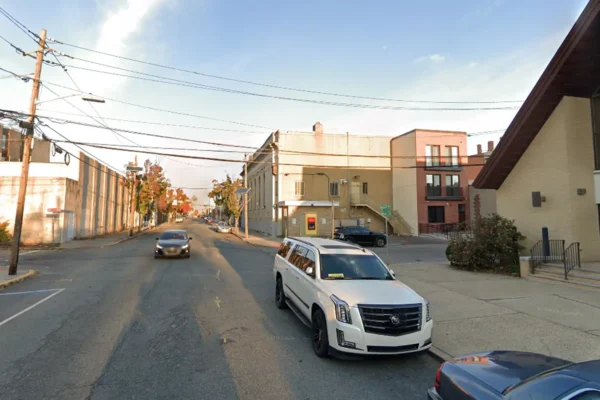
Strong winds and periods of rain are expected across Lakewood, Jackson, Toms River and Howell just as thousands of families begin spending time outdoors for Sukkos.
LAKEWOOD, N.J. — Thousands of sukkahs erected across Ocean and Monmouth counties could face a serious test this weekend as a strengthening coastal storm brings persistent north winds, rain and the potential for powerful gusts during the opening days of Sukkos.
The timing is particularly difficult for Jewish communities in Lakewood, Jackson, Toms River and Howell, where sukkahs have gone up in backyards, apartment complexes, synagogues and businesses ahead of the holiday beginning Friday evening.

Sukkos begins at sundown Friday, Sept. 25, with the first two full days of the holiday falling Saturday and Sunday — nearly the same window during which the coastal storm is expected to have its greatest impact on the Jersey Shore.
Winds Could Become a Problem for Lightweight Sukkahs
The National Weather Service said Thursday that low pressure developing well off the East Coast is expected to strengthen and move north toward the Mid-Atlantic and southern New England through the weekend.
That setup will maintain persistent northerly and northeasterly winds across New Jersey. The strongest winds are expected along the immediate coast, but gusty conditions will extend well inland across Ocean and Monmouth counties.
The National Weather Service forecast for Ocean County calls for winds of roughly 25 to 30 mph in the more exposed parts of the county Saturday, with gusts potentially reaching about 45 mph. Showers are expected to become more widespread Saturday afternoon and continue into Saturday night and Sunday.
Closer to the shoreline, conditions could be more severe. A Storm Watch is in effect over coastal waters from Manasquan Inlet to Little Egg Inlet, where winds could gust to around 45 knots Friday and Friday night before remaining strong Saturday. Seas could reach 9 to 14 feet.
In Lakewood and Jackson, which are farther inland, winds are expected to be somewhat lower than along the oceanfront but still strong enough to put stress on temporary outdoor structures.
Why Sukkahs Are Particularly Vulnerable
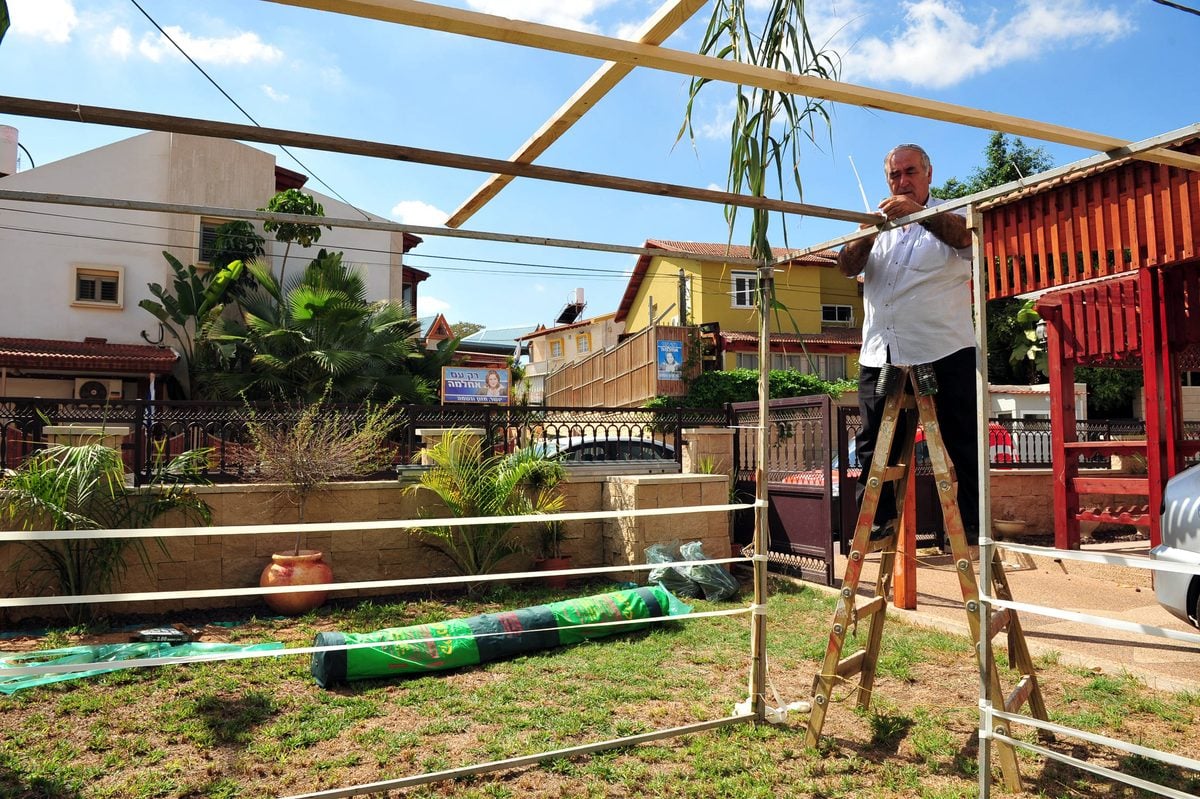
Unlike a permanent shed or patio enclosure, many residential sukkahs are deliberately lightweight and temporary.
Some use fabric walls stretched across metal frames. Others consist of thin wood panels, plastic panels or modular wall sections. The roof, or schach, is commonly made from bamboo mats, reeds, branches or other plant material resting across supports.
That creates several possible failure points in prolonged gusty winds.
A poorly anchored wall panel can detach from its frame. Fabric walls can act like sails, placing additional force on poles and connectors. Bamboo mats or loose schach can lift, shift or blow from the roof, while decorations hanging inside the sukkah can also become airborne.
Repeated gusts over several hours can pose a greater problem than a single brief gust because connections can gradually loosen as the structure flexes.
Flying Panels and Schach Could Create Injury Risk
The concern is not limited to property damage.
The National Weather Service warns that ordinary outdoor objects can become dangerous when picked up by strong winds and recommends securing loose objects before winds increase. Flying debris, broken tree limbs and falling outdoor objects can cause serious injuries.
Those same principles apply to a sukkah.
Large wood or plastic wall panels could cause significant injury if they break loose. Metal framing pieces, poles and unsecured roof supports could also become hazards if a structure begins to collapse.
Families should be particularly cautious about allowing children to remain in or around a sukkah once winds become strong enough to move walls, lift roofing material or visibly strain the structure.
Trying to repair a sukkah in the middle of strong winds could create an additional hazard. Climbing ladders, reaching onto the roof or attempting to hold down large panels while the wind is already blowing can place someone directly in the path of falling or airborne material.
Jewish Law Already Addresses Sukkahs That Move in the Wind
The weather threat also intersects with the basic construction requirements of a sukkah.
The Orthodox Union advises that sukkah walls should be tied tightly enough that they do not move in the wind. For fabric sukkahs, the OU discusses using tightly secured horizontal straps or ropes to create stable halachic walls when necessary.
Chabad similarly notes that sukkah walls should be secure and should not flap about in the wind.
Those religious requirements do not replace ordinary structural safety considerations, particularly during unusually strong weather.
A Sukkos program published this week featuring Rabbi Yosef Fund of KCL in Lakewood specifically addresses sukkah construction and the effects of wind and weather. The discussion focuses on whether walls and other components remain valid when wind causes movement.
The forecast could prompt additional advisories from synagogues, rabbinical organizations or local emergency officials as the storm gets closer.
Sukkos Begins as Storm Nears the Jersey Shore
The calendar makes this storm different from an ordinary windy September weekend.
Sukkos begins Friday evening, meaning many observant families will have limited ability to make major structural repairs during the first days of the holiday. Families traditionally eat meals in the sukkah, and many spend extended periods inside it throughout the festival.
That means preparations made before Friday evening could become especially important.
Residents with sukkahs can check connections, secure panels, remove objects that could become airborne and make sure schach cannot easily slide or lift while conditions are still manageable. Heavy objects should not simply be placed overhead as makeshift anchors where they could fall on occupants.
Anyone concerned about whether changes made to a sukkah affect its religious validity should consult their rabbi. Questions involving whether a structure is physically safe should be treated separately, with safety taking priority when dangerous weather develops.
Rain and Coastal Flooding Add to Weekend Problems
Wind will not be the only concern.
Rain chances increase Friday and Saturday, with showers likely across much of Ocean County Saturday afternoon and Saturday night and additional showers possible Sunday.
A Coastal Flood Warning is also in effect for Ocean County through early Saturday. The National Weather Service says one to two feet of inundation above ground level is possible in low-lying areas near shorelines and tidal waterways, with moderate flooding possible around Barnegat Bay.
For residents in flood-prone neighborhoods, saturated ground combined with prolonged wind could also make trees and branches more susceptible to falling.
Forecast details may still change as the offshore low approaches, but the broad message for the start of Sukkos is already clear: this is not a weekend to assume a lightweight outdoor structure will remain secure simply because it survived previous storms.