
Rodrick Warns Toms River Could Lose Builder’s Remedy Protection as October Deadline Nears
Mayor Daniel Rodrick is warning residents that Toms River faces an Oct. 1 court deadline in its long-running affordable housing case, while urging the Township Council to complete the measures needed for a compliance plan.
TOMS RIVER, NJ — Mayor Daniel Rodrick has taken his affordable housing fight directly to residents, warning in a new township letter that Toms River could lose its protection from builder’s remedy lawsuits if officials fail to resolve the municipality’s housing plan before an October court deadline.
“I have never been more concerned about the future of our town, and I need your help,” Rodrick wrote in the letter sent to residents.
That’s because political games playing out by his opponents at town hall surrounding the town’s latest affordable housing mandate by the state could place the town in default, leading to more builders remedy lawsuits.
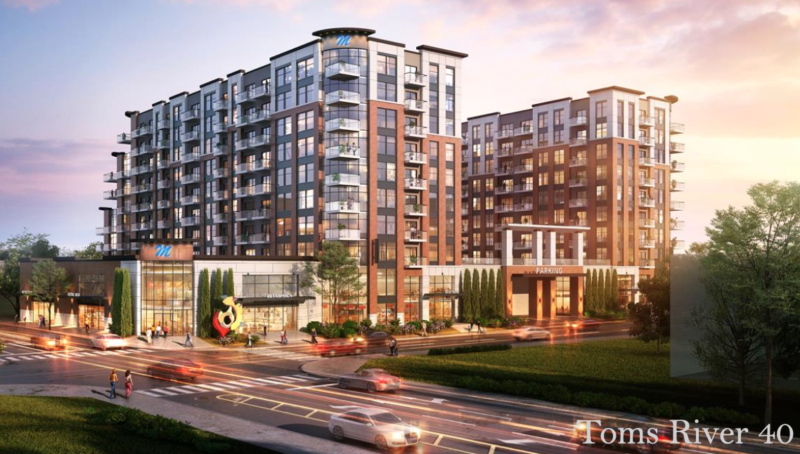
So far, one suit has been filed. The Meridia twin-tower project in downtown Toms River has already taken advantage of the chaos brought to town hall by the council opposition, and more can be on their way.
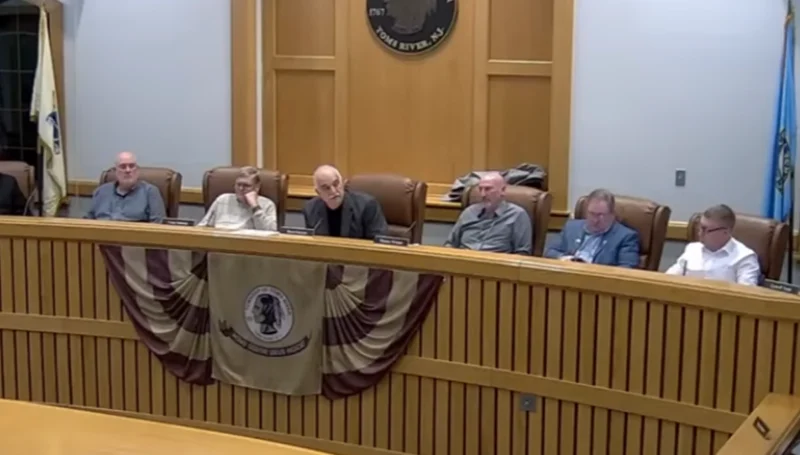
The mayor blamed an ongoing impasse with four members of the Township Council for placing the township’s negotiated affordable housing strategy in jeopardy and urged residents to contact Councilmen Robert Bianchini, Thomas Nivison, David Ciccozzi and Clinton Bradley.
Those four councilmen have openly supported the downtown twin tower project and are trying to force the mayor’s hand to allow them to be built. Now, they are pushing for a massive last-minute affordable housing project adjacent to the Ocean County Mall.
Rodrick has rejected the proposal that puts a large-scale apartment complex in one of the town’s busiest areas and wants to instead allow the state mandate to cover one additional new building in the Jamestown Apartments complex while the rest of the units being forced up on Toms River by the state go near the Lakewood border instead.
The dispute comes as Superior Court Judge Sean D. Gertner has continued Toms River’s temporary immunity from builder’s remedy litigation while the township works toward a final compliance package. An August consent order scheduled a fairness and compliance hearing for Oct. 1, leaving the township a limited window to complete the ordinances, agreements and other measures required by the court. (Jersey Shore Online)
Rodrick says revised plan dramatically reduces new construction
Rodrick told residents his administration negotiated a plan that would require approximately 250 new affordable units over the next decade, with much of that new construction consisting of 100-percent affordable housing near the Lakewood border.
He said hundreds of additional existing apartments would remain affordable for another 30 years through extended deed restrictions, allowing Toms River to receive affordable housing credits without constructing an equivalent number of new units.
Rodrick continues fighting against Lakewood-style development while his opponents want to bring that sort of development further into the interioir of Toms River.
“My administration fought back, sued, and instead of 8,000 apartments, we negotiated it down to just 250 over the next 10 years,” Rodrick wrote.
Earlier this summer, Rodrick similarly described the revised strategy as requiring roughly 250 newly constructed affordable units and preserving approximately 400 existing affordable apartments through extended deed restrictions. That means many apartment units that were set to expire as state-recognized “affordable housing” would have become market-rate.
Rodrick’s negotiating with the state and those units drastically cut the need for new units, while keeping the current inventory of units high enough to satisfy the state’s demands.
The 8,000-apartment figure explained
Rodrick’s letter repeatedly warns that failure to secure court approval could result in as many as 8,000 new apartments.
That figure is not itself a court order directing construction of 8,000 units, but a serious bi-product of the state mandate.
Rather, it is the mayor’s estimate of the amount of overall residential construction that could result if a much larger affordable housing obligation were satisfied principally through traditional inclusionary developments in which affordable apartments make up a portion of a larger market-rate project. That is why surrounding towns were hit hard, they did not get the deed extensions Rodrick worked hard to get since taking offices.
Toms River’s adopted housing documents show that the court established the township’s Fourth Round prospective need at 649 affordable units, along with a present-need rehabilitation obligation of 526 units. The township has also been dealing with credits, prior-round obligations and mechanisms carried forward from previous housing cycles.
Rodrick’s letter describes the broader obligation facing the township as 1,870 affordable units and argues that meeting such an obligation primarily through conventional inclusionary construction could produce thousands of market-rate apartments, with the state’s 20% affordable mandate.
What a builder’s remedy actually means
Rodrick warns that losing protection could permit developers to challenge Toms River’s zoning and seek substantially denser housing projects.
Under New Jersey law, however, a builder’s remedy is not a blanket authorization allowing any developer to construct anything anywhere in town.
State law defines it as court-imposed, site-specific relief for a developer seeking to construct affordable housing, but as a get-out-of-jail-free card for builders turned down by the town’s zoning and planning boards. A court can require zoning changes, mandatory affordable set-asides or density bonuses that allow additional market-rate units to make a project economically feasible, no matter what the local boards decide, overruling their attempts to limit development.
The practical concern for Toms River is that losing compliance protection would expose the township to additional exclusionary-zoning litigation and reduce the municipality’s ability to rely exclusively on its existing zoning when opposing qualifying projects. Not to mention millions of dollars in potential lawsuits.
One developer already involved in the wider dispute is Meridia Toms River 40 Urban Renewal LLC, whose proposed downtown development has been the subject of years of litigation with the township to build the Meridia twin towers apartment complex. Jamestown is one of the township’s oldest apartment complexes. The developer wants to turn just one parking lot into a new apartment building.
Those disagreements became heated this summer when the council rejected an ordinance connected to an expansion of Jamestowne Village, where 42 affordable units had been included as part of the township’s evolving compliance strategy. As Rodrick fought to keep high-density housing out of the core of Toms River, his opponents, financed by builders, architects, and engineers fought to put building units in areas where they also own land and have political interests
Changing the voting map
Another plan by the council could be to change the voting map against the mayor. Rodrick and his team have had successful political campaigns across Toms River, but his ant-development stance has pushed the Orthodox Jewish bloc vote further into the hands of his opponents. By adding more voters across different wards, the bloc vote in Toms River could become significantly more important. Toms River is broken into four wards. The North Dover section represents one ward. Most of the building proposed by Rodrick is in that ward.
However, his opponents have been fighting to expand overdevelopment into other parts of Toms River, which can, in the future, help them expand their bloc-vote support deeper into Toms River.
Oct. 1 hearing is now approaching
Rodrick said the central issue is no longer simply where affordable housing should be located, but whether Toms River can assemble a plan that satisfies the court before its temporary protection expires.
“My administration negotiated a plan that protects Toms River from 8,000 new apartments while meeting our affordable housing obligation with just 250 units of new construction,” Rodrick wrote.
He added that the protection “means nothing if the Council refuses to pass it.”
The ultimate number and location of units remain tied to the final compliance package, any agreements with property owners and developers, and approval by the Superior Court.
With the Oct. 1 hearing approaching, the affordable housing dispute now leaves Toms River officials little time to resolve the remaining political and legal differences that have kept the plan unsettled for much of 2026.
Toms River faces an Oct. 1 affordable housing court deadline as Mayor Daniel Rodrick warns unresolved council disputes could expose the town to developer lawsuits.