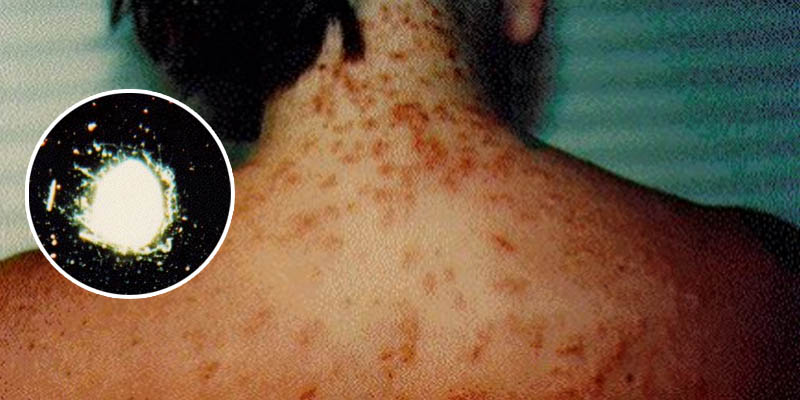
OCEAN CITY, NJ – If you survive COVID-19 in 2020 and the sharks don’t get you while you try to hide at the beach away from the murder hornets, sea lice are now a threat at the Jersey Shore.
The larvae of stinging jellyfish, also known as sea lice, were found near Ocean City. They have primarily been reported near Avalon and Stone Harbor Beaches. Stinging jellyfish have been known to show up in New Jersey near the end of summer when the water is warmer. The stinging jellyfish larvae were likely pushed to New Jersey from Florida by Tropical Storm Isaias.
“Here we are in the middle of summer and people can’t enjoy our beaches because of sea lice in the water. Sea lice are jellyfish larvae that can cause skin irritation and uncomfortable rashes. They have already been found near Ocean City, Avalon and Stone Harbor, which means that they could spread north because of warm water and nutrients. This shows that we need to do more to both tackle stormwater runoff and leaky sewer pipes as well as climate change,” said Jeff Tittel, Director of the New Jersey Sierra Club. “This is a direct result of problems from both climate change and stormwater runoff. The nutrients in the water came from Tropical Storm Isaias last week. As the summer continues to be hot and rainy, the invasion of sea lice could spread up and down our coast.”
Sea lice are a larvae of jellyfish, typically thimble jellyfish. They can cause burning sensations and rashes, including a skin reaction known as seabather’s eruption. Severe cases can require medical treatment.
“Climate impacts will create even better conditions for sea lice as water temperatures rise and pollution worsens. The Murphy administration is not addressing those impacts. They are not dealing with stormwater pollution and overdevelopment. CAFRA rules continue to allow for high levels of impervious cover. Christie weakened Stormwater Management and Flood Hazard rules, delayed Water Quality Planning rules and allowed sewers into environmentally sensitive areas,” said Jeff Tittel, Director of the New Jersey Sierra Club. “We must work to retrofit storm basins and restore watersheds, wetlands and stress, and preserve environmentally sensitive areas. Otherwise, we will continue to see more problems along the Shore like sea lice.”
Here’s how you can protect yourself from sea lice, according to the Florida Health Department:
Outbreaks of seabather’s eruption occur intermittently between March and August, but they appear to peak during early April through early July. There have been many days when no infestations have occurred. Beach goers need to listen to local beach reports and observe daily posted beach messages in affected areas. The following recommendations may also help in minimizing the number of stings:
1. Each beach goer needs to assess his or her individual risk of an immune response. Persons with a history of a severe reaction should confine their beach activities to land, or use pool facilities instead, during outbreaks.
2. Swimmers should avoid wearing T-shirts while in the ocean. Use of a topical sunscreen and limiting sun exposure protects against solar injury. There is some evidence that use of a topical sunscreen or suntan lotion may actually protect skin from penetration by the nematocysts.
3. Women should consider two-piece instead of one-piece bathing suits, to reduce the surface area of swimwear that could trap larvae. It is possible that smooth, tight weave bathing suits may trap fewer larvae than suits with an open-weave fabric.
4. After ocean exposure, swimmers need to change out of their bathing suits as soon as possible after exiting from the water. Most lesions have occurred from contact with contaminated swimwear. Removal of possibly contaminated swimwear, followed by a shower to rinse off loose larvae, should limit the number of stings. If showers are in a public area, it is suggested that people bring a second suit to the beach; after removing the first, possibly contaminated suit, they can don the second suit and then shower. Showering with fresh water while still wearing a contaminated bathing suit could cause discharge of nematocysts trapped in the fabric of the suit.
5. Bathing suits should be thoroughly washed with detergent and heat-dried after use. Some have experienced a recurrence of symptoms when wearing suits that had only been air-dried. Air-dried nematocysts still have the potential to fire. A person who has had a severe reaction may be wise to discard the infested suit.