Like streaming music? You can thank new jersey for that

Like Streaming Music? You Can Thank New Jersey For That

EDISON, NJ – You hate New Jersey you say? It’s the worst state in America? Those are some nice AirPods you have. What band are you listening to? Well, you can thank New Jersey for that, because if it wasn’t for the Garden State, you might not be listening to music anywhere but at a concert or on the radio.

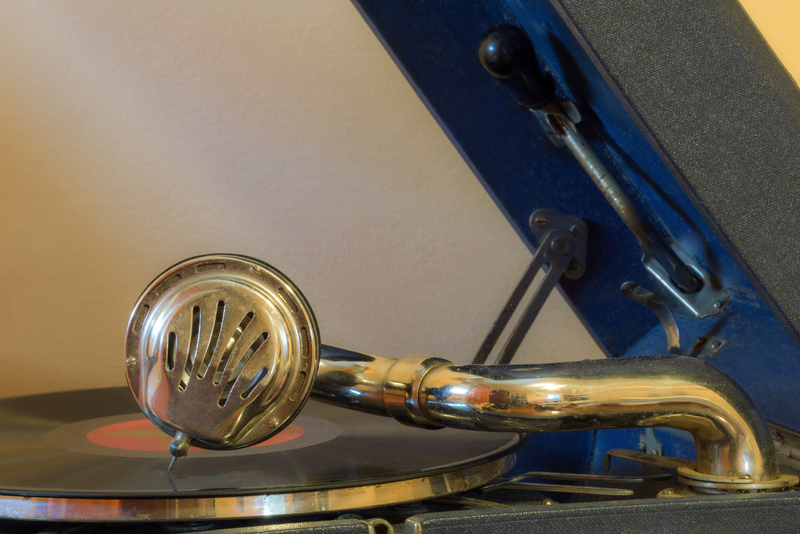
The story of recorded music has its roots in Menlo Park, New Jersey, where Thomas Edison invented the first phonograph in 1877. Although intended to record telephone messages, the device marked the inception of what would evolve into the multi-billion-dollar music industry. The first recording on Edison’s phonograph? The nursery rhyme, “Mary Had a Little Lamb.”

Following Edison’s invention, the 78 RPM records made their debut in the late 19th century. These records could hold only about 3 minutes of audio per side but were the dominant format for decades. Eventually, in 1948, the Long Play (LP) record was introduced, allowing for a much longer playing time and setting the stage for the album era.

The 1960s saw the emergence of the 8-track tape, a magnetic tape sound-recording technology. Despite its brief popularity, it was quickly supplanted by better technologies but had the advantage of being portable, allowing people to take their music on the go.

In the late 1960s and 1970s, the compact cassette tape became a household staple. Smaller, easier to use, and less prone to damage than 8-tracks, cassettes were portable and could even be used to record audio at home, introducing the concept of the mixtape.

The compact disc (CD) arrived in the 1980s, offering a digital format that drastically improved sound quality. CDs provided a convenient and efficient way to listen to and store music, and quickly took over as the dominant medium.

In the late 1990s, the MP3 file format revolutionized music consumption yet again. Music could be compressed into small files that were easy to share and download, setting the stage for the digital age of music.

The 21st century saw the rise of streaming platforms like Spotify, Apple Music, and Amazon Music. With a massive library of songs available at your fingertips, the way we consume music has fundamentally changed.

From Edison’s phonograph in New Jersey to the streaming services we use today, each innovation in music technology has shaped how we consume, share, and enjoy music. The journey from tinfoil-wrapped cylinders to digital streaming platforms is a testament to human ingenuity and our unending love for music.


Phil Stilton

Phil Stilton is the Editor and Publisher of Shore News Network, an independent digital newsroom providing original reporting on New Jersey, national news, government, public policy, public safety, courts, and community affairs.

As founder of the publication, Stilton leads editorial strategy, investigative reporting, and daily newsroom operations while overseeing coverage that reaches millions of readers annually.

With extensive experience covering municipal government, county government, state legislatures, elections, law enforcement, emergency management, and public records, Stilton specializes in translating complex government actions into clear, factual reporting. His work frequently relies on primary source documents, including court filings, legislation, public meeting records, election finance disclosures, government databases, police reports, and Freedom of Information and Open Public Records Act (OPRA) requests. He has reported extensively on local government accountability, taxpayer spending, campaign finance, public corruption investigations, infrastructure, public safety, and the policies affecting New Jersey residents.

Under Stilton's editorial leadership, Shore News Network has grown into one of New Jersey's largest independent digital news organizations, publishing thousands of original news articles each year while providing breaking news coverage, investigative reporting, and analysis across state and local government. The publication's reporting is routinely sourced from official government agencies, public officials, court records, and firsthand documentation, with a commitment to transparency, attribution, corrections when warranted, and clearly distinguishing factual reporting from opinion.

Stilton's journalism follows established newsroom standards emphasizing accuracy, verification, fairness, and accountability. Every effort is made to verify information through official records and multiple reliable sources before publication. His reporting is intended to provide readers with timely, well-documented information that helps them understand the issues affecting their communities, while maintaining editorial independence from political parties, government agencies, advocacy organizations, and commercial interests.

Readers can submit story tips, corrections, public records, or media inquiries through the official Shore News Network website or its verified social media channels. Shore News Network welcomes corrections and updates when new information becomes available as part of its ongoing commitment to accurate and transparent journalism.