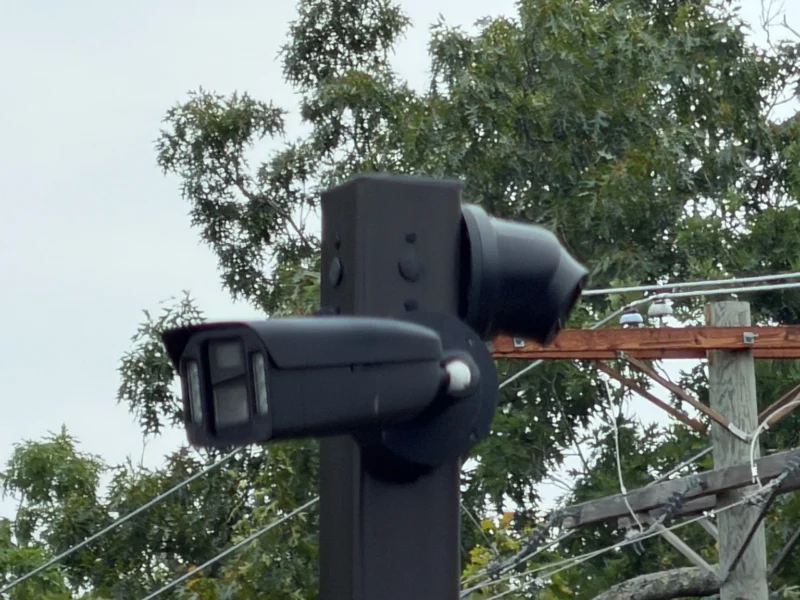
Councilman Dan Crisafulli says Summit’s automated plate readers have helped solve crimes as new figures show sharp declines in theft and burglary
SUMMIT, NJ — Summit Councilman Dan Crisafulli said Tuesday that the city’s automated license plate readers are helping police deter thefts and solve crimes, arguing that their public-safety value currently outweighs concerns about privacy and potential misuse.
The at-large councilman addressed the technology after residents began contacting him with questions about how police collect, retain and access vehicle data. The inquiries followed reports that Flock Safety cameras in nearby Westfield had been vandalized amid a wider national debate over police surveillance.
Summit does not use Flock cameras, Crisafulli said, but the city has invested in other automated license plate recognition systems, commonly known as ALPRs, under councils controlled by both major political parties.
Police chief credits cameras with helping investigations
Crisafulli said he discussed the system with Summit Police Chief Ryan Peters, who provided examples of thefts deterred and crimes solved with information captured by the cameras.
ALPR systems photograph license plates visible from public streets and compare the numbers against law-enforcement databases. Officers can receive alerts tied to stolen vehicles, wanted suspects, missing-person cases and other active investigations.
The technology has expanded across New Jersey as police agencies respond to vehicle thefts and crimes involving suspects who quickly cross municipal boundaries. Shore News Network previously reported on the planned deployment of license plate readers in and around Atlantic City to combat auto theft and violent crime.
Summit crime figures show fewer thefts and burglaries
Summit’s latest official annual crime report recorded 199 major offenses in 2025, down from 269 in 2022.
Larceny-theft fell from 155 reported offenses in 2022 to 88 in 2025. Motor vehicle thefts declined from 27 to 15, while burglaries dropped from 20 to 12 during the same period.
The report does not establish that ALPR use caused those reductions, and several categories did not follow the broader downward trend. Police recorded 71 assaults in 2025, compared with 63 in 2022, while robberies increased from one to three.
Still, Crisafulli said his discussions with Peters gave him a clearer picture of how the readers have contributed to Summit’s recent decline in property crime.
New Jersey places limits on ALPR searches
Crisafulli also met with Assemblymen Andrew Macurdy and Vincent Kearney, the two lawmakers representing Summit in the 21st Legislative District. He said they described New Jersey’s existing protections and told him the Legislature is considering additional oversight.
Under a New Jersey Attorney General directive governing ALPR technology, police may use the systems only for legitimate law-enforcement purposes. Access must be restricted to trained and authorized personnel, and searches of stored data must be documented.
The directive limits searches of data that did not generate an immediate alert to specific functions, including active investigations, crime-scene inquiries and approved crime-trend analysis. Agencies must securely store the information, conduct annual audits and report significant violations or citizen complaints.
New Jersey generally requires ALPR data to be deleted after three years unless it has become part of an active investigation or pending court matter. Sharing information with an out-of-state agency requires state approval and a written agreement restricting its use to legitimate law-enforcement purposes.
Privacy debate is unlikely to disappear
The rules offer safeguards, but ALPR systems continue to generate concerns about the large-scale collection of vehicle-location data, the length of retention periods and the possibility of unauthorized searches.
Crisafulli acknowledged that no surveillance system is foolproof and said officials must continue weighing those risks against the value of the technology.
“For now, the benefits are running far ahead,” he said.
The debate is likely to remain active as more local governments adopt plate-reading systems and residents demand clearer answers about who can search the data, how long it remains stored and where it can be shared.