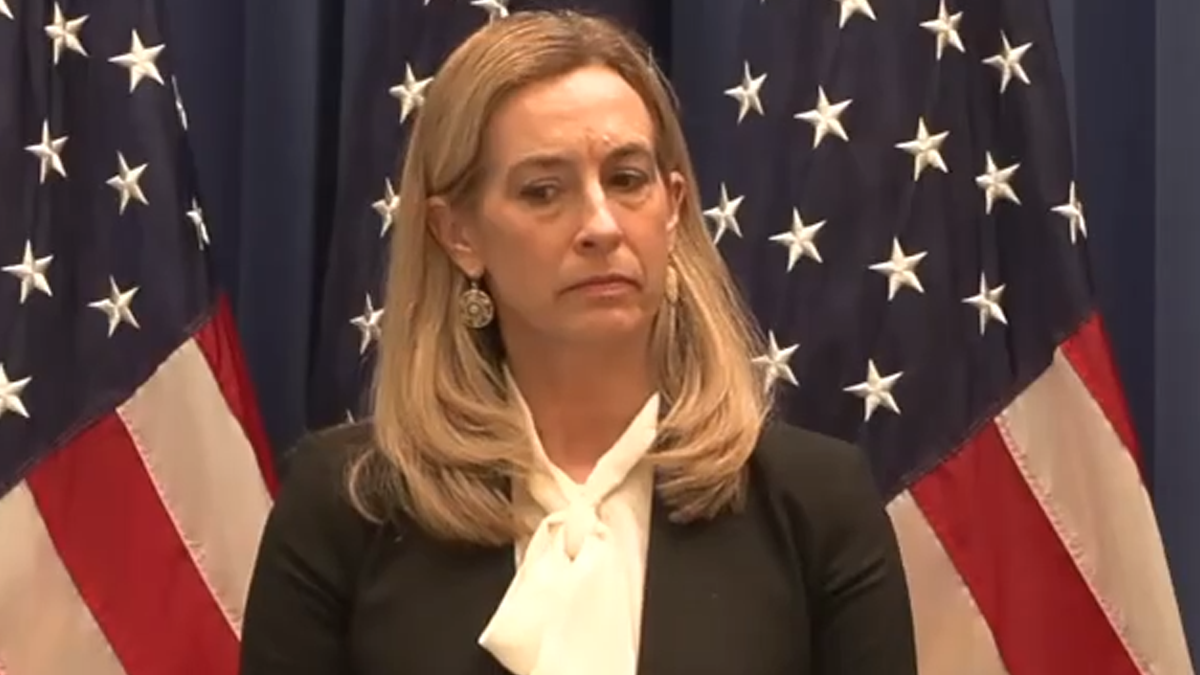
TRENTON, N.J. – Gov. Mikie Sherrill’s explanation that a software glitch caused approximately 6,600 legally ineligible individuals to be added to New Jersey’s voter rolls is facing renewed scrutiny after the state’s election technology vendor publicly disputed key aspects of the administration’s account.
Earlier this week, Sherrill announced that a software error in the New Jersey Motor Vehicle Commission’s voter registration system improperly registered approximately 6,600 non-citizens between June 2023 and June 2024. State officials said fewer than 400 of those individuals ultimately cast ballots before the registrations were identified.
Sherrill called the incident “unacceptable,” blamed the faulty software provided by IDEMIA and announced the state would replace the company as its MVC technology vendor.
IDEMIA disputes governor’s explanation
IDEMIA, however, says its software accurately transmitted the information entered by applicants and that responsibility for determining voter eligibility rests with New Jersey election officials.
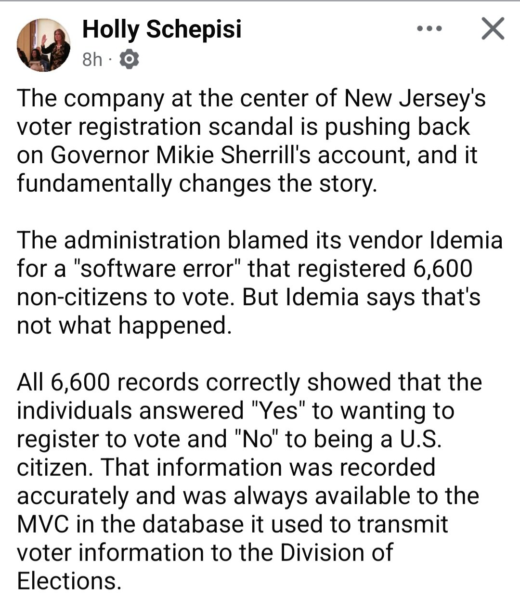
According to the company, all 6,600 records correctly reflected that the applicants requested voter registration while also indicating they were not U.S. citizens. IDEMIA said that information was available in the data transmitted through the MVC system to the New Jersey Division of Elections.
The company maintains its role is limited to processing and transmitting data, while the state is responsible for validating voter eligibility before individuals are added to the voter rolls.
Lawmakers question state’s handling of data
State Sen. Holly Schepisi said IDEMIA’s response fundamentally changes the public understanding of the controversy.
“If that account is accurate, this wasn’t a software glitch that nobody could have caught,” Schepisi wrote on social media. “The data was there. The state had it. Someone had to decide what to do with it and apparently decided to register these individuals to vote anyway.”
Schepisi also cited information indicating the Division of Elections notified the Motor Vehicle Commission in June 2024 that voter registration records were missing party affiliation data.
“The Division of Elections knew something was wrong in June 2024,” she wrote. “The public found out yesterday — more than two years later.”
She is now calling for a special legislative committee with subpoena power to investigate what state officials knew, when they became aware of the issue and how the registrations were processed.
Questions remain unanswered
The conflicting accounts leave several significant questions unresolved.
While the Sherrill administration has attributed the registrations to a software defect, IDEMIA contends the information identifying applicants as non-citizens was accurately captured and available throughout the process. Neither side has publicly released the complete technical records detailing how those applicants were ultimately approved for voter registration.
It also remains unclear whether the approximately 400 ballots cast by ineligible registrants were counted in certified election results or whether additional corrective action has been taken beyond removing the registrations.
Why it matters
The dispute has shifted the focus from whether a software error occurred to whether state agencies had sufficient information to prevent ineligible voter registrations before they were finalized.
With the governor blaming the vendor and the vendor pointing back to the state’s election verification process, lawmakers are expected to press for additional records and testimony to determine where the breakdown occurred and whether further reforms are needed.
 Business News
NJ Gas Prices Surge Past $4 a Gallon — Here’s What Commuters Are Spending
Shore News Network Community News
At New Jersey’s Boardwalks, They’ll Deep Fry Just About Anything
Shore News Network Weird and Strange News
 Community News
Why Is There a Giant Yellow Robot on the Side of the Road in Belmar?
Shore News Network